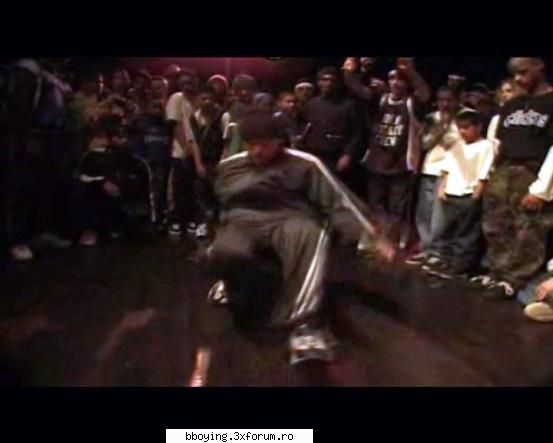
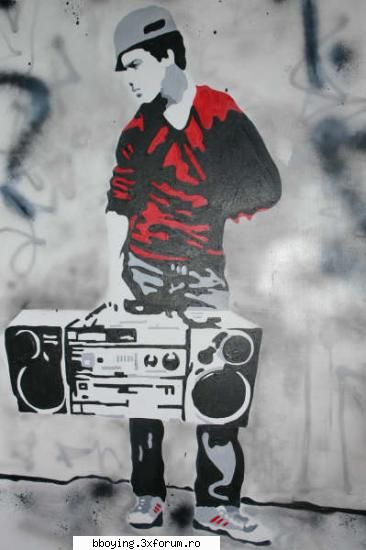
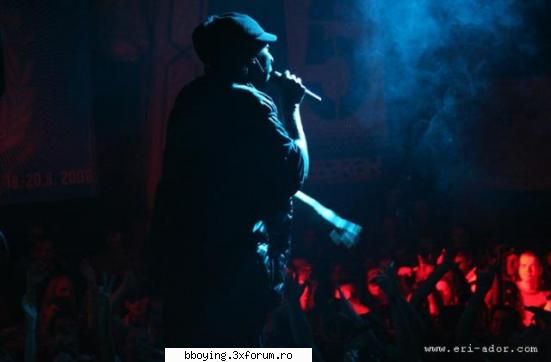
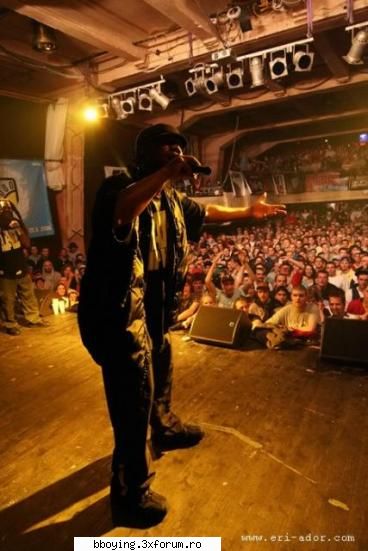
Colectia de poze bboying.3xforum.ro
Total 77 poze.

Inainte

 
crazy legs hipo hop dance steady crew)

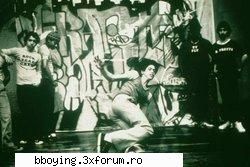
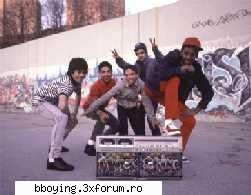
the rock steady crew was in 1977 by bronx b-boys jimmy d andCRAZY LEGS Hipo HOp dance pioneer.(Rock Steady Crew) The Rock Steady Crew was established in 1977 by Bronx b-boys Jimmy D and Jojo. When they started this crew in the streets of the Bronx, they had no idea that someday it would take them all around the world. Only the best b-boys were down with Rock Steady. They had rivals in all five boroughs of New York and for every rival there were ten kids who wanted to be down with them. However, getting into the original crew was not easy. To get into Rock Steady you had to battle one of the other b-boys in the crew. It was a competition few people won. In 1979 when the b-boying hype was beginning to die down, Jimmy D put Crazy Legs and Lenny Len down with Rock Steady just in time to add new life to the art form and take it to the next level. This was at a time when Crazy Legs moved to Manhattan. Going back to the Bronx every weekend became too difficult for Crazy Legs pockets. He then started to explore the Hip Hop scene in Manhattan more often. This meant losing touch with other members of Rock Steady. Crazy Legs would spend most of his time developing his craft in tenement building hallways and battling b-boys that he would come across and eventually hanging out with the ones that he felt had an original style. Wanting to start a crew of his own he went back to the Bronx to look for Jimmy D and the rest of the crew to get permission to start a chapter of his own. He was not able to find them. Not knowing what to do, he sought the advice of his cousin Lenny Len. Lenny Len suggested that he join Rockwell Association (another well known crew from the Bronx). Rockwell Association was the crew that had turned Crazy Legs down as a member before he got in to Rock Steady Crew. This time Crazy Legs had a lot more to offer. They immediately put him in Rockwell Association and gave him a chapter in Manhattan. It was bitter sweet for him. He felt that Rock Steady Crew was the better of the two and wanted to use the Rock Steady Crew name. In the early part of 1981 Crazy Legs had come across Jimmy D and told him about what he was doing in Manhattan. Jimmy D was impressed with the amount of members that Legs had in Rockwell Association. Crazy Legs asked Jimmy D if he can start a chapter and Jimmy D gave him permission. Crazy Legs immediately changed the name of the crew to Rock Steady Crew. Although none of the members that got into Rock Steady Crew by battling, they had already gained the respect of Crazy Legs. Crazy Legs and the new recruits from Manhattan eventually became the motivating forces behind b-boying gaining back its popularity in the streets of New York City. The turning point for Rock Steady was in 1981 when people began to take notice of all the noise Crazy Legs, Frosty Freeze, Take One, Little Crazy Legs and Ken Swift were making in Manhattan. In August of 1981, photographer/sculptor Henry Chalfant offered them the chance to perform at the Lincoln Center Outdoors Program. This performance, which was also a battle with rival b-boys from The Dynamic Rockers, was crucial not only because it was covered by local television stations, The New York Times, The Village Voice, The Daily News, and National Geographic, it would later gain them worldwide exposure. Jimmy D took notice of the buzz that Crazy Legs had started in Manhattan and made him President of the entire Rock Steady Crew. Crazy Legs in turn made Frosty Freeze and Ken Swift Co- Vice Presidents. In the winter of 1982 the Rock Steady Crew was invited to perform at the original Ritz nightclub. The list of performers that night included the Punk Rock group BOW WOW WOW, Afrika Bambaataa and the Jazzy 5. Since Afrika Bambaataa was known by many as the “Godfather of Hip-Hop�, the Rock Steady Crew was honored to be on the same bill. After their performance, Crazy Legs and Frosty Freeze asked Afrika Bambaataa if they could be down with the Zulu Kings, the most highly respected of all b-boy crews. Afrika Bambaataa allowed them as well as the entire Rock Steady Crew to become members of the Zulu Kings, knowing that they would also become an integral part of the Zulu Nation. Soon after that performance the Rock Steady Crew took the downtown club scene by storm. They became caught up in a culture clash of Rastafarians, Punk Rockers and Hip-Hop heads. As the word spread, Rock Steady expanded into a huge family consisting of women, children, roller skaters, artists and DJ’s. The Crew’s popularity grew bigger than the city of New York and Kool Lady Blue started managing the group. She booked them on the Roxy Tour, sponsored by Europe One Radio. The Roxy Tour took the Rock Steady Crew, Afrika Bambaataa, Fab Five Freddie, The McDonald Double Dutch Girls, DJ’s and graffiti artists straight from the “concrete jungle� to London and Paris. It was the first Hip-Hop tour of it’s kind and it opened the door for many more to follow. The Crew also appeared on the Jerry Lewis Telethon two years in a row. In November 1983, they were asked by the Queen of England to perform at the Royal Variety Performance in aid of the Artist’s Benevolent Fund. During these spectacular performances Charisma Records approached the Rock Steady Crew with a record deal. The record “Hey You, The Rock Steady Crew� was in the top ten charts in Great Britain and sold over a million copies. The Crew, however, saw very little of the proceeds. Due to their lack of knowledge of the music industry at such a young age, the company took advantage of the Crew and would not allow them any creative input toward their own project. When Charisma Records went out of business and was sold to Virgin Records, the group was put on hold indefinitely. During this time, the crew's management told them not to dance in clubs. They tried to convince them that it was in their best interest not to dance they way they love to. Just for fun. Suddenly the Crew was on the outside looking in. By this time they had lost much of their fame and notoriety. They found themselves at a dead end with no plans for the future. Regardless, the Crew never split up, but they took some time to regroup and they went their separate ways. Some members took an optimistic attitude and went back to school or pursued other interests. Others did not fare so well. However, the Crew kept looking forward and took their anger and disappointment and made something positive. In 1991 Mr. Wiggles approached Crazy Legs about an idea he and Fable (Magnificent Force) had for a Hip-Hop musical. Crazy Legs (with the help of Mr. Wiggles) then needed to persuade Ken Swift to start dancing again in order to have Ken involved as well. The musical was called “So, What Happens Now?". Rock Steady member Buck 4 (R.I.P) provided the perfect scenario to base the musical on. He said, “You don’t know what it feels like to go fill out a job application. where it says, ‘what do you do?’ what do I write? I spin on my head?� “So, What Happens Now?� was the critics choice in the New York Times and received rave reviews in The Village Voice, The Daily News and El Diario. In 1992, they received a standing ovation lead by Gregory Hines at the Kennedy Center Honors where President George Bush, Gregory Peck and the Nicholas Brothers were all in attendance. A Rock Steady Crew Anniversary is held annually to symbolize the preservation of the history and evolution of Hip-Hop Culture. This monumental community event brings out DJ’s, b-boys/b-girls, graffiti artists, emcees and thousands of other positive Hip-Hop heads from all around the globe. It also honors members of Rock Steady Crew and members of the Hip-Hop community that have passed away. Since their beginning the Rock Steady Crew has come full circle. Crazy Legs is still president of the crew. Fabel and Easy Roc are co-vice presidents. They have added new faces like Fever One, Alien Ness, Jeromeskee, Floor Phantom, Lady Jules, Floor Rock as well as members in Japan, United Kingdom and Italy. The difference this time is that they have total control over their company and their destiny. “This time we have control over what’s going on�, says Crazy Legs. “We are running it with no one to answer to and that makes everything we do more satisfying�. With the Rock Steady Crew’s 29th anniversary on the horizon, they have plenty more goals in sight. The Rock Steady Crew has bounced back and performs throughout the world. They remain very active in the community and are involved in several different outreach programs as well as holding food drives and donating time and money to non-profit organizations. They hope to set up a Rock Steady foundation for children. This program will provide dance classes and other activities that will help to influence the youth to stay on the right path throughout life. It will also involve maintaining and preserving Hip-Hop culture. also visit: :nod:
14.09.200614.1KB
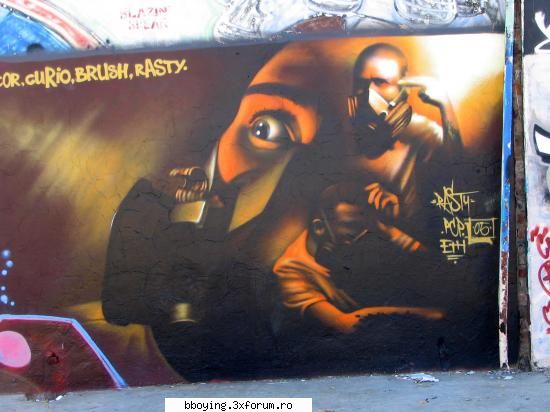
statements of protest were often written on walls and in public places so all those in the communitystatements of protest were often written on walls and in public places so all those in the community could see them. Some of this ancient graffiti can be seen in the catacombs of Rome. But even before the Romans, civilizations painted on walls. The Egyptians, Greeks, Macedonians and others communicated with their societies in the most effective means possible--through colorful and powerful images on the walls of their dwellings, tombs, and architecture. Thousands of years later, in the 1960s and 70s, young people in the South Bronx re-established this artform in their own way, creating a dialogue with their fellow graffiti artists and society. The need for these young people to establish their names--to create "fame" for themselves--flourished in the boroughs of New York and soon spread to the entire world. To many people, graffiti is simply scrawled, unreadable markings on a wall. To others, it is symbolic of gang activity--a common misconception. In most cases it is illegal. But, from the subway cars and handball courts of the Bronx, it became something very different. Although a few of the "tags" (scrawled signatures) are done by gang members, most artistic graffiti, including tags and "throw-ups" (names done in large, outlined letters), are markers of recognition for an entire society of graffiti "writers." It is a means of achieving fame--and gaining notice for their larger works called "pieces" ("masterpieces"). Graffiti artists call themselves "writers" and their art "writing." Writing began with just that--writing. Writers simply painted or marked their names (actually nicknames) everywhere they could. This activity is called "tagging." From these simple tags, writers took the shapes inherent in standard English characters, expanded them, decorated them, and made them much more than just simple letters. They used these stylized letters to spell their names and make statements. The more creative the style of the letters, and the more often their work appeared, the more popular the writer became with their fellow creators. Over time, many of the letters were so stylized they became difficult to read by the regular viewing public. "Stash", 1985. From the book Spraycan Art by Henry Calfant & James Prigoff Besides using highly stylized letters, writers create interesting and intricate images in their works. They often borrow iconography from popular culture, such as cartoon or comics figures. Sometimes they do portraits. Many writers even invent their own caricatures, and these figures become associated with their names further adding to their notoriety. By combining unique letter styles and images, writers create their pieces--large works of art that often take up an entire wall or, as it was at the time the artform was in its heyday--a subway train. It's through creating large pieces that writers truly establish their names. The pieces are what distinguish the masters of graffiti art from the new, inexperienced writers that graffiti society refers to as "toys." Toys, in fact, are those that do most of the tagging and throw ups because they are trying to establish themselves in the graffiti art world. Most young writers work with experienced writers to learn the techniques, and after periods of tagging their names around the city, they soon graduate to larger and larger pieces. A detail from a piece entitled "Saw Sude" at the corner of 151st and Gerard in Mott Haven. The character featured is "The Mask" from the comic book that inspired the movie. Writers: Prod, Jel, Psycho, Slust, Kaws, Cher, Siren & Xman. In fact, most writers work with a team of other artists, referred to as "crews" (also spelled "cru"). By being "down" (in) with a crew, young artists can learn from several teachers, and gain fame by their association with a given group. A detail of a present piece in a ball court next to Yankee Stadium. We believe the title is "The Power of Imagination". The writers' identities are to be determined. Among graffiti crews and writers there is a great sense of honor and respect. When a writer and/or his/her crew finishes a piece, it is very rarely defaced by other writers until the paint starts to wear. If it is defaced, it is usually done by a toy, or other writers trying to establish themselves. The result, however, is often a scolding by their peers or flat-out rejection. Another point of honor is that the creation of the art is cross-cultural and non-sexist. Women, men, Hispanics, Caucasians, African-Americans--all of them write with the crews and share ideas. Crews are not enviro-centric, either. Writers like to visit other neighborhoods to meet with other crews and writers to see what is being done there. This is not to say that competition does not exist, but the competition is an honorable and charitable one. Painted subway cars by Paze, Midge and Foam, 1982. From the book Subway Art by Martha Cooper and Henry Chalfant. Modern graffiti actually came into its own on the subway cars of the New York City Transit system. During the 70s through the early 80s, the painted subway cars were a gallery of the art. Train cars were "bombed" (covered with painting and writing) nightly by eager young artists. But pieces were short-lived due to the "buff" (chemical cleaning) of the cars. Later, in 1987, the Metropolitan Transit Authority (MTA) all but ended subway car graffiti by replacing cars with paint resistant, stainless steel cars, or refurbishing older cars with paint resistant materials. When this happened, graffiti moved to walls and handball courts. This is where most pieces are seen today. A piece in progress by Il Crew, located in a ball court by the park at the corner of Cedar and Sedgwick Avenues. A recent trend in Bronx graffiti is the creation of tributes and memorials. Often taking up entire walls, memorials are testimonials to those in the New York community who have died tragically through drug-related accidents, violence or AIDS. Most times these memorials are done legally, with the permission of property owners and community members. Since the loss of subway cars, many writers have graduated from illegal graffiti to getting paid for their talent. This Bronx-born art, including it's lettering, terminology and imagery, has now spread to the entire world. Enthusiastic writers from other countries visit New York, in the hope of meeting its originators, some of whom have even attempted to paint the subway cars in an effort to express greetings to their fellow artists. But their efforts are easily washed away on paint-resistant surfaces. True graffiti, with all of its power and mystique, is part of the same culture as Hip Hop and breakdancing. All of it, Bronx-created, is indicative of the lifestyle of those who live in this urban area. Graffiti artwork adds color to a world that often lacks it. And in that the artistic form of graffiti serves the most noble of purposes.
15.10.200639.3KB
i recently caught up with moy at the out for fame houston heat, (houston is hot, skill wise andI recently caught up with Moy at the Out For Fame Houston heat, (Houston is HOT, skill wise and weather wise) and got a chance to hook with one of Texas’s up and coming b.boys.. Whatup Moy, tell the readers a little bit about yourself.. Wuz up! Im Moy from Havik, currently 16 years old and I've been dancing for about four years. What's the Texas scene like? Texas is alright but not the way it should be, but there are a lot of dope bboys, though! Who are some of your influences? Some of my influences were my friends from HAVIK, Style Elements, and lots of other bboys (too many to name). What are your views on the East vs West, Cali vs Texas issues? I don't think that those issues should be going on because, we are all dancers and are part of one culture, and if it does go on let it be for fun. People tend to generalize Texas with only having Airtracks (airflares). How do you feel about that ? To me that’s ok because people are entitled to their own opinions but they shouldn't judge off what they see on videos. It doesn't bother me. What would be your idea of the dopest crew battle (any two crews)? A dope battle would be between Stylelements and Boogie Brats. What was your most memorable battle? My most memorable battle was Freestyle Session 5, Havik/KORO vs Stylelements/Footwork Fanatics. Where do you see the b.boy scene heading within the next couple of years? I see b.boying getting more involved in commercials and positive programs. What do you think about the Out For Fame U.S. B.boy Championship? I think it is a good event because it gives other bboys the chance to represent! Lastly, what we all want to know, what is the secret to Airtracks?? Your waist! shhhh! Any last comments or shouts? Thanks to GOD for everything he has given us and showed us...HAVIK,KORO, SWC, Tribal Gear, Youth Advocates, Hope in Hollywood, La Breakers, Stylelements, Kujo, Ivan, and to all those I forgot…Peace....
29.09.200634KB
legenda scenei din sua, a facut istorie sambata trecuta (5 august) la festivalul Supernatural, legenda scenei underground din SUA, a facut istorie sambata trecuta (5 august) la festivalul "Rock the Bells" datorita skill-ului sau de MC. Supernatural detine recordul la cel mai lung freestyle, intrecandu-l pe rapperul canadian D.O., cu peste 15 minute. Supernatural a "scuipat" rime timp de 9 ore intr-o camera VIP. Tema freestyle-ului? Spectatorii ii dadeau obiecte pe care scriau diferite cuvinte, iar MC-ul se lega de acestea. In timp ce Supernat facea istorie, afara pe scena au cantat Redman, Mos Def, De La Soul, B-Real, Immortal Technique, Aesop Rock, Living Legends, Planet Asia si Talib Kweli, plus multi altii. c surprins sunt.. :rotfl:
14.09.20067.1KB

 
to dance...to move usually to music, using prescribed or improvised steps and gestures. true essenceto dance...To move rhythmically usually to music, using prescribed or improvised steps and gestures.
07.03.200723.3KB
"When we made Hip Hop, we made it hoping it would be about peace, love, unity and having fun so that people could get away from the negativity that was plaguing our streets (gang violence, drug abuse, self hate, violence among those of African and Latino descent). Even though this negativity still happens here and there, as the culture progresses, we play a big role in conflict resolution and enforcing positivity." GodFatha Afrika Bambaataa.. ZULU Divine Inspired ZULU One Love
16.10.200631.2KB
kool herc 
the father of hip hop 

kool herc emigrated to the bronx in 1967 when he was 12 yearsKOOL HERC The Father of Hip Hop Kool Herc emigrated to the Bronx in 1967 when he was 12 years old. While attending Alfred E. Smith High School he spent a lot of time in the weight room. That fact coupled with his height spurned the other kids to call him Hercules. His first deejay gig was as his sister's birthday party. It was the start of an industry. 1520 Sedgwick Avenue. The address of Herc's family and the location of the recreation room where he would throw many of his first parties as the DJ. Herc became aware that although he new which records would keep the crowd moving, he was more interested in the break section of the song. At this point in a song, the vocals would stop and the beat would just ride for short period. His desire to capture this moment for a longer period of time would be a very important one for hip hop. Herc would purchase two copies of the same record and play them on separate turntables next to each other. He would play the break beat on one record then throw it over to the other turntable and play the same part. Doing this over and over, he could rock any house in NY. (Not to mention it being an early form of looping that would be made easier through electronic sampling.) He would dig in crates and look everywhere to find the perfect break beat for his parties. He didn't care what type of music, because he only needed a small section of a song for his purposes. His first professional DJ job was at the Twilight Zone in 1973. He wanted to get into another place called the Hevalo, but wasn't allowed...yet. His fame grew. In addition to his break beats, Herc also became known as the man with the loudest system around. When he decided to hold a party in one of the parks, it was a crazy event. And a loud one. At this time Afrika Bambaataa and other competing DJ's began trying to take Herc's crown. Jazzy Jay of the Zulu Nation recalls one momentous meeting between Herc and Bam. Herc was late setting up and Bam continued to play longer than he should have. Once Herc was set up he got on the microphone and said "Bambaataa, could you please turn your system down?" Bam's crew was pumped and told Bam not to do it. So Herc said louder, "Yo, Bambaataa, turn your system down-down-down." Bam's crew started cursing Herc until Herc put the full weight of his system up and said, "Bambaataa-baataa -baataa, TURN YOUR SYSTEM DOWN!" And you couldn't even hear Bam's set at all. The Zulu crew tried to turn up the juice but it was no use. Everybody just looked at them like, "You should've listened to Kool Herc." Finally his fame peaked and at last, in 1975, he began working at the Hevalo in the Bronx. He had his crew with him called the Herculoids. He helped coin the phrase b-boy (break boy) and was recently quoted as saying he was "the oldest living b-boy." As competing DJ's looked to cut in on the action, Herc would soak the labels off his records so no one could steal his beats. Grandmaster Flash had another story about Herc in his heyday Flash would go into the Hevalo to check out Herc, but Herc would always embarrass him. He would call Flash out on the mike and then cut out all the highs and lows on the system and just play the midrange. Herc would say, "Flash in order to be a qualified disc jockey...you must have highs." Then he would crank up the highs and they would sizzle through the crowd. Then he would say, "And most of all, Flash, you must have...bass." And when Herc's bass came in the whole place would be shaking. Flash would get so embarrassed he would leave. After a while spinning the records got to be an all intensive thing and Herc wouldn't have as much time to talk to the crowd and get them going. He needed someone else to help out and act as the Master of Ceremonies for him. And thus, for all practical purposes, Coke La Rock became the first hip hop MC ever. Another club that Herc rocked was the Sparkle located at 174th and Jerome Avenue in the Bronx. This was the spot that came before the Hilltop, 371 (DJ Hollywood's spot) and Disco Fever. In 1977, Herc's career began to fall. The rise of Grandmaster Flash and Furious Five, and Bambaataa's various crews with their polished emcee styles put Herc at a disadvantage. One night he was stabbed three times at his own party and his career never fully recovered. He appeared as himself in the film Beat Street. Kool Herc played his last Old School party in 1984. Most recently he has appeared on Terminator X's release "The Godfathers of Threat" and with the Chemical Brothers on their album "Dig Your Own Hole." Similar to Bambaataa he does appear in Europe and New York from time to time. Although he is not part of the hip hop vocabulary of most of those who listen to it these days (unfortunately), Kool Herc is the father of this underground sound from New York that found its way to becoming a worldwide phenomenon.....
09.09.200626.8KB
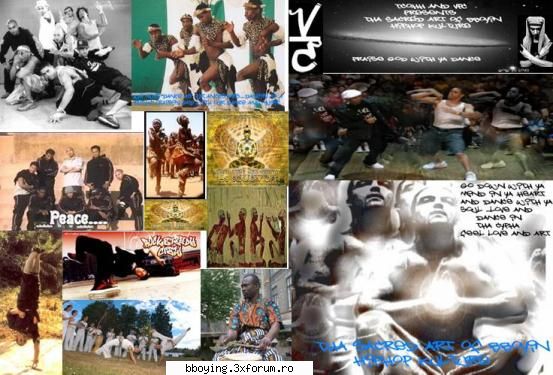
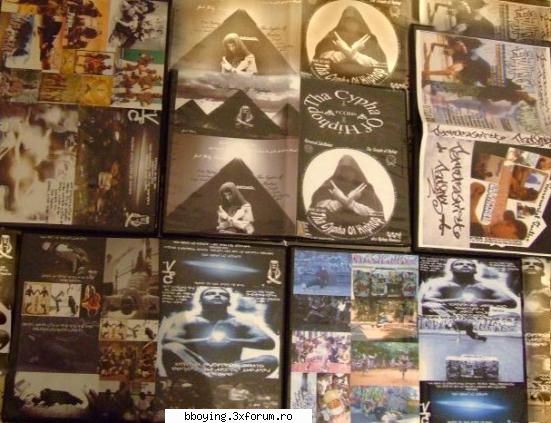
vpc brings you a new hiphop material on dvd ...tha sacred art of bboyin hiphop real footage aboutVPC brings you a new HipHop material on DVD ...Tha Sacred Art Of Bboyin HipHop kulture...includin real footage about tha art of Bboyin.... peace and much love
31.07.200657.8KB

 
all the energy all the powa all the is from divinity true essence of hiphopAll The Energy All The Powa All The Inspiration is from Divinity
18.11.200644KB
2 great headz ...one love...one art... deejay ... spin that shit!2 great headz ...One Love...One Art...
14.09.200614.2KB
one cypha one art one art two turntables and aOne Cypha one Art One Art
16.10.200653KB
dance (from old french dancier, perhaps from frankish) generally refers to human movement eitherDance (from Old French dancier, perhaps from Frankish) generally refers to human movement either used as a form of expression or presented in a social, spiritual or performance setting. Dance is also used to describe methods of non-verbal communication (see body language) between humans or animals (bee dance, mating dance), motion in inanimate objects (the leaves danced in the wind), and certain musical forms or genres. Origins of dance Main article: History of dance Unlike some early human activities such as the production of stone tools, hunting, cave painting, etc., dance does not leave behind physical artifacts. Thus, it is impossible to say with any certainty when dance became part of human culture. However, dance has certainly been an important part of ceremony, rituals, celebrations and entertainment since the birth of the earliest human civilizations. Archaeology delivers traces of dance from prehistoric times such as Egyptian tomb paintings depicting dancing figures from circa 3300 BC and the Bhimbetka rock-shelter paintings in India. One of the earliest structured uses of dance may have been in the performative retelling of mythological stories. Indeed, before the introduction of written languages, dance was one of the primary methods of passing these stories down from generation to generation. Another early use of dance may have been as a precursor to ecstatic trance states in healing rituals. Dance is still used for this purpose by cultures from the Brazilian rainforest to the Kalahari Desert. Origins of Sri Lankan dances goes back to immemorial times of aboriginal tribes and "yakkas" (devils). According to a Sinhalese legend, Kandyan dances originate, 2500 years ago, from a magic ritual that broke the spell on a bewitched king. Many contemporary dance forms can be traced back to historical, traditional, ceremonial, and ethnic dances. Dancing and music See also: List of dances and :Category:Music genres Although dance and music can be traced back to prehistoric times it is unclear which art form came first. However, as rhythm and sound are the result of movement, and music can inspire movement, the relationship between the two forms has probably always been symbiotic. Many early forms of music and dance were created and performed together. This paired development has continued through the ages with dance/music forms such as: Jig, Waltz, Tango, Disco, Salsa, Electronica and Hip-Hop. Some musical genre also have a parallel dance form such as Baroque music and Baroque dance where as others developed separately: Classical music, Classical ballet. Although dance is often accompanied by music, it can also be presented independently or provide its own accompaniment (tap dance). Dance presented with music may or may not be performed in time to the music depending on the style of dance. Dance performed without music is said to be danced to its own rhythm.
26.10.200625.6KB

 
one is art learn the history of hip hop dance pioneersOne Love...Bboyin is Art
14.09.200612.1KB
peace and much love brothaz true essence of hiphoppeace and much love brothaz
02.08.200633KB
:nod: beat'box:nod:
25.09.200634.1KB
november = hip hop history month !! 

hip hop history month

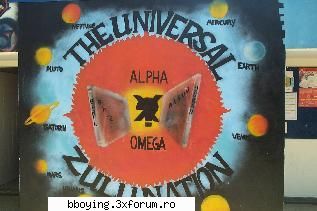
the universal zulu nation calls on theNOVEMBER = Hip Hop History month !! HIP HOP HISTORY MONTH The Universal Zulu Nation calls on the World to recognize the whole month of November as HIP HOP HISTORY MONTH! The official birthday of the Universal Zulu Nation is November 12, 1973. The official birthday of Hip Hop is November 12th, 1974. With consideration to the above mentioned dates, nothing makes more sense than to celebrate Hip Hop culture and it's history during November, which is exactly what the Universal Zulu Nation has been doing for over 27 + years. November is also significant in the fact that it kicks off the "indoor jam season". The Hip Hop community jams, enjoyed outdoors in the parks, throughout the Summer, had to move indoors for about 7 months to community centers, gymnasiums, schools etc. for the Fall and Winter seasons. The Hip Hop World should recognize this month and pay tribute to those who laid the foundation and paved the way as well as to those who continue to preserve the rich tradition of the culture. Of course, The Zulu Nation appreciates all efforts to preserve the whole of Hip Hop culture, including any days or weeks set aside to conscientiously appreciate Hip Hop, but would rather that all of these days and weeks combine to celebrate in unity every November as the tradition has been since the beginning of this culture. Founded by the godfather of Hip Hop himself, Afrika Bambaataa, The Universal Zulu Nation is the world's oldest, largest and most respected grass roots Hip Hop organization. It's members and supporters are Hip Hop's most famous and legendary artists. True school enthusiasts travel from all around the world to be in New York City, in November, for the annual Zulu Hip Hop Anniversary, the only true Hip Hop Anniversary since the beginning. The Anniversary hosts a positive Hip Hop community coming together from all walks of life to celebrate the true essence and excitement of what Hip Hop was meant to be. Many artists who have donated their performances to help raise funds at Zulu Hip Hop Anniversaries have gone on to become legends and many of these legends continue to return to NYC, in November, to give back to the core community who supported them since their careers began. A Little Background Information: In the early years of the culture, the movement went untitled until Afrika Bambaataa, started calling it "Hip Hop", a term originated by Lovebug Starski. In the 70's, ten years prior to it's gaining global recognition, Hip Hop was a celebration of life gradually developing each of it's elements to form a cultural movement. Due to it's energy, dynamics, and momentum, Hip Hop culture has become, ultimately, a key to upliftment and reformation, as well as a billion-dollar industry. From the 80's on, the Rap industry and media have helped to make the terms "Hip Hop" and "Rap" synonymous, leaving out the other elements included in the culture. In light of this enormous oversight, the Zulu Nation promotes the "5th element" of Hip Hop, which is KNOWLEDGE, and actively tries to educate the masses about the history and foundational elements of true Hip Hop culture. Bambaataa declared: "When we made Hip Hop, we made it hoping it would be about peace, love, unity and having fun so that people could get away from the negativity that was plaguing our streets (gang violence, drug abuse, self hate, violence among those of African and Latino descent). Even though this negativity still happens here and there, as the culture progresses, we play a big role in conflict resolution and enforcing positivity." Hip Hop is the Vehicle to Deliver Innumerable Lessons! Afrika Bambaataa doesn't believe that Hip Hop heads should just have knowledge of Hip Hop. He promotes and proves that Hip Hop can be used as a vehicle for teaching awareness, knowledge, wisdom, understanding, freedom, justice, equality, peace, unity, love, respect, responsibility and recreation, overcoming challenges, economics, mathematics. science, life, truth, facts and faith. The Elements: Hip Hop culture is defined as a movement which is expressed through various artistic mediums which we call "elements". The main elements are known as MC'ing (Rapping), DJ'ing, WRITING (Aerosol Art), SEVERAL DANCE FORMS (which include Breaking, Up-Rocking, Popping, and Locking) and the element which holds the rest together: KNOWLEDGE. There are also other elements such as Vocal Percussion/Beat Boxing, Fashion, etc. Within the past 20 years, Hip-Hop culture has greatly influenced the entertainment world with its creative contributions in music, dance, art, poetry, and fashion. Due to their lack of knowledge about the whole of Hip Hop culture, many of our world's youth are mistaken in thinking that activities such as: smoking blunts, drinking 40's, wearing a designer label plastered across their chest, carrying a gun, or going to strip clubs, are "Hip Hop". Hip Hop is being portrayed negatively by many artists who work in the element of Rap (emceeing), and this negativity is usually instigated and promoted by the record industry and various other corporations who exploit the culture at the expense of the youth's state of mind and morality. The Universal Zulu Nation believes there is a difference in speaking out about negativity (activism) and promoting it as a desirable lifestyle. Gangsters, pimps, playas, hustlers, niggers, spics, and many other derogatory words once used against us are now self employed in our everyday vocabulary. Our ancestors who have fought and died trying to free us from these sicknesses and slave mentality are probably turning over in their graves! Bambaataa asks you to just think about this, "How in the hell did we turn from GODS to dogs?" Afrika Bambaataa encourages you to do more research about our story, his/her-story, and what you think is your mystery is actually your history. Where are our Hip Hop thinkers, lawyers, holistic doctors, scientists, agriculturalists/herbalists, revolutionaries, politicians, judges, researchers, teachers, police, army, accountants, anthropologists, etc. Where is our own Hip Hop Museum? Many talk the talk but don't walk the walk. Many straight out sell-out to the liberation of our people as well as to all humans on the planet so called Earth! He also encourages you to do research on any Hip Hop organization that deals with consciousness and the upliftment of all people. To all those who purposely make up your own history and lie about the culture- DO YOUR RESEARCH! You can contact the Universal Zulu Nation at their main website and to explore links to other Zulu chapters and websites. Thank you in advance for forwarding this announcement to everyone you know! Peace and Blessings Afrika Bambaataa & the entire Universal Zulu Nation. As we say in Zulu - respect the many UNIVERSES and especially MOTHER EARTH PS: If you are planning any events in honor of Hip Hop History Month in November please feel free to write to the webmaster at ZuluNation.com to keep us up-to-date! THE 5TH ELEMENT OF HIP HOP CULTURE KNOWLEDGE, CULTURE, OVERSTANDING FACTOLOGY VS. BELIEFS NEW YORK STATE SENATE RECOGNIZES NOVEMBER AS HIP HOP HISTORY MONTH STATUS: J6602 ESPADA Resolutions, Legislative TITLE....Honoring the rich traditions of Hip Hop Culture / 12/11/02 REFERRED TO FINANCE 12/17/02 REPORTED TO CALENDAR FOR CONSIDERATION 12/17/02 ADOPTED BILL TEXT: LEGISLATIVE RESOLUTION honoring the rich traditions of Hip Hop Culture WHEREAS, It is the sense of this Legislative Body to pay tribute to those individuals of historic and artistic significance whose creative talents have contributed to the cultural enrichment of our communities and our Nation; and WHEREAS, The month of November is now recognized by the State of New York as Hip Hop Culture History month; and WHEREAS, Afrika Bambaattaa, was the first Hip Hop activist, who once said, "Hip Hop Culture was created to be about peace, love, unity and having fun, in order to help people to get away from the negativity that was plaguing our streets"; and WHEREAS, Even though this negativity still exists, as the culture progresses, Hip Hop Culture plays a big role in the conflict and resol- ution by encouraging positivity; and WHEREAS, Hip Hop is made up of Rap, DJ'ing, Break dancing, Up-Rocking, Popping, Locking, Vocal Percussion, and Beat Boxing; and WHEREAS, The godfather of Hip Hop culture is Afrika Bambaattaa; and the world's oldest, largest and most respected grass roots Hip Hop organization is the Universal Zulu Nation; and WHEREAS, Hip Hop culture is a positive tool for social change; and WHEREAS, The inception of Hip Hop culture in the Bronx was during the early 1970's; it has been a vehicle for breaking down racial barriers on a world wide level; and WHEREAS, Hip Hop is a means for overcoming challenges, and a means for teaching awareness and knowledge, inspiration and wisdom; and WHEREAS, During the 70's, Hip Hop was a celebration of life, gradually developing to form a cultural movement as a result of its dynamic energy and momentum; and WHEREAS, Hip Hop culture has become, ultimately, a key to uplift the spirit of many; and WHEREAS, Hip Hop culture has greatly influenced the entertainment world with its creative contributions in music, dance, art, poetry, and fashion; and WHEREAS, Hip Hop is the vehicle to deliver innumerable lessons and continues to provide for unity, love, respect, and responsibility; and WHEREAS, D.J. Afrika Bambaattaa and the Universal Zulu Nation, Cool Herc, Grandmaster Flash, the Cold Crush Brothers, Cool Clyde and Light- nen Lance, Nolie Dee, Maria Davis and Mytika Davis are true inspira- tions; and WHEREAS, It is the sense of this Legislative Body, in keeping with its time-honored traditions, to recognize and pay tribute to those organiza- tions which foster ethnic pride and enhance the profile of cultural diversity that strengthens the fabric of the communities of New York State; and WHEREAS, It is the sense of this Legislative Body that those who enhance the well-being and vitality of their community and have shown a long and sustained commitment to excellence certainly have earned our recognition and applause; now, therefore, be it RESOLVED, That this Legislative Body pause in its deliberations to honor the rich traditions of Hip Hop Culture; and be it further RESOLVED, That copies of this Resolution, suitably engrossed, be tran- smitted to Afrika Bambaataa and all of the participants of the Hip Hop Culture Celebration. This November for Hip Hop History Month the Temple of Hiphop will be celebrating the accomplishments of Afrika Bambaataa and his contributions to Hip Hop Kulture. All Temple Members are encouraged to assist Zulu Nation and the Universal Federation for the Preservation of Hip Hop toward Afrika Bambaataa’s vision of peace, love , unity and safely having fun.
16.10.200613.3KB

 
cold crush brothers: as one of the first hiphop crews to come out of the bronx in the late 70's, theCold Crush Brothers: As one of the first HipHop crews to come out of the Bronx in the late 70's, the Cold Crush Brothers raised the standard for the groups of the time. With their synchronized routines and flashy costumes, the Cold Crushers were definitely the crew to see live. As the Crushers stand today, there members include DJ Tony Tone (Angelo King), Easy A.D. (Adrian Harris), DJ Charlie Chase (Carlos Mandes), GrandMaster Caz (Curtis Fisher), Almighty KG (Kenneth Pounder), and JDL (Jerry Dee Lewis). The original crew included Chase, Tone, A.D., WhipperWhip, Mr. T, and Dotarock. This lineup never recorded anything together. WhipperWhip and Dotarock left and became members of the Fantastic Five. DJ Charlie Chase was one of, if not the first Latin American DJ to get involved in the HipHop movement. He was raised in a family of musicians, and was a bass player before he became a DJ. He got his first chance to start spinning with the DJ crew Tom and Jerry. They would play disco records and let Chase get on in the middle of their sets. Crowds of the times were getting tired of disco, so when the party started dying, the two DJ's Tom and Jerry would let Chase spin his HipHop albums to get the crowd going again. Most of the time, after hyping the crowd back up, the other DJ's would make Chase get off the tables so they could look like they were the party pleasers. After leaving Tom and Jerry, Chase took to the streets to build his own reputation and following. He got up with a few MC's around the area such as Cisco Kid, and RC. RC introduced Chase to Tony Tone one day, and that was the beginning of the Cold Crush. Tony Tone was part of the Brothers Disco (DJ Baron and DJ Breakout) at the time and took Chase to one of their shows. It was the first all HipHop show Chase had ever been to, and he loved it. Tony actually came up with the name Cold Crush, after waking up from a dream one night. Tone said in the book Yes, Yes, Ya'll ," Cold Crush, when I thought up the name meant anybody steps in our way, they get crushed, cold crushed, no remorse. Once we get on stage, it's no friendship, we got to walk off the stage victorious." Eazy A.D. was first part of the group the As-Salaam Brothers. They broke up, and he joined the Cold Crushers. Grandmaster Caz (one known as the DJ Cassanova Fly) hooked up with the Crush after his crew, the Mighty Force disbanded. Dotarock and WhipperWhip also came along for the ride. It just so happened that Kevie Kev and the guys from the L Brothers were looking at the two MC's to join their crew. Back then, it was all about the system you had to perform on, the louder the better, and Chase and Tone’s system wasn't the best of the time. So, Data, and Whip chose the crew with the better sound, and joined the L Brothers to form the Fantastic Five. Later the Cold Crush even took in some of the Furious Five MC's, after they were pissed at Grand Master Flash for taking too much of their money. They later went back to Flash, only after he had them ruffed up. What a world. One of the most funked up parts in the history of HipHop, involved GrandMaster Caz and the first mainstream group of HipHop, The Sugarhill Gang. As the story goes, Sylvia Robinson of SugarHill Records heard a demo of the Cold Crush with Caz rocking the mic, and decided to make a rap album. She over heard a bouncer of a local club named Hank, rapping along with a Cold Crush tape and asked him to join her new group. Now, Big Bank Hank as they called him, was a friend of the crews, who helped them get the big sound system that they needed. So Hank goes back to Caz, and asks him if he could use the lyrics he wrote. Thinking that after he let him use the lyrics, he would help bring him into the SugarHill Gang, Caz let him use them. As history goes, Hank goes on to be part of the first platinum HipHop album ever "Rappers Delight", with Caz's lyrics. Caz never sees a dime from Hank or SugarHill, and doesn't even get credit for his rhymes. It's a major lesson to learn in the industry. Never let anyone use your stuff if your not getting something out of it. Cold Crush started to attract a lot of attention from other crews, and was approached constantly to battle. Caz one said, "It's like I don't care if God, Moses and Abraham, come down here to battle us, we bustin' they ass". Some of their most famous battles were against Grand Wizard Theodore and the Fantastic Five. Both of the crew were featured in the film Wild Style, and were both on the soundtrack. They were the first crew to sign with Tuff City, a label under CBS records. The Crushers went on to release numerous singles like, "The Weekend, "Punk Rock Rap", "Fresh, Wild, Fly, and Bold," and "Heartbreakers." The group never recorded a full-length album though. The Cold Crush broke up in 1986, but today are still affiliated with one another. The members have released solo material throughout the late 80's and 90's such as KG's and Tony's 1988 album "Troopers", and GrandMaster Caz's 2000 release "MC Delight", which was an album done as a comeback for not receiving credit for "Rapper's Delight". The group as recently performed at the grand opening of the Experience Music Project in Seattle, and brought down the house during the Rock and Roll Hall of Fame and Museum's "HipHop Nation: Roots, Rhyme and Rage" exhibit when it opened at the Brooklyn Museum of Art in Sept. of 2001. Grand Wizard Theodore & the Fantastic Five: Born Theodore Livingston, Grand Wizard Theodore (with such groups as the L Brothers and GWT and the Fantastic Five), was a pioneering DJ who perfected the art of needle dropping and was the first to invent the scratch. Although he is best known for both foundation-forming techniques, Grand Wizard Theodore and his crew, go deeper than his famous first cut. Grand Wizard Theodore learned the art of DJing from his older brother ("Mean Gene" Livingston), and Grand Master Flash, who in the early 70's performed together. A young Theodore started helping his brother and Flash out, by doing things like carry records and helping set up the sound systems. Eventually, Theodore even started pulling the records that Flash would need during his sets. The two older DJ's became so confident in Theodore's taste of beats; they would send him to local record shops to pick out new records for them to spin. One record shop offered free 45's to people who beat a certain score on a pinball machine. Theodore would sit and play pinball, listening to the storeowner playing the newest records behind the counter, beat the score needed for the 45, then pick out the hottest new tracks he heard being played. In the summer of 1975, as the story goes, Theodore was playing records too loud, and his mother started to bang on the door, telling him to turn it down. When his mother came through the door, he stopped the record with his hand, and started moving the record back and forth. When she left the room, Theodore knew he had invented something no other DJ had ever done, and the "Scratch" was invented. He kept perfecting the new innovation so it would blow people away when he unveiled it. The practice of "needle dropping" as Grand Master Flash coined it, came from Theodore's dislike of having to keep back spinning records to reach the break beats. He started picking the needle up, totally off the record, and placing the needle back down at the being of the break. He would watch the thickness of the grooves on the records to accomplish this feat, something many DJ's still to this day can't perfect. Theodore's skills were developing so fast that his brother "Mean Gene" started getting jealous, at one point threatening to leave Flash if "his little brother got on the set.� Flash took it upon himself to help craft the young DJ's style and technique. While Gene was gone, Flash would let Theodore watch and learn the basic skills, and then let him work on his own. Refusing to keep Theodore a secret, Flash finally thought Theodore was ready for a crowd, and let him get on the tables at the 63rd park. The crowd went crazy for the little DJ. People knew he was going to do big things in the future. After the demise of the L Brothers (Theodore's first group with his brother), he formed Grand Wizard Theodore and the Fantastic Five. The group consisted of Theodore and MC's Waterbed Kev (Kevin Strong), Master Rob (Robin Strong), Prince Whipper Whip (James Whipper), Ruby Dee (Rubin Garcia), and Dot-A-Rock (Darryl Mason). Whipper Whip and Dot-A-Rock (known together as "Salt & Pepper) were in a group called The Mighty Gestapo Crew, with DJ Kenny B, and Count D and the Funky Phase Four MC's. They were also members of the original Cold Crush Brothers. One of the original members of the Fantastic Five was an MC called Busy Bee. Ruby Dee eventually replaced him because of Busy's want to be a solo artist, and because he didn't get along with Kev. Theodore and the Fantastic Five wanted their performances to be totally original and different. They would were fresh white tuxedos and perform intricate routines with their moves and rhymes. The group tried recording a song with a band, for the record label Soul On Wax Records, but in the end were disappointed, and ended up not using it. They were now dead set on never signing a record deal. They were happy with their success as a live group, and that was all they needed. One of their biggest shows was a battle against the Cold Crush Brothers at Harlem World. At the end of the night the crowd decided whom won by applause and the Cold Crush was just that, crushed. This was memorialized by the release of the battle tape a few years ago. The two groups were rivals, but respected each other’s skills. It just so happened that they were the two most popular groups around, and both were unsigned to any record labels. The two groups would later go up against each other in the cult film, WildStyle, but on the basketball court. Grand Wizard Theodore was also involved in making the soundtrack for the film. Grand Wizard Theodore to this day is still part of the HipHop culture. >From judging DJ battles, to teaching the skills of the DJ to up and comers. He was inducted to the DMC Technics DJ Hall of Fame in 1998, and has received a Lifetime Achievement award from the International Turntablists Federation. Theodore as also served on the panel of the Rock and Roll Hall of Fame and Museum's HipHop Conference in 1999, and 2000. He's is one of the many DJ's honored and starring in the documentary independent film "Scratch". Afrika Bambaataa Discography Year, Title, Label 1986 Planet Rock - The Album Tommy Boy Records 1986 Beware (The Funk Is Everywhere) Tommy Boy Records 1987 Death Mix Throwdown Blatant 1988 The Light EMI America 1991 The Decade of Darkness 1990-2000 EMI Records USA 1992 Don't Stop... Planet Rock (The Remix EP) Tommy Boy (EP) 1993 Zulu War Chant Profile (12" 1993 What's the Name of this Nation?... Zulu Profile (12" 1994 Feel the Vibe DFC (12" (with Khayan) 1996 Jazzin' by Khayan ZYX 1996 Lost Generation Hot 1996 Warlocks and Witches, Computer Chips, Microchips and You Profile 1997 Zulu Groove Hudson Vandam (Compilation) 1998 Agharta - The City of Shamballa Low Spirit (12" (with Westbam) 1999 Electro Funk Breakdown DMC 1999 Return to Planet Rock Berger Music 2000 Hydraulic Funk Strictly Hype 2001 Electro Funk Breakdown DMX (Compilation) 2001 Looking for the Perfect Beat: 1980-1985 Tommy Boy(Compilation) 2004 Dark Matter Moving at the Speed of Light Tommy Boy Afrika Bambaataa Afrika Bambaataa was born on April 10th 1960 as Kevin Donovan in Bronx, New York. Known as one of the "Godfathers" of Hip Hop culture, he was one of the 3 original DJs to create the break beat movement in the mid to late 70's. As a founding member of the Bronxdale area street gang the Savage Seven (later known as the Black Spades because of member growth) he came to power in the position of Division leader. After a chance trip to Africa that changed his life forever, as well as changing his name to Afrika Bambaataa Aasim, he decided to use his power in the streets to help those involved in the gang lifestyle change their ways and play a more positive roll in their community, and their lives. He began to develope a group called The Organization, a group of rappers, graffiti artists, B-boys, and other people that politically and socially aware of the real problems facing the world. This group eventually became The Zulu Nation (inspired by Michael Caine film, Zulu and his studies African history) and was involved in creating a positive Hip Hop culture from the early 80's up till the present. Bam's early use of drum machines and synths, were pivotal in creating a new sound for Hip Hop and R&B. His style of music which he dubbed "Electro Funk" paved the way for other musical genres like early Techno, House, Electronica, and the Miami Bass sound. He was also known for his record collection that he played at shows which you could hear Ennio Morricone to Kraftwerk's "Trans-Europe Express" which was the main melody of Bam's "Planet Rock". Bam is also responsible for helping many young cats get into the music business, with his connect to Tom Silverman at Tommy Boy Records, a label that was very successful in the 80's and 90's. In the early 80's he created a sort of super group called the Soul Sonic Force. Soul Sonic was made up of the groups and people that Bam help form and performed with. These groups within groups were mostly all members of the Zulu Nation. Bambaataa, in 1982, was the first person to ever organise the a Hip Hop tour in Europe. He brought with him all the elements of the culture represented by the heavyweights of the time such as, DJ Grand Mixer DS.T, graffiti artists Fab 5 Freddy and Phase 2, and B-boy and girl groups the Rock Steady Crew, and the Double Dutch Girls. This tour created the international scene which even still today is felt by Headz across the globe. With a resume that runs consistently through 2 decades, Bam is still creating music and helping the youth of the world to see the positive light of equality, and hope. He is one, if not the, hardest working man in Hip Hop throughout it's history and even still today. Kool DJ Herc Known as the Godfather of Hip-hop, Kool DJ Herc (born Clive Campbell) was born in Jamaica april 16, 1955. Using 2 copies of his records, he pioneered the art of using break beats while DJing. These were the juiciest percussion and straight rhythm sections of the songs he played. they also were the best parts to dance to, so he started extending the songs to keep the party going all night long. His love for music started while listening to American music like James Brown while living as a young boy in Jamaica. Then he moved to the Bronx in 67, at the age of 12. His first DJing gig was at his sisters birthday party, and after that he started throwing parties in his families rec room. This was the beginning of the B-boy era, a phrase he actually came up with. Early on he knew the importance of keeping the crowd hype. He knew all the types of songs that keep people moving, and also learned the importance of keeping it fresh. When he started Djing, the most popular music was Disco. In reality, the youth of the ghetto's in New York were into a much different sound and scene. Kool Herc catered to all types of musical tastes (from R&B, Soul, and Funk, to underground Disco). In the mid 70's he started playing the clubs of N.Y.C, such as the Twilight Zone, and the Hevelo. At this time his reputation was huge for having the best sound system of any DJ around (this was the first form of "battling" musically). During this period Many of the up and coming DJ's like Afrika Bambaataa, and Grand Master Flash were attending Herc's parties or getting burnt at them. There are numerous stories of battling Herc and his system and getting embarrased or getting blown off the stage. Many elements of Hip-Hop were either created, or refined by Kool DJ Herc. the Breaking, the Djing, the MCing all grew to take over the culture of B-boys and Headz everywhere. Its true that alot of people give respect to Herc for everything he's done for Hip-hop, but not enough of the current youth, or the current peps in the industry do. I wonder if the so called artist that plague the airwaves, and television today really know where their opportunities came from. I myself would like to thank Kool Herc personally, and maybe one day will have the chance to. ar fi bine dak s'ar citi macar jumtate din ce-i aici...da ma indoiesc...
14.09.200630KB
b-boying became even more popular in 80s. it was first introduced to out side of new york city andB-boying became even more popular in 80s. It was first introduced to out side of New York CIty and the rest of world by a movie ‘Flashdance’ in 1983. Even though it was not a b-boy movie, a short scene which featured b-boying and popping on a street had a great impact and was enough to inspire people to start b-boying all over the world. There were other movies to, like ‘Wild Style’ and ‘Beat Street,’ but these movies weren’t as commercial as ‘Flashdance’. Breaking crews like the Rock Steady Crew soon became famous worldwide as the media became attached to this interesting new dance. Crazy Legs, from the RSC is still recognized as one of the greatest b-boys of all time. The media attachment to breaking only lasted till the mid 1980’s, but breaking didn’t die. B-boys went into the underground were they continued to master there b-boy techniques. 20 years later breakdancing has made its way all over the world and is now as popular as ever. Nowadays, B-boy events such as B-BOY SUMMIT and ROCK STEADY ANNIVERSARY are organized every year and many b-boys from all over the world get together and keep the culture alive and even try to take it into next level. Want to know more about breakdancing? Or maybe even learn how to be a B-boy? Check out the following links:
14.09.200625.4KB
the mighty 4 is honored to present you with an exclusive interview with the living legend himself,The Mighty 4 is honored to present you with an exclusive interview with the living legend himself, KEN SWIFT. Peace Ken drop a lil info for the cats at home.. Name: Ken Rok,aka,Kid Zoom,aka, MadMugs,aka, Ken Ski,aka,Prince Ken Swift,aka, Kid Extra Nasty,aka,Ken Swift Age: 35 Location: Money Island, NYC, Upper West Side Manhattan RSC, NYC, BreakLife NY Tell us about the first time you ever seen B.boying and what made you get into it? The first time I saw bboyin was 1978, ..at first I was shown a shuffle by a friend, and then soon after that I saw it a jam in a party thrown at a church hall and at a jam around my block. I think Ron Daris was the first rawbboy I saw, and Im using the term bboy in its true context. We were into anything and everything around the way.We were wild and were into playin in the pump, playin ringaleevio, kick the can, hot piece a butter, tag no touch,bike stunts, playin in abandoned buildings and having rock fights, ...so,...when I saw the rockin and how different ,radical and high energy it was, it fit right into to the type of stuff we was doin. I was already writin graffitti in the streets and motion taggin so, through that scene I was introduced to breaking. Who are your influences/inspirations? Past, ..Greggo,(originality, speed, flexibility) Ron Daris, (flips) The Light Brothers, (flips)Kid Sorceror, Deno Rock (RIP), Kid Terrific, Markie Dee (RIP), The #1 Sure Shot Boys, DominicanFreddy, Shakie, Magnetic (power, spins), Kid Galaxy,(power, spins) Buck 4 (RIP), Spy, Trac, Ice Ice, Pierre, Lil Lep, Pex, DST, Mr. Freeze, Frosty Freeze,(character) Crazy Legs, Kid Spy & Migo (for the UpRock), Lenny Len,(footwork).........................Presently,........too many to mention. What were the golden years of B-boyin in NY to you in your opinion? The Golden years had to have been before I came in the mix, ....those where the raw years of early development, my golden years were 80 to 83, I was in my raw no thinking stages, no fear, thirsty to battle, off the dome, up & coming mode. A lot of the people I was around were better than me so I was Lucky. When you first began dancing, did you ever dream that it (bboyin) would get to where its at today? No, i didnt look ahead at all..no dreams of fame stardom etc, ....we were just doin what was happenin, ..to me, thats like sayin, "did you ever dream that ridin a bike would get to where its at today". What is your definition of foundation? I believe that foundation consists of the essential mentality combined with moves from the first years of development, ............foundation to me was that person reacting and dancing to a song with no shame/that person with the flava gears, that when you looked at them you knew they was ready/the attitude that you was the one who would out dance the others at the jam/the one that did something incredible that you never saw before....the mentality stands out to me, ..because when you apply those characteristics to moves, those are what make the moves personal and dope. I mean, if I show you an old "foundation move" and you dont flip it with your adobo on it, its gonna look wack. The kids back then just had that flava thats kind of unexplainable, thats why you loved to see them rock, I dont think they applied too much thought to it, they just went out and went bananas when the music came on, ..thats the foundation! Lettin the music rock you, ..letting go. Alot of the best bboys were stick up kids and ill street dudes who could care less about fame........Now, there are "foundation moves", but being that I started a lil later on, my opinion on it can be debated, .....I see it being, ...circular ftwk patterns, shuffles, chairs, babies, swipes, sweeps, spins- (head, knee, butt, back, etc.) back rock, single tracs, bridges, cork screws. Rockin' has been around before B.boyin', when did you first get to see cats Rock (Brooklyn rock etc.) and how do you feel about the artform of Rockin'? To me, when you say "rockin has been around before B.Boying" to me its a lil funny cause when I think of rocking, I think of breaking, ...........I really didnt call it bboying that much when I first started, ...,even though when I first heard about breaking, my friend told me, "check out this bboy shit".................so I guess you mean uprocking, my older brother Speedy used to run with a crew called The #1 Sure Shot Boys, they were from Amsterdam Houses on 61st. St. in Manhattan, ..he was 4 years older than me, ...I saw them rock a lil bit, but they broke mostly at the parties, ...I was younger so I was looked at like the lil shorty goin for his on the breakin tip, they were one of my biggest inspirations, ...other crews were The Four Aces, The Midnight Rockers, The Da Boys, and some members from Rockwell Association. They hung out around 83rd st. & Amsterdam, I lived on 97th & Amsterdam. I saw more Up Rock when I went to USA Skating Rink in Queens, the cats there were crazy dope, ..but I saw so little of it, that when we went back to my block, we had to try to remember it which was hard because we didnt have someone to show us, ..but then again we wouldnt have asked someone to show us anyway, ......so, ..we kind of developed a different type of style and delivery, we were primarily into the breakin but we did our lil Up Rock here and there. Thats the reason why we called it Brooklyn Rock, I was told that it started in Brooklyn so, ...nuff said, ...heads came up in the nineties and tried to diss me saying I was doing it wrong , but, ..with all due respect (cause I have the utmost respect), the dudes that popped the shit didnt step to me, I stepped to them. The first time I felt like one dude edged me, ..but after that I learned alot from that battle and when we went at it again I felt like I shook shit apart, .....regardless of that, ...in my heart I know they can Rock better than me. Ive been blessed to be able to get lost in music with that dance, and some of the music is so incredible that it gives you no choice but to Rock, ...I wish I wouldve came up with those dudes cause I know I wouldve been tight with that style. I still havent figured that dance out, when I watch the older legends rock, to me, I feel like a rookie, I have the ultimate respect. In my opinion, only the people that came up with that dance in NY in the early seventies, can flip that dance correctly, once again, over time people have seen moves and steps and have done them, but, there so much more to that dance, ..the songs structured alot of what was done, you had to be there in those ancient parties and jams to learn that. My favorites, Eddie from 93rd. & Columbus Ave., he was partners with Kid Galaxy's younger brother, they battled together with us against Dynamic Rockers at Liincoln Center, they were called Migo & Amigo, ... even though he was from Manhattan, he hung out in Brooklyn and he was outta control nasty in that dance, he's in the Planet Rock video battling on the checkered floor, .....then theres Eddie Ed aka, Kid Spy ...he was my bboy partner at one point, ....his Uprock was ill, ..he was also in the Planet Rock video, ..he's rockin next to a tv on the floor, he does this jerk forward then drops back into a split, and shoots himself in the head, check the video when you can, its sick. The other favorite is Spice One from Flatbush, Ive had the opportunity to meet him through Burn 1, to me he was tight beause he knew most of the styles from the different neighborhoods in BKlyn. Ive seen him rock and he definetly opened me up, ...also Sammy from Incredible Breakers, we practiced together a few times and I gained tremendously from that. Also, Chino & Brian, Incredible Breakers/Rockers Revenge,....these dudes are straight offiical hardcore brothas, ...Chino is a mad man with that dance, he's ill, those kids is Bronx Official 4realz. What generation of B-boys are we in today? I dont know!!?? maybe 5th generation .....72 -75 beginning,, 75 -84 most influential, overall structure point, 84-89 world continuance, 89-96 home & abroad B.Boy comeback, 96-01 event expansion/video era & retro commercial exploitation/positive rapid dance advancement ......................my opinion of course. What was your most memorable battle? A lot of good ones,...........but it has to be ..Rock Steady vs. Floormasters at Negril in NYC I think that was 82. Also RSC VII Gems vs a club full of BBoys in Tokyo 1997. Who were some B-boys from NY that didnt get much limelight but definitely deserved thier rightful dues? (I hear about cats like German, Float, Incredible Breakers etc.) You gotta understand how big breaking was in NY at that time, and how big the five boroughs are, ..you had BX, Manhattan, Bklyn, Queens, Long Island, Staten Island, ...were talking massive numbers of mad hyped up kids, ...to think about it if you are mentioning the names above, that means that they were noticed, ..but think about it like this, ..every neighborhhod had an incredible bboy in it , ....were talkin about 20 block radiuses, ...theres dudes that we'll never hear of that were amazing. Float for sure is one of a kind, ...you need an interview with him on this site,....his dancing and top style is top of the line, ..he had he ability to make everything he did look effortless, you rarely saw him struggle with his moves, ..a true innovator of power moves,...plus, he had dope footwork, ...if he was inthe mix I think he would be a definite contender even now. There were alot of dope crews, ....peace to ScramblinFeet also. When did you first come to the Westcoast and get a glance of B-boys out west? Its funny because I was born in Brooklyn but moved when I was almost two years old to California, ..my father was in the Army, so I lived in Saramento, Eureka, Palmdale, Arbuckle, and San Francisco until I was six years old,..then I moved back to NYC. The first time I went to Cali. to break was 84, and by that time people had been exposed to breaking already. We, RSC, judged A Big BreakDance Contest. I remember seeing the most incredible Popping/Boogaloo etc crews, they did like 6 minute choreographed shows. We saw like 50 groups. I was completely blown away and never saw it like that before. We also performed at Magic Mountain, were we ran into OZ, who had left NY and came to LA, and was real popular with the breakers. The breakers were doing incredible spins, side moving ufo's, inverted elbow spins, blazing backhand 90's some ill original stuff. I met Tech, ..from Tech & Sway, ...he was with The San Francisco Ballet Breakers, .......the scene was definetly open, ....but most of the dancers were into power moves and spins. Do you feel the European scene played a major role in keeping B-boying alive? Without a doubt. ...Id rather say they played a role in keeping "Hip Hop" alive overall .......Europe held it down with all the elements, ..much respect, ......I think Europe and other countries played a major role in keeping it alive......but I have to say, back then, alot of people didnt know what real B.Boying was, and even though there were a few that were official, the majority of people were just into spins,....from the movies, most people drew to the spins and air stuff when they got into breaking, ...there were'nt that many people doing footwork & dancing to the beat. Idont say that as a disrespect in any way, but thats the way I saw it,...Europe has a great history of its own, ..Im sure there were a few people breaking out there in the early eighties,....we went to Paris and the U.K. in 82 and when we went back after Beat Street, it was outta control, ....we toured Germany in 84 for six weeks and people went coconuts. Australia also has to get its props too, ...even Japan has a thorough history.....put it like this whatever country that got a hold of Beat Street and Wild Style got their dose of Hip Hop. Props to Actuel Force, Gabon, (France), Maurizio, (italy.) Swift & Storm, (Germany) Evo, (UK) Nico, (Sweden) King Bee, (UK) Emilio & Marcella (Italy), Crazy(Switzerland), Wildcat,(Denmark) Crazy A,(Japan), Machine (Japan), Hiro (Japan), Renegade, (Sweden) Tech & Karma,(Norway) Swerve, (New Zealand) Rooney (Brazil) there are so many more but,...peace to all many world pioneers and legends old and new. In the early 90's what pushed you to get back down and serious to B-boy again? I went through alot of stuff that most of you dont know about, ....I got into alot of trouble in the streets.....we're talking like 84 to 87.........but through all the madness I always reacted to music and broke when I wanted to, I didn't practice everyday and all but , ..I never felt like breaking was dead or anything like that cause if i felt it, I did it,......people have said between this year and that year this one or that one stopped breaking......................when you have something in your heart & soul, no society or situation or rumour or propaganda can stop you from feelin it, ....see, ...when media and the masses started exploiting the dance and sayin breaking was played out, ...alot of people said,,....OK, ...and stopped ........I wasnt part of the time when TV made people start, I came into it in its underground state. So it has stayed in me always regardless of what TV, Magazines or people in the street said. After Buck 4 and Kuriaki's deaths, The Rhythm Technicians were doin shows and stuff, and then we, RSC, collaborated with them on the play "So What Happens Now? In 1990, I guess what pushed me was the fact that I knew deep inside I could rock, I wasnt makin much progress but I didnt give up. I was about 160 pounds, .(my breaking weight is 135) I was tryin to get down with the updated power and air stuff, my hip was destroyed from the early eighties, and I couldnt find a swerve with my dancing. I was frustrated because I didnt feel good about my stock (moves)....., after I lost the pounds I needed to, .....around 1993 while practicin I decided to take my old moves and put attatchments on to them, while focusing more on freezes... ...after that the flood gates opened up and I was makin up a different move or combo everytime I practiced, .. I wrote down all of the moves by name and number, in 97 I recorded 94 moves, four pages of combinations and moves in different catagories, I would go to practice and run down the list and do each move twice for execution and memory, when I got to the last move I would start over again, those who used to train with me have seen me with my papers laid out on the floor in the practice. Around 1998 I stopped keeping track of my moves by writing them down cause I toured like 8 months of that year, but since then Ive made up at least 40 more combos & moves.When I started lacin kids real easy, it was scary beause I still felt like I could get better. What year did you get down with Rock Steady? I believe it was 1981 . Are you currently still affiliated with Rock Steady? Ask anyone from around my way that question and they'll laugh at you and think youre stupid. ....but the again....... In 2001 Rock Steady Crew belongs to one person, RSC is a business, ..to me "the crew" ended in the eighties. Go figure, from friends on the block just havin fun dancin to, one guy threatening the other that if he uses the name he will call his lawyers. Cmon bee, I laid the bricks son, from the get. My history is etched in stone. I rep RSC whenever and wherever I choose, I dont have to wear a shirt with letters, if you know the legacy, then that question is ludicrous. I got one thing to say to sum it up ..."Behold A Pale Horse". Being an O.G. in the game and still gettin busy in the trenches, how do you feel about the scene today and where its heading? Alot of the top BBoys who have influence right now, need to educate themselves on the history of this dance so they can understand and respect its journey,.. breaking is not a fad, it is a legitimate dance that has been and continues to be exploited and looked down on. In my opinion breaking is the "Original" dance of Hip Hop Culture. The younger generations need to know this. Unless there continues to be an educational effort in teaching the history of this dance, it will get wacker and wacker, and then it will be lost in sport and entertainment. This dance is for the communities of young people throughout the world to enjoy and also prosper from, but unless we understand what its been through, we wont know where its going. I like the dancing more than anything right now, ...its dope, and the competition level is tight, and theres so many dope and different styles flowin, mad super heroes and even a few complete B.Boys ...........................but, ..... The gossip is wack, the jealous haters are wack, the ones that lie about their history are wack, some events thrown by non bboys are wack, the NY pioneers that compromised their principles for money are wack, and the biters are wack. What's your training schedule like? My schedule depends on the time I have left over after my responsibilities with my kids are taken care of. If Im lucky If get Like 6 hours a week thats like two hours on three seperate days. When your not into your daily routines, what do you do in your free time? Believe it or not I get more free time when Im travelling than while Imin NYC. Im with my kids a lot when Im not in the mix. I like to work out with the weights every now and then, ...right now Im studying Investments, Money Management and Financial Planning. On tour I like to chill with the local people and soak up their culture & traditions. What's your all time favorite jam to bust to? Every song has a different effect on me, I think I have about ten alltime favorites, but I would have to say, it might be Apache. If you could see two crews or two particular B-boys battle it out, who would they be and why? I havent seen who's out there lately but maybe, .. Moy /Lil Rock vs Iron Monkey/Ruin , Crumbs/Reveal vs Kmel/Remind ....why, I dont know, ..I just made it up, ...thats a hard question, why you tryin ta strain my brain? How do you feel about B-boyin and how its getting more play in the commercial industry? B.Boying isnt getting play in the commercial industry, ..breakdancing is. I think its corny when people dress up in tiger suits with booties on their feet and break in front of jungle back drops, or do incredible tricks to a song that doesnt have a break, ...why cant they ever show it the way it is, and why cant they ever show someone dancing on top to the beat without spinning or doing a trick. ....what can I say, I think breakers are being pimped and so many people want to be seen in a video, that they do whatever is asked, I just cant do it because I came up differently, ..I have principles and Ive seen how that hurts the dance, .I believe in creative control...........people that see breaking in vids only see one or two seconds worth, ...and they'll never get a glimpse of our dance because they never show someone dancing, ..they only show a visually incredible move, ...this is why some people say " breakdancers don't dance they just throw their bodies around acrobatically." But also, I dont blame the young cats for doin it and I aint hatin them, ...I just laugh when I see pioneers play themselves for that dollar, ..these are the same dudes that I sat next to on panels that used to bark about how people shouldnt play themselves in that way. When judging battles, what is your criteria? Whetever is brought to the table between two people or two crews,....choose who executes the best, and does what they had to do to win. Who are some crews that's out today that you are diggin right about now? BreakLife World Reps, Strategic Air Command, Zoom Platoon. ........jusplayin, ..... .....wow, ...too many to post, and so many I havent seen.........Peace to 7 Gems, .......the original Seven Grandmasters ..................Dude, ..you know I can go down the list for every state. Im diggin the crews that are versatile, the ones that have a person for every style that gets presented, ...the complete crews. And Im diggin the crews that regardless of how good they are, ..you can chill with, and not have to worry about the BS, respectable people who have open minds to dance, and dont diss original style. Peace to all my BreakLife jiggas out there, yall know the tempo. What are your thoughts on the tragedy of the recent terrorist attacks? Its a changing world, ..you have to have faith and live each day to the fullest, ..theres no telling what the future holds. Its a tuff situation, but I have faith in God and understand that good will always overcome evil. Im just into trying to do whats right while Im here, I've been blessed and I dont take that for granted. Enjoy life people, tomorrow is not guarenteed. What advice would you give to up and coming B-boys and girls? Respect your mind and body, enjoy breaking for what its truly worth, remember this is a dance, ..in business, protect yourself, see the world if you can, challenge yourself first, your main battle in life may be with yourself. Ask questions, Always respond quick when you get hit by a dope move, control your anger, let your dance do the talking, try to master all styles, learn the history, set goals, train hard, know your priorities and be responsible for your own actions. What projects are you currently in the works with? My final vid, "ill Padrino" What is your biggest pet peeve about the scene today? Jiggas get ten dope moves and think they the shhh. Is there any possibities you would ever do a book or something of that nature where you would tell your lifestory as a bboy, myself and im sure thousands of others would definitely pick that up. If you know somebody who knows the procedure to do a book, ..let me know,..Ive thought about it. Any last comments for the people at home? Thank you to all the people who have approached me and givin me respect,....I never take for granted the compliments that people give me, and personally those compliments are the true jewels that I value so much in my life at this point. People have made me feel like I made a difference in their life and that makes me feel like it was all so worth it. Stay real with yourself and be cool. one million. Ken Swift Corleone. Interview done in October of 2001
29.09.200635.3KB
dancing is a meditative way for many of us to experience visions of peace, love, unity, and respect,Dancing is a meditative way for many of us to experience visions of Peace, Love, Unity, and Respect, and transmits these Visions to humanity Since the beginning of time people have danced as a way of communing with the higher power. People have danced in prayer, for fertility, to help their crops grow, to communicate with spirits, and to celebrate Life. Every One of Us is truly a divine creation, each unique in nature, the result of a spark from the Fire in the heart of God. The Age of Aquarius is truly here. This is a time for our selfidentity to be revealed. We are all divine beings. After 26, 000 years, as enough of Humanity reaches this realization, an effect is created on all human beings. The Force of Truth is pressing on us. The Force has cracked the dam, which restrains Human consciousness and has allowed an unstoppable flowing energy to be released. This Force of Truth is gaining more momentum every day, as more people feel it's effects. Don't fight the flow. Let it carry you to our true destiny, Unity. The illusion of separateness is the dam that blocks the stream of consciousness. Overcome the illusion; expand your circle of compassion. Love One Another..God Is Love..
14.10.200646KB

 
ohh yes! hip hop knowledge ..peace :rolleyes: learn the history of hip hop dance pioneers OHH YES! HIP HOP KNOWLEDGE ..peace :rolleyes:
14.09.20066.5KB
knowledge reigns supreme - over :nod: :zzz: two turntables and aKnowledge Reigns Supreme - Over Nearly Everyone :nod: :zzz:
14.09.200617.8KB
hiphop is our soul..one love one art true essence of hiphopHiphop is our Soul..One Love One Art
10.11.200625.6KB
infinity lessons 

what is the is a great african clan that becomes kingdom under the command of isInfinity Lessons What is the Zulu-Nation? The Zulunation, is a great african clan that becomes kingdom under the command of Shakazulu. What is the Universal Zulu Nation? The Universal Zulu Nation is a great combination of individuals. It has lots of chapters around the world: for example in USA, Canada, Brasil, Japan, Southafrica, Belgium, Netherlands, Italy in Swiss. When and where were the UZN founded? The UZN has been founded 1973 from a pupil of the Adlai E. Stevenson High School - named Afrika Bambaataa. The Headquarter of the UZN was in the South Bronx (in the Bronx River Houses). Today the headquarter of the UZN is still there? No, but it is in New York and is connected to all the chapters worldwide. Which names lead to the name of the "UZN"? The Organization The Zulu Nation The Almighty Zulu Nation The Universal Zulu Nation What is the meaning of the word "Zulu"? Zulu means "the heavens". What is the meaning of the word "Zulu" reference to the UZN? It means "the heavens" oder "strong in figures". What is the meaning of the word "Amazulu" for the UZN? Amazulu means "Humans of the heaven". Where does Bambaataa got the idea to found the UZN? He got the idea in the sixties watching the movie "Zulu" from Michael Caine. Who helps to build the UZN? Amad Henderson Shaka Reed Zambu Lanier Kusa Stokes Aziz Jackson Which groups lies within the UZN? Zulu Kings / Queens and the Shaka Zulus. More questions about the UZN. What are the fundamentals of the UZN? The fundamental is truth (knowledge, wisdom and comprehension). We as the zulu will aprove all that exist in the universe if it is true proved with facts. Which basic principle has the UZN? Truth, but in all things is thruth and untruth. Nothing is totally white just as well as is nothing totally black. If somebody can prove his attitude which proves the truth, the UZN will except his attitude. Which responsibilities has the UZN? To survive and avoid with all situations "open minded". To bring other near to truth (knowledge, wisdom and comprehension). To respect other people whom respekt thereselfs and never be the agressor. To live with other in harmony and peace. What are the UZN Infinity Lessons? They attend many Themes which conciliate knowledge, wisdom and comprehension. The Authors comes from different nations and races but all they conciliate truth. Which nationalities belongs to the UZN? In the beginning most people were africans or Hispanos, today the UZN is representing by a lot of nations worldwide. Why does people from other nations accedes the UZN? The idea of Africa Bambaataa was, to publish the message of the UZN worldwide through the music. When the HipHop culture was born, Africa Bambaataa travels to europe and the rest of the world to publish his message. Why does the most people think Africa Bambaataa is the leader of the UZN? People know that he has founded the UZN but when it grows he has founded the Zulu Council which authorised and famoust member he is. What is the meaning of a leader of the UZN? The leader are people with a great experience and a high knowledge. They teach other who doesn´t know a lot to live within the UZN princibles, doesn´t matter which country or race they belong to.
17.09.200617KB

 
art and love is in everybody true essence of hiphopArt and Love is in Everybody
18.11.200649.2KB
thank you divinity 4 all ya love one art true essence of hiphopThank You Divinity 4 all ya inspiration!!!ONE LOVE ONE ART
18.12.200653.6KB
"God loves Hiphop, cause he created Hiphop"
28.07.200648.6KB
"Hiphop is you and me man" KRS ONE Tha Teacha....contemplate about this niggaz u know...Much Love.. Hiphop...Knowledge Wisdom Undastandin' Peace Unity LOVE safetly havin' fun.....u know what i'm sayin..
31.08.200616.7KB

 
divine inspired everythin love art wisdom kulture hiphop u know what i'm sayin... true essence ofDivine Inspired..God inspired Everythin Love Art Wisdom Kulture HipHop u know what i'm sayin...
17.10.200624.8KB
graffiti is art graffiti is not a crime!Graffiti is Art
14.09.200630.6KB
mceein is art two turntables and aMceein is Art
14.09.200617.2KB
we show love insteed of krsone true essence of hiphopwe show Love insteed of hate"Teacha KrsOne
23.10.200639.9KB

 
one art true essence of hiphopOne Art
19.02.200717.7KB
zulu true essence of hiphopzulu
24.07.200617KB
bboyin to the fullest true essence of hiphopBboyin to the fullest
06.01.200744.1KB
super dope..am primit'o p mail d la mrwiggles! 

the creation of rock steady crew (pioneers of hipSuper dope..am primit'o p mail d la MRWIGGLES! THE CREATION OF ROCK STEADY CREW (pioneers of Hip Hop) THE CREATION OF THE ROCK STEADY CREW Written by Joe-Joe, The Original B.Boy, Rock Steady Crew '77 Founded in 1977, the crew's original name was the "Untouchable Four B.Boys". It consisted of four members, Joe-Joe, Easy-Mike, Jimmy-Dee, and P.Body 170th. However, the demands of recruits enabled them to reconsider and look past the four- member title of restricted membership. As a result, a meeting was held in Echo Place, Bronx, NY, at the residence of Jamie White . It was there that the ROCK STEADY name was born despite the initial idea of creating an extra crew to extend the "Untouchable Four B.Boys". It was decided that the Rock Steady Crew would serve one purpose. To keep the steady flow on the dance floor. In defining the "Rock Steady Crew" title: The word "ROCK" symbolized the concrete for the bumps and bruises sustained while performing. Mats and cardboard were unheard of back then. The word "STEADY" constituted the love and continuation of the art of B.Boying. In addition, the word "CREW" contained special meaning because it represented the teamwork and efforts that were put forth in order to empower those individual skills. Rock Steady Crew became a dominating force in the B.Boy community through the teachings and leadership skills that were implemented by Joe-Joe. The various skills were basic footwork, the backspin, the swipe, the bridge and many other moves. These skills eventually evolved through out the For instance. Crazy Legs back spin. The original members of Rock Steady Crew were Joe- Joe, Easy Mike, Jimmy-Dee, P-Body 170th, Jimmy Lee, Chrome, Boo-Ble, Pauly, Lime-5, Rubberband, l- Mack (Weebles), Doctor Ace, Slick Rick, Popeye, Trace 2, Trac 2, Rim 180th, Tito 183rd, Me 2, Green Eye Joe, Braces, C.N., Les, Angel Rock, Bon 5 Lenny Len and Crazy Legs. Different turns of events started to then take place. For instance, Jimmy-Dee and Joe-Joe were approached by little Richie Coln asking for the expansion of a Manhattan chapter of the crew. After permission was granted, the chapter was supervised into the Lincoln Center battle against the Dynamic Rockers from Queens, NY, with the participation of Joe-Joe and Jimmy-Dee . The Bronx chapter gradually diminished due to each individual member's circumstances. For instance, Jimmy-Dee disappeared off the face of the earth, others relocated, others passed away and Joe- Joe was sent to mandatory job corps for too years. Within that length of time, the Manhattan chapter flourished under Crazy Legs' direction and supervision. Rock Steady Crew then became an international B.Boy sensation. Who would have thought what little Richie Colon would achieve through so much potential and self-determination? Peace Joe-Joe The B.Boy Original Rock Steady Crew '77 . by Joe-Joe also visit:
14.09.200622.9KB

 
tha there is no more pain weakness hate only divine love and art...one soul one everythin is oneTha Cypha..where there is no more pain weakness hate only Divine Love and Art...One Soul One Heart...and Everythin is One ..ONE GOD... Meditate and Feel ..Go down with ya mind in ya heart and FEEL Love....THA CYPHA.... One Love
13.09.200635KB
wsup cypha of hiphop and presents a hiphop on dvd real god love art kulture and hiphop u know whatWsup Hiphoppas Tha Cypha Of Hiphop and Lil'Vietnam presents "ThaCyphaOfHiphop" a Hiphop Documentary on DVD representin' real Hiphop....about God Love Spirituality Art Kulture and Hiphop u know what i'm sayin... the release will be in 2 week's ..so get ready...fo more infos hit me with a msg at lil_vietnam_terrorwrist_b_boy@yahoo.com "...u must rock fo tha love of tha art...u gotta look in ya heart.."Teacha KRS ONE.. "Hiphop is our unique Spirit, our unique collective consciousness, the force behind Hip Hop’s elements. Hiphop is the name of our lifestyle"Krs One tha teacha of Hiphop... "It is indeed wonderful to live Hiphop in the presence of God" KRS ONE peace and much love...God Is Love ICXC
31.08.200642.3KB
love unity knowledge wisdom love true essence of hiphopHiphop..peace love unity knowledge wisdom undastandin One Love
23.09.200626.8KB
yeah man, i admit that i didnt create originate the twirly leg stuff. first was crazy legz, thenyeah man, I admit that i didnt create originate the twirly leg stuff. First inspirations was Crazy Legz, then EZrock and Gizmo (bag of trix). Then Storm... Lego (SNC), then deadly mike, then everyother dope bboy in the world. All i did was get inspired, then tried to create out of what inspired me. Some people may argue and say i didnt create anything, and i dont seek for credit, ill just let my danicng explain itself. Who right now isnt guilty for doing something that others dont do anyway. Youll be surprised when you dig deep into everyones dance history. In order to Originate something, if you most likely would have to be one of the originals... so what matters most now, is make your style look the best to represent who you are inside. When you dance, just ask yourself if you are really dancing the way you feel (and think) inside. If you are, then keep doing what you do, dont let anyone tell you how to think and feel. But ofcourse, keep trying to grow and learn. Bboying is like knowledge, its never ending and keeps on going. However knowldedge is different from Wisdom. Wisdom seeks for truth in knowledge.
29.09.200625.2KB
Inainte