ady_bob One Bboy In Entity Din: VPC/ToT
Postari: 123
Super dope..am primit'o p mail d la MRWIGGLES!
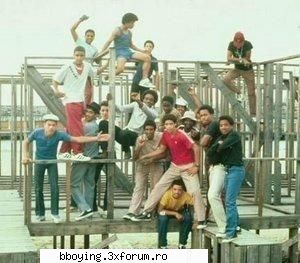
THE CREATION OF ROCK STEADY CREW (pioneers of Hip Hop)
THE CREATION OF THE ROCK STEADY CREW Written by Joe-Joe, The Original B.Boy, Rock Steady Crew '77 Founded in 1977, the crew's original name was the "Untouchable Four B.Boys". It consisted of four members, Joe-Joe, Easy-Mike, Jimmy-Dee, and P.Body 170th. However, the demands of recruits enabled them to reconsider and look past the four- member title of restricted membership. As a result, a meeting was held in Echo Place, Bronx, NY, at the residence of Jamie White [AKA Jimmy-Dee]. It was there that the ROCK STEADY name was born despite the initial idea of creating an extra crew to extend the "Untouchable Four B.Boys". It was decided that the Rock Steady Crew would serve one purpose. To keep the steady flow on the dance floor. In defining the "Rock Steady Crew" title: The word "ROCK" symbolized the concrete for the bumps and bruises sustained while performing. Mats and cardboard were unheard of back then. The word "STEADY" constituted the love and continuation of the art of B.Boying. In addition, the word "CREW" contained special meaning because it represented the teamwork and efforts that were put forth in order to empower those individual skills. Rock Steady Crew became a dominating force in the B.Boy community through the teachings and leadership skills that were implemented by Joe-Joe. The various skills were basic footwork, the backspin, the swipe, the bridge and many other moves. These skills eventually evolved through out the For instance. Crazy Legs back spin. The original members of Rock Steady Crew were Joe- Joe, Easy Mike, Jimmy-Dee, P-Body 170th, Jimmy Lee, Chrome, Boo-Ble, Pauly, Lime-5, Rubberband, l- Mack (Weebles), Doctor Ace, Slick Rick, Popeye, Trace 2, Trac 2, Rim 180th, Tito 183rd, Me 2, Green Eye Joe, Braces, C.N., Les, Angel Rock, Bon 5 Lenny Len and Crazy Legs. Different turns of events started to then take place. For instance, Jimmy-Dee and Joe-Joe were approached by little Richie Coln [Crazy Legs] asking for the expansion of a Manhattan chapter of the crew. After permission was granted, the chapter was supervised into the Lincoln Center battle against the Dynamic Rockers from Queens, NY, with the participation of Joe-Joe and Jimmy-Dee [We toasted them!]. The Bronx chapter gradually diminished due to each individual member's circumstances. For instance, Jimmy-Dee disappeared off the face of the earth, others relocated, others passed away and Joe- Joe was sent to mandatory job corps for too years. Within that length of time, the Manhattan chapter flourished under Crazy Legs' direction and supervision. Rock Steady Crew then became an international B.Boy sensation. Who would have thought what little Richie Colon would achieve through so much potential and self-determination? Peace Joe-Joe The B.Boy Original Rock Steady Crew '77 . by Joe-Joe
LEARN THE HISTORY OF HIP HOP DANCE PIONEERS – poza de ady_bob, in BBOY'ing · 22.9KB
_______________________________________ . One Bboy In Entity .
#2
ady_bob One Bboy In Entity Din: VPC/ToT
Postari: 123
CRAZY LEGS Hipo HOp dance pioneer.(Rock Steady Crew)
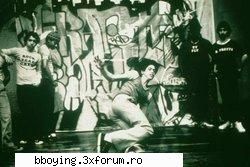
The Rock Steady Crew was established in 1977 by Bronx b-boys Jimmy D and Jojo. When they started this crew in the streets of the Bronx, they had no idea that someday it would take them all around the world. Only the best b-boys were down with Rock Steady. They had rivals in all five boroughs of New York and for every rival there were ten kids who wanted to be down with them. However, getting into the original crew was not easy. To get into Rock Steady you had to battle one of the other b-boys in the crew. It was a competition few people won. In 1979 when the b-boying hype was beginning to die down, Jimmy D put Crazy Legs and Lenny Len down with Rock Steady just in time to add new life to the art form and take it to the next level. This was at a time when Crazy Legs moved to Manhattan. Going back to the Bronx every weekend became too difficult for Crazy Legs pockets. He then started to explore the Hip Hop scene in Manhattan more often. This meant losing touch with other members of Rock Steady. Crazy Legs would spend most of his time developing his craft in tenement building hallways and battling b-boys that he would come across and eventually hanging out with the ones that he felt had an original style. Wanting to start a crew of his own he went back to the Bronx to look for Jimmy D and the rest of the crew to get permission to start a chapter of his own. He was not able to find them. Not knowing what to do, he sought the advice of his cousin Lenny Len. Lenny Len suggested that he join Rockwell Association (another well known crew from the Bronx). Rockwell Association was the crew that had turned Crazy Legs down as a member before he got in to Rock Steady Crew. This time Crazy Legs had a lot more to offer. They immediately put him in Rockwell Association and gave him a chapter in Manhattan. It was bitter sweet for him. He felt that Rock Steady Crew was the better of the two and wanted to use the Rock Steady Crew name. In the early part of 1981 Crazy Legs had come across Jimmy D and told him about what he was doing in Manhattan. Jimmy D was impressed with the amount of members that Legs had in Rockwell Association. Crazy Legs asked Jimmy D if he can start a chapter and Jimmy D gave him permission. Crazy Legs immediately changed the name of the crew to Rock Steady Crew. Although none of the members that got into Rock Steady Crew by battling, they had already gained the respect of Crazy Legs. Crazy Legs and the new recruits from Manhattan eventually became the motivating forces behind b-boying gaining back its popularity in the streets of New York City. The turning point for Rock Steady was in 1981 when people began to take notice of all the noise Crazy Legs, Frosty Freeze, Take One, Little Crazy Legs and Ken Swift were making in Manhattan. In August of 1981, photographer/sculptor Henry Chalfant offered them the chance to perform at the Lincoln Center Outdoors Program. This performance, which was also a battle with rival b-boys from The Dynamic Rockers, was crucial not only because it was covered by local television stations, The New York Times, The Village Voice, The Daily News, and National Geographic, it would later gain them worldwide exposure. Jimmy D took notice of the buzz that Crazy Legs had started in Manhattan and made him President of the entire Rock Steady Crew. Crazy Legs in turn made Frosty Freeze and Ken Swift Co- Vice Presidents. In the winter of 1982 the Rock Steady Crew was invited to perform at the original Ritz nightclub. The list of performers that night included the Punk Rock group BOW WOW WOW, Afrika Bambaataa and the Jazzy 5. Since Afrika Bambaataa was known by many as the “Godfather of Hip-Hop�, the Rock Steady Crew was honored to be on the same bill. After their performance, Crazy Legs and Frosty Freeze asked Afrika Bambaataa if they could be down with the Zulu Kings, the most highly respected of all b-boy crews. Afrika Bambaataa allowed them as well as the entire Rock Steady Crew to become members of the Zulu Kings, knowing that they would also become an integral part of the Zulu Nation. Soon after that performance the Rock Steady Crew took the downtown club scene by storm. They became caught up in a culture clash of Rastafarians, Punk Rockers and Hip-Hop heads. As the word spread, Rock Steady expanded into a huge family consisting of women, children, roller skaters, artists and DJ’s. The Crew’s popularity grew bigger than the city of New York and Kool Lady Blue started managing the group. She booked them on the Roxy Tour, sponsored by Europe One Radio. The Roxy Tour took the Rock Steady Crew, Afrika Bambaataa, Fab Five Freddie, The McDonald Double Dutch Girls, DJ’s and graffiti artists straight from the “concrete jungle� to London and Paris. It was the first Hip-Hop tour of it’s kind and it opened the door for many more to follow. The Crew also appeared on the Jerry Lewis Telethon two years in a row. In November 1983, they were asked by the Queen of England to perform at the Royal Variety Performance in aid of the Artist’s Benevolent Fund. During these spectacular performances Charisma Records approached the Rock Steady Crew with a record deal. The record “Hey You, The Rock Steady Crew� was in the top ten charts in Great Britain and sold over a million copies. The Crew, however, saw very little of the proceeds. Due to their lack of knowledge of the music industry at such a young age, the company took advantage of the Crew and would not allow them any creative input toward their own project. When Charisma Records went out of business and was sold to Virgin Records, the group was put on hold indefinitely. During this time, the crew's management told them not to dance in clubs. They tried to convince them that it was in their best interest not to dance they way they love to. Just for fun. Suddenly the Crew was on the outside looking in. By this time they had lost much of their fame and notoriety. They found themselves at a dead end with no plans for the future. Regardless, the Crew never split up, but they took some time to regroup and they went their separate ways. Some members took an optimistic attitude and went back to school or pursued other interests. Others did not fare so well. However, the Crew kept looking forward and took their anger and disappointment and made something positive. In 1991 Mr. Wiggles approached Crazy Legs about an idea he and Fable (Magnificent Force) had for a Hip-Hop musical. Crazy Legs (with the help of Mr. Wiggles) then needed to persuade Ken Swift to start dancing again in order to have Ken involved as well. The musical was called “So, What Happens Now?". Rock Steady member Buck 4 (R.I.P) provided the perfect scenario to base the musical on. He said, “You don’t know what it feels like to go fill out a job application. where it says, ‘what do you do?’ what do I write? I spin on my head?� “So, What Happens Now?� was the critics choice in the New York Times and received rave reviews in The Village Voice, The Daily News and El Diario. In 1992, they received a standing ovation lead by Gregory Hines at the Kennedy Center Honors where President George Bush, Gregory Peck and the Nicholas Brothers were all in attendance. A Rock Steady Crew Anniversary is held annually to symbolize the preservation of the history and evolution of Hip-Hop Culture. This monumental community event brings out DJ’s, b-boys/b-girls, graffiti artists, emcees and thousands of other positive Hip-Hop heads from all around the globe. It also honors members of Rock Steady Crew and members of the Hip-Hop community that have passed away. Since their beginning the Rock Steady Crew has come full circle. Crazy Legs is still president of the crew. Fabel and Easy Roc are co-vice presidents. They have added new faces like Fever One, Alien Ness, Jeromeskee, Floor Phantom, Lady Jules, Floor Rock as well as members in Japan, United Kingdom and Italy. The difference this time is that they have total control over their company and their destiny. “This time we have control over what’s going on�, says Crazy Legs. “We are running it with no one to answer to and that makes everything we do more satisfying�. With the Rock Steady Crew’s 29th anniversary on the horizon, they have plenty more goals in sight. The Rock Steady Crew has bounced back and performs throughout the world. They remain very active in the community and are involved in several different outreach programs as well as holding food drives and donating time and money to non-profit organizations. They hope to set up a Rock Steady foundation for children. This program will provide dance classes and other activities that will help to influence the youth to stay on the right path throughout life. It will also involve maintaining and preserving Hip-Hop culture. also visit: WWW.ROCKSTEADYCREW.COM
LEARN THE HISTORY OF HIP HOP DANCE PIONEERS – poza de ady_bob, in BBOY'ing · 14.1KB
_______________________________________ . One Bboy In Entity .
#3
ady_bob One Bboy In Entity Din: VPC/ToT
Postari: 123
LEARN THE HISTORY OF HIP HOP DANCE PIONEERS – poza de ady_bob, in BBOY'ing · 6.5KB
_______________________________________ . One Bboy In Entity .
#4
ady_bob One Bboy In Entity Din: VPC/ToT
Postari: 123
"B-Boys get DOWN!!!"
Breaking or breakdancing started in the late 1960’s, early 70’s. DJ Kool Herc took a James Brown song called the ‘Good Foot’ and looped it on the ‘break’ beat so that dancers could have a continuos rhythm to dance to. The ‘good foot’ was the first freestyle dance that incorporated moves involving drops and spins. As D.J.s invented new ways to stretch the break beats in the records, dancers had more time to invent and experiment. Soon moves like dropping down to the ground and poppin up again on beat became standard. DJ Kool Herc coined the term b-boy around the mid seventies to describe the people that danced this new style. In the middle of his sets he would get on the mic and yell “B-boys go down!†to signal the crown to clear the way for the breakers. People still aren’t sure what Herc meant, but the term b-boy is still used today and most people think it means ‘break boy.’ In Brooklyn a new step inspired by these drops was being developed and called ‘Brooklyn Rock’ also known as ‘Uprocking’. Once the first early break moves had been established, a definite style began to develop.
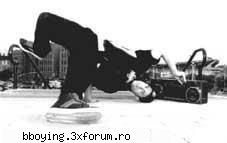
B-boy moves: a headspin above / a freeze below (a stall in the midle of a move)
Breaking evolved further when people from South American countries began to incorporate capoiera, a local fight/dance style, into uprocking. Also, Bruce Lee and other Kung Fu film stars had a major influence on b-boying culture. The popularity of Kung Fu films during the mid and late 70s around the world and especially in New York City, has had a great impact on b-boying style. Breakdancing groups like The Rock Steady Crew, and the New York City Breakers emerged. These crews would battle each other in night clubs and try to win contests by having the newest and hardest moves. Soon breakers were doing flips, head spins and other extremely acrobatic moves to compete with each other.
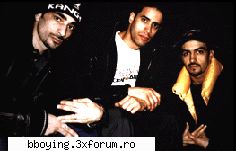
The Rock Steady Crew (Mr. Wiggles, Crazy Legs, Ken Swift)
LEARN THE HISTORY OF HIP HOP DANCE PIONEERS – poza de ady_bob, in BBOY'ing · 9.1KB
_______________________________________ . One Bboy In Entity .
#5
ady_bob One Bboy In Entity Din: VPC/ToT
Postari: 123
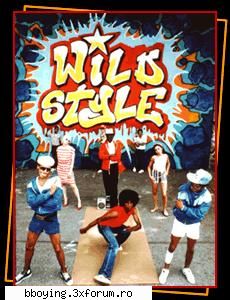
B-boying became even more popular in 80s. It was first introduced to out side of New York CIty and the rest of world by a movie ‘Flashdance’ in 1983. Even though it was not a b-boy movie, a short scene which featured b-boying and popping on a street had a great impact and was enough to inspire people to start b-boying all over the world. There were other movies to, like ‘Wild Style’ and ‘Beat Street,’ but these movies weren’t as commercial as ‘Flashdance’. Breaking crews like the Rock Steady Crew soon became famous worldwide as the media became attached to this interesting new dance. Crazy Legs, from the RSC is still recognized as one of the greatest b-boys of all time. The media attachment to breaking only lasted till the mid 1980’s, but breaking didn’t die. B-boys went into the underground were they continued to master there b-boy techniques. 20 years later breakdancing has made its way all over the world and is now as popular as ever. Nowadays, B-boy events such as B-BOY SUMMIT and ROCK STEADY ANNIVERSARY are organized every year and many b-boys from all over the world get together and keep the culture alive and even try to take it into next level.
Want to know more about breakdancing? Or maybe even learn how to be a B-boy? Check out the following links:
LEARN THE HISTORY OF HIP HOP DANCE PIONEERS – poza de ady_bob, in BBOY'ing · 25.4KB
_______________________________________ . One Bboy In Entity .
#6
ady_bob One Bboy In Entity Din: VPC/ToT
Postari: 123
Cold Crush Brothers: As one of the first HipHop crews to come out of the Bronx in the late 70's, the Cold Crush Brothers raised the standard for the groups of the time. With their synchronized routines and flashy costumes, the Cold Crushers were definitely the crew to see live. As the Crushers stand today, there members include DJ Tony Tone (Angelo King), Easy A.D. (Adrian Harris), DJ Charlie Chase (Carlos Mandes), GrandMaster Caz (Curtis Fisher), Almighty KG (Kenneth Pounder), and JDL (Jerry Dee Lewis). The original crew included Chase, Tone, A.D., WhipperWhip, Mr. T, and Dotarock. This lineup never recorded anything together. WhipperWhip and Dotarock left and became members of the Fantastic Five.
DJ Charlie Chase was one of, if not the first Latin American DJ to get involved in the HipHop movement. He was raised in a family of musicians, and was a bass player before he became a DJ. He got his first chance to start spinning with the DJ crew Tom and Jerry. They would play disco records and let Chase get on in the middle of their sets. Crowds of the times were getting tired of disco, so when the party started dying, the two DJ's Tom and Jerry would let Chase spin his HipHop albums to get the crowd going again. Most of the time, after hyping the crowd back up, the other DJ's would make Chase get off the tables so they could look like they were the party pleasers. After leaving Tom and Jerry, Chase took to the streets to build his own reputation and following. He got up with a few MC's around the area such as Cisco Kid, and RC. RC introduced Chase to Tony Tone one day, and that was the beginning of the Cold Crush. Tony Tone was part of the Brothers Disco (DJ Baron and DJ Breakout) at the time and took Chase to one of their shows. It was the first all HipHop show Chase had ever been to, and he loved it.
Tony actually came up with the name Cold Crush, after waking up from a dream one night. Tone said in the book Yes, Yes, Ya'll ," Cold Crush, when I thought up the name meant anybody steps in our way, they get crushed, cold crushed, no remorse. Once we get on stage, it's no friendship, we got to walk off the stage victorious." Eazy A.D. was first part of the group the As-Salaam Brothers. They broke up, and he joined the Cold Crushers. Grandmaster Caz (one known as the DJ Cassanova Fly) hooked up with the Crush after his crew, the Mighty Force disbanded. Dotarock and WhipperWhip also came along for the ride. It just so happened that Kevie Kev and the guys from the L Brothers were looking at the two MC's to join their crew. Back then, it was all about the system you had to perform on, the louder the better, and Chase and Tone’s system wasn't the best of the time. So, Data, and Whip chose the crew with the better sound, and joined the L Brothers to form the Fantastic Five. Later the Cold Crush even took in some of the Furious Five MC's, after they were pissed at Grand Master Flash for taking too much of their money. They later went back to Flash, only after he had them ruffed up. What a world.
One of the most funked up parts in the history of HipHop, involved GrandMaster Caz and the first mainstream group of HipHop, The Sugarhill Gang. As the story goes, Sylvia Robinson of SugarHill Records heard a demo of the Cold Crush with Caz rocking the mic, and decided to make a rap album. She over heard a bouncer of a local club named Hank, rapping along with a Cold Crush tape and asked him to join her new group. Now, Big Bank Hank as they called him, was a friend of the crews, who helped them get the big sound system that they needed. So Hank goes back to Caz, and asks him if he could use the lyrics he wrote. Thinking that after he let him use the lyrics, he would help bring him into the SugarHill Gang, Caz let him use them. As history goes, Hank goes on to be part of the first platinum HipHop album ever "Rappers Delight", with Caz's lyrics. Caz never sees a dime from Hank or SugarHill, and doesn't even get credit for his rhymes. It's a major lesson to learn in the industry. Never let anyone use your stuff if your not getting something out of it.
Cold Crush started to attract a lot of attention from other crews, and was approached constantly to battle. Caz one said, "It's like I don't care if God, Moses and Abraham, come down here to battle us, we bustin' they ass". Some of their most famous battles were against Grand Wizard Theodore and the Fantastic Five. Both of the crew were featured in the film Wild Style, and were both on the soundtrack. They were the first crew to sign with Tuff City, a label under CBS records. The Crushers went on to release numerous singles like, "The Weekend, "Punk Rock Rap", "Fresh, Wild, Fly, and Bold," and "Heartbreakers." The group never recorded a full-length album though. The Cold Crush broke up in 1986, but today are still affiliated with one another. The members have released solo material throughout the late 80's and 90's such as KG's and Tony's 1988 album "Troopers", and GrandMaster Caz's 2000 release "MC Delight", which was an album done as a comeback for not receiving credit for "Rapper's Delight".
The group as recently performed at the grand opening of the Experience Music Project in Seattle, and brought down the house during the Rock and Roll Hall of Fame and Museum's "HipHop Nation: Roots, Rhyme and Rage" exhibit when it opened at the Brooklyn Museum of Art in Sept. of 2001.
Grand Wizard Theodore & the Fantastic Five: Born Theodore Livingston, Grand Wizard Theodore (with such groups as the L Brothers and GWT and the Fantastic Five), was a pioneering DJ who perfected the art of needle dropping and was the first to invent the scratch. Although he is best known for both foundation-forming techniques, Grand Wizard Theodore and his crew, go deeper than his famous first cut.
Grand Wizard Theodore learned the art of DJing from his older brother ("Mean Gene" Livingston), and Grand Master Flash, who in the early 70's performed together. A young Theodore started helping his brother and Flash out, by doing things like carry records and helping set up the sound systems. Eventually, Theodore even started pulling the records that Flash would need during his sets. The two older DJ's became so confident in Theodore's taste of beats; they would send him to local record shops to pick out new records for them to spin. One record shop offered free 45's to people who beat a certain score on a pinball machine. Theodore would sit and play pinball, listening to the storeowner playing the newest records behind the counter, beat the score needed for the 45, then pick out the hottest new tracks he heard being played. In the summer of 1975, as the story goes, Theodore was playing records too loud, and his mother started to bang on the door, telling him to turn it down. When his mother came through the door, he stopped the record with his hand, and started moving the record back and forth. When she left the room, Theodore knew he had invented something no other DJ had ever done, and the "Scratch" was invented. He kept perfecting the new innovation so it would blow people away when he unveiled it. The practice of "needle dropping" as Grand Master Flash coined it, came from Theodore's dislike of having to keep back spinning records to reach the break beats. He started picking the needle up, totally off the record, and placing the needle back down at the being of the break. He would watch the thickness of the grooves on the records to accomplish this feat, something many DJ's still to this day can't perfect.
Theodore's skills were developing so fast that his brother "Mean Gene" started getting jealous, at one point threatening to leave Flash if "his little brother got on the set.� Flash took it upon himself to help craft the young DJ's style and technique. While Gene was gone, Flash would let Theodore watch and learn the basic skills, and then let him work on his own. Refusing to keep Theodore a secret, Flash finally thought Theodore was ready for a crowd, and let him get on the tables at the 63rd park. The crowd went crazy for the little DJ. People knew he was going to do big things in the future.
After the demise of the L Brothers (Theodore's first group with his brother), he formed Grand Wizard Theodore and the Fantastic Five. The group consisted of Theodore and MC's Waterbed Kev (Kevin Strong), Master Rob (Robin Strong), Prince Whipper Whip (James Whipper), Ruby Dee (Rubin Garcia), and Dot-A-Rock (Darryl Mason). Whipper Whip and Dot-A-Rock (known together as "Salt & Pepper) were in a group called The Mighty Gestapo Crew, with DJ Kenny B, and Count D and the Funky Phase Four MC's. They were also members of the original Cold Crush Brothers. One of the original members of the Fantastic Five was an MC called Busy Bee. Ruby Dee eventually replaced him because of Busy's want to be a solo artist, and because he didn't get along with Kev.
Theodore and the Fantastic Five wanted their performances to be totally original and different. They would were fresh white tuxedos and perform intricate routines with their moves and rhymes. The group tried recording a song with a band, for the record label Soul On Wax Records, but in the end were disappointed, and ended up not using it. They were now dead set on never signing a record deal. They were happy with their success as a live group, and that was all they needed. One of their biggest shows was a battle against the Cold Crush Brothers at Harlem World. At the end of the night the crowd decided whom won by applause and the Cold Crush was just that, crushed. This was memorialized by the release of the battle tape a few years ago. The two groups were rivals, but respected each other’s skills. It just so happened that they were the two most popular groups around, and both were unsigned to any record labels. The two groups would later go up against each other in the cult film, WildStyle, but on the basketball court. Grand Wizard Theodore was also involved in making the soundtrack for the film.
Grand Wizard Theodore to this day is still part of the HipHop culture. >From judging DJ battles, to teaching the skills of the DJ to up and comers. He was inducted to the DMC Technics DJ Hall of Fame in 1998, and has received a Lifetime Achievement award from the International Turntablists Federation. Theodore as also served on the panel of the Rock and Roll Hall of Fame and Museum's HipHop Conference in 1999, and 2000. He's is one of the many DJ's honored and starring in the documentary independent film "Scratch".
Afrika Bambaataa Discography Year, Title, Label
1986 Planet Rock - The Album Tommy Boy Records 1986 Beware (The Funk Is Everywhere) Tommy Boy Records 1987 Death Mix Throwdown Blatant 1988 The Light EMI America 1991 The Decade of Darkness 1990-2000 EMI Records USA 1992 Don't Stop... Planet Rock (The Remix EP) Tommy Boy (EP) 1993 Zulu War Chant Profile (12" 1993 What's the Name of this Nation?... Zulu Profile (12" 1994 Feel the Vibe DFC (12" (with Khayan) 1996 Jazzin' by Khayan ZYX 1996 Lost Generation Hot 1996 Warlocks and Witches, Computer Chips, Microchips and You Profile 1997 Zulu Groove Hudson Vandam (Compilation) 1998 Agharta - The City of Shamballa Low Spirit (12" (with Westbam) 1999 Electro Funk Breakdown DMC 1999 Return to Planet Rock Berger Music 2000 Hydraulic Funk Strictly Hype 2001 Electro Funk Breakdown DMX (Compilation) 2001 Looking for the Perfect Beat: 1980-1985 Tommy Boy(Compilation) 2004 Dark Matter Moving at the Speed of Light Tommy Boy Afrika Bambaataa Afrika Bambaataa was born on April 10th 1960 as Kevin Donovan in Bronx, New York. Known as one of the "Godfathers" of Hip Hop culture, he was one of the 3 original DJs to create the break beat movement in the mid to late 70's. As a founding member of the Bronxdale area street gang the Savage Seven (later known as the Black Spades because of member growth) he came to power in the position of Division leader. After a chance trip to Africa that changed his life forever, as well as changing his name to Afrika Bambaataa Aasim, he decided to use his power in the streets to help those involved in the gang lifestyle change their ways and play a more positive roll in their community, and their lives. He began to develope a group called The Organization, a group of rappers, graffiti artists, B-boys, and other people that politically and socially aware of the real problems facing the world. This group eventually became The Zulu Nation (inspired by Michael Caine film, Zulu and his studies African history) and was involved in creating a positive Hip Hop culture from the early 80's up till the present.
Bam's early use of drum machines and synths, were pivotal in creating a new sound for Hip Hop and R&B. His style of music which he dubbed "Electro Funk" paved the way for other musical genres like early Techno, House, Electronica, and the Miami Bass sound. He was also known for his record collection that he played at shows which you could hear Ennio Morricone to Kraftwerk's "Trans-Europe Express" which was the main melody of Bam's "Planet Rock". Bam is also responsible for helping many young cats get into the music business, with his connect to Tom Silverman at Tommy Boy Records, a label that was very successful in the 80's and 90's.
In the early 80's he created a sort of super group called the Soul Sonic Force. Soul Sonic was made up of the groups and people that Bam help form and performed with. These groups within groups were mostly all members of the Zulu Nation.
Bambaataa, in 1982, was the first person to ever organise the a Hip Hop tour in Europe. He brought with him all the elements of the culture represented by the heavyweights of the time such as, DJ Grand Mixer DS.T, graffiti artists Fab 5 Freddy and Phase 2, and B-boy and girl groups the Rock Steady Crew, and the Double Dutch Girls. This tour created the international scene which even still today is felt by Headz across the globe.
With a resume that runs consistently through 2 decades, Bam is still creating music and helping the youth of the world to see the positive light of equality, and hope. He is one, if not the, hardest working man in Hip Hop throughout it's history and even still today.
Kool DJ Herc Known as the Godfather of Hip-hop, Kool DJ Herc (born Clive Campbell) was born in Jamaica april 16, 1955. Using 2 copies of his records, he pioneered the art of using break beats while DJing. These were the juiciest percussion and straight rhythm sections of the songs he played. they also were the best parts to dance to, so he started extending the songs to keep the party going all night long. His love for music started while listening to American music like James Brown while living as a young boy in Jamaica. Then he moved to the Bronx in 67, at the age of 12. His first DJing gig was at his sisters birthday party, and after that he started throwing parties in his families rec room. This was the beginning of the B-boy era, a phrase he actually came up with.
Early on he knew the importance of keeping the crowd hype. He knew all the types of songs that keep people moving, and also learned the importance of keeping it fresh. When he started Djing, the most popular music was Disco. In reality, the youth of the ghetto's in New York were into a much different sound and scene. Kool Herc catered to all types of musical tastes (from R&B, Soul, and Funk, to underground Disco).
In the mid 70's he started playing the clubs of N.Y.C, such as the Twilight Zone, and the Hevelo. At this time his reputation was huge for having the best sound system of any DJ around (this was the first form of "battling" musically). During this period Many of the up and coming DJ's like Afrika Bambaataa, and Grand Master Flash were attending Herc's parties or getting burnt at them. There are numerous stories of battling Herc and his system and getting embarrased or getting blown off the stage.
Many elements of Hip-Hop were either created, or refined by Kool DJ Herc. the Breaking, the Djing, the MCing all grew to take over the culture of B-boys and Headz everywhere. Its true that alot of people give respect to Herc for everything he's done for Hip-hop, but not enough of the current youth, or the current peps in the industry do. I wonder if the so called artist that plague the airwaves, and television today really know where their opportunities came from. I myself would like to thank Kool Herc personally, and maybe one day will have the chance to.
ar fi bine dak s'ar citi macar jumtate din ce-i aici...da ma indoiesc...