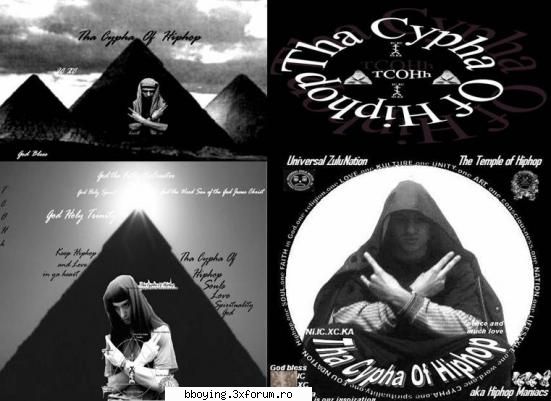
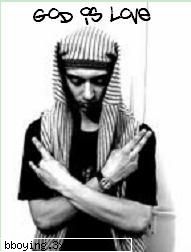
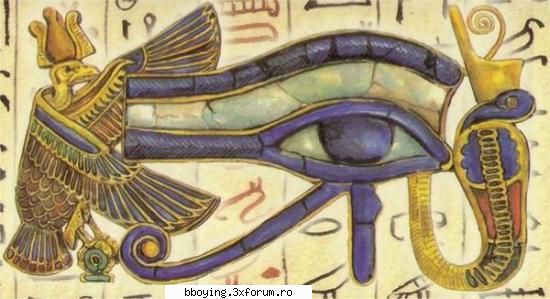
yo souls GOD IS LOVE..believe it.. LOVE is tha uncreated energy..tha supreme energy ..tha supreme spiritual energy..tha most powerfull positive energy... tha Uncreated Light Of God IS LOVE GodHoly Trinity is tha source of Love and God it's in Love u know what i'm sayin..IC XC is Love..true Hiphoppas.. we all have tha SEED of Love in our Heart... From Love Jesus Christ took our body becoming True God and True Human and sacrificed on tha holy Cross..u know what i'm sayin.. Hiphop is Love....meditate Hiphoppas...peace and MUCH LOVE open ya heart eyes feel Love and you will be baptized by Love...let Love in ya heart in ya life u know what i'm sayin..let Love to lead ya life on tha way that goes to God... LOVE is our connection to God ...tha spiritual lifestyle starts from Love.. pray with Love and you will be connected to God u know what i mean... Go down with ya mind in ya Heart feel and apply Love.... peace and much love....be Love..Feel Love..apply Love..
True Hiphop..tha essence of Hiphop – poza de Lil'Vietnam, in BBOY'ing · 23.2KB
#127
Lil'Vietnam
Vizitator
God HT is Love..and that's why God is any of us...in our hearts, in all tha kultures in all tha art forms,in all tha traditions..that's why God it is in Hiphop... God's love for us ,His creation is beyond our imagination and powers u know what i'm sayin' peace and much love..Keep it feelin Love
True Hiphop..tha essence of Hiphop – poza de Lil'Vietnam, in BBOY'ing · 21.9KB
#128
Lil'Vietnam
Vizitator
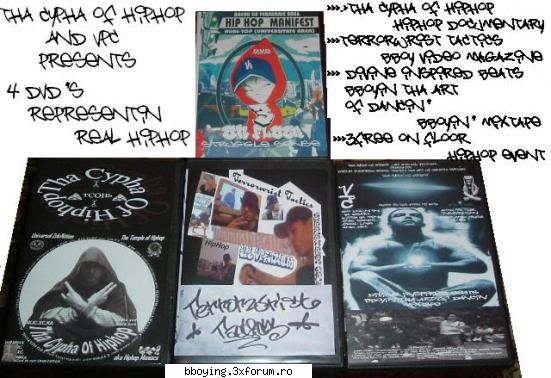
word up.. huge true love 4 ma nigga Obie fo doin tha first REAL DOPE session in this country we all call Romania u know what i'm sayin' 4 me 3on Floor is like FREESTYLE SESSION, Mighty4 or Out For Fame u know what i'm sayin'...and i'm sayin' this beceuse on this session i saw what is like to represent in a dope session..to live Hiphop ova there .. The FIRST and tha ILLEST HipHop event EVER from this country u know what i'm sayin...i know u don't believe me but yo i DON't need ya to agree with me i NEED real Hiphoppas to agree me u know what i'm sayin'... it was all about representin Hiphop and b-boyin..all about representin as artists not as Fame HUNTERS u know what i'm sayin.. ..all about Love and art u know what i'm sayin'..dope floor ..dope sound..dope tracks..dope b-boys ..dope atmosphere...dope organization..dope mc...true representin of dance art,b-boyin in a Word ..word up.. but this word REAL says so few and u must FEEL tha shit if u wanna know what i'm sayin' ....3on Floor is more than Real.it WAS REAL Hiphop .. ...yo ma bro OBIE i was and i am amazed of this shit..i couldn't believe that in Romania someone could do a shit like this u know what i mean...mad love....thankGod 4 this...youre ma NIGGA foreava...real Hiphoppa ..true b-boy..ma BRO..VPC representin.. peace and much love 4 Obie Rkid ,Lolo and all tha dope cats out there...3on Floor struggle sense....real Hiphop.... foreva yours in Hiphop Lil Vietnam repressentin VPC and Tha Cypha Of Hiphop ...God Bless..keep it in Tha Cypha..be Spiritual..go back to tha Essence to foundation..u know what i mean..word up..
True Hiphop..tha essence of Hiphop – poza de Lil'Vietnam, in BBOY'ing · 33.6KB
#129
Lil'Vietnam
Vizitator
word up souls.... in every of us is tha Face Of God..every soul from tha Universe have tha Face Of Jesus Christ the God...u know what i'm sayin'...we are souls...we was created from God's Love..we are livin from God's Love..our destiny it's God Love u know what i mean...tha Universe exist's because of God's Love....material and spiritual....in everythin that sorround's us is God material or spiritual.. may tha Love of The Holy Trinity open ya heart eyes...and see tha CYPHA...u know what i'm sayin... God sacrifaced for us..still don't u believe God Is Love....let me tell u somethin' u gonna see this after death..and don't worry we all die someday...meditate and ask for God's help..cause everythin' is from God not from ya u know what i'm sayin... Holy Trinity 3 person's in ONE essence LOVE.... don't forget that we all are souls(HiphoppasArtistsMonks) we are One u know what i'm sayin... Love and Pray.....live Art Love and Hiphop...IX.XC..God Is Love.HT Keep tha LOVE of God in ya heart....Keep livin in Tha Cypha Of God... "love one another"Jesus Christ...
True Hiphop..tha essence of Hiphop – poza de Lil'Vietnam, in BBOY'ing · 22.8KB
#130
Lil'Vietnam
Vizitator
We ROCK in tha Cypha ...... read this and FEEl it ma brothaz....WORD UP B-boyin aka breakin started in 1969. That was the year that James Brown recorded "Get on the Good Foot," a song that inspired an acrobatic dance based on the high energy moves that Brown performed on stage. Soon, kids in New York were doing the Good Foot -better known as B-Boy(short for Break Boy)- which was the direct precursor to the sort of breakdancing we know today.
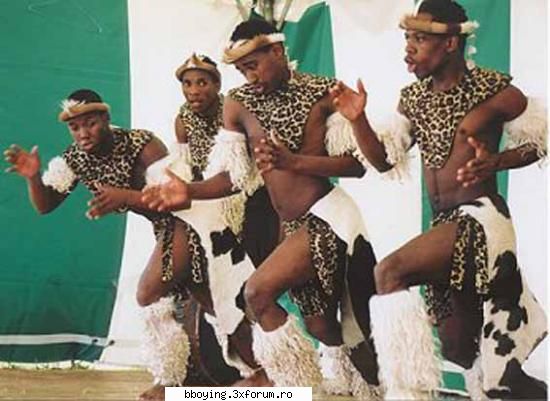
1969 was also the year that Afrika Bambaataa started organizing ghetto youth into one of the first breakdance crews: The Zulu Kings. The Zulu Kings won contests and talent shows. They performed their moves at dance clubs. Bambaataa recognized the potential for acrobatic dancing, and he encouraged young people to stick with it. But most people thought the Zulu Kings were just another gang.
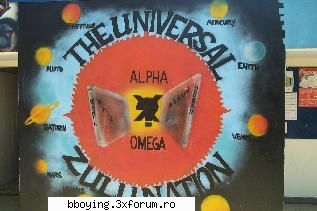
When the Zulu Kings were challenged by a rival street gang, Bambaataa, they called for a break in the usual street warfare and suggested that the two groups fight with steps rather than weapons. Sure enough, the rival gang was just as ready to square off with dance steps as they were with knives and chains. Afrika Bambaataa's followers grew into the Zulu Nation which was 5000 strong. The kids in the Zulu Nation would rather dance than fight, and breakdancing (a term invented by Afrika Bambaataa) became an integral part of hip-hop.
These dance battles gradually evolved into a highly stylized form of mock combat called "Uprock". In an uprock battle, a dancer would lose if he actually touched his opponent. A B-Boy named Rubberband is credited with developing Uprock. Breakin' was originally known as "Rocking". "Old Style" breakin' and B-Boy'n consisted only of floor work ("Floor Rock" or "down rock" and "top rock" (dancing on two feet, like the Moonwalk). Acrobatic moves such as the headspin had yet to emerge. Floor Rock involved complicated leg moves. Athletic young men found it was a good way to win dance contests. B-Boy'n was especially popular in the South Bronx, where rival gangs would battle over turf, or just to gain each others' respect.
Breakin' remained popular until 1977, when a dance called the Freak took over. Meanwhile, another dance was catching on...one which would lead to the development of the Electric Boogie. This dance was called the Robot. People started doing the Robot as early as 1969, but the dance really took off after Michael Jackson danced the Robot while singing "Dancin' Machine" on national TV.
In 1979, a new breakdance crew was organized called Rock Steady Crew. These dancers were very talented, but breakin' wasn't as popular anymore. People said that Rock Steady were old fashioned. One person who encouraged Rock Steady Crew was Afrika Bambaataa. The kids in Rock Steady Crew were all original members of Bambaataa's Zulu Nation. Bambaataa told them to stick with it. Rock Steady Crew invented many of the "power moves" that made breakdancing famous. Crazy Legs and Frosty Freeze (who specialized in "freeze" moves) practiced in Central Park, New York and on the streets until they had perfected their routine. They added a lot of acrobatic moves such as the headspin, handglides, backspins, and "The Continuous Backspin" (better known as the Windmill). Breakdancing has always been an integral part of our underground dance culture, but not many know of it roots and past. Voodootribe took a look into the history of B-Boying for us.
Beginning
B-Boying began in a recreation center in the South Bronx of New York City in the early 1970’s. Street gangs and violence was at an all time high but was about to start its decline, mainly due to the introduction of a new culture that would later be dubbed "Hip Hop" by Afrikaa Bambaataa. This Hip Hop culture would give inner city youth a way to make a name for themselves and escape the anonymity of urban life, by battling other youth with creativity and style instead of violence.
It was a young Jamaican immigrant named Clive Campbell (aka Kool DJ Herc) who was primarily responsible for the birth of this culture. Kool Herc developed a revolutionary new way of spinning records using two identical records. Instead of playing the entire the song on a record, he would only play the very upbeat and percussive breaksection of a song, known as the "breaks." Since the breaksection of a song is only seconds long, after the breaksection was through playing on the first record he would start playing the same section on the second record while managing to match the beat seamlessly . By repeating this process, he was able to play a continuous song of nothing but breaksections.
Along with DJing, these "breakbeats" laid the foundation for the two more elements of the Hip Hop culture: MCing and B-Boying. It became the MC’s (Master of Ceremony) job to amuse, excite, and motivate the crowd to dance by using Rhythmic Accentuated Poetry (RAP) over those breakbeats. B-Boys were the ones who would dance or "freak out," "bust moves," and "go-off" on the dancefloor with their steps and freezes. These three elements along with graffiti art or writing are what make up the hip hop culture.
Influence
Most heads consider James Brown’s hit "Get on the Good Foot" the starting point for B-Boy culture. After its release, people started mimicking Brown’s footworks and began dancing the "Good Foot." Early B-Boying was based largely on an extended version of the Good Foot, also known as Rockin’. So essentially, James Brown was the first B-Boy.
The word (B-)Boying most likely came from the African word "Boioing" which means to hop or jump, and is just one of the indicators of the influence African dance. It was the African people’s dance culture which brought the heavy rhythm and the idea of dancing in a circle, but it was definitely a variety of influences that made up early B-Boying including gymnastics, Eastern martial arts, tap dance, Salsa, Afro-Cuban and Native American dances. One of the most influential dances was a South American martial arts/fighting dance known as the Capoeira. Contrary to many rumors, B-Boying didn’t originate from the Capoeira but it played a large role in its early development.
The Capoeira originated in the 16th century and was practiced by many of the millions of African slaves brought to Brazil. Since fighting was not allowed but singing and dancing was permitted, the slaves prepared for their resistance by incorporating fighting moves into their dancing. The fight-dance was performed in a circle with a crowd surrounding it, and as soon as a guard or official came close, the fighting would turn into a dance again. Eventually the dancing the Capoeira became forbidden and most of the slaves who practiced the Capoeira died after their five years of service, yet a few managed to escape into the forests of Brazil. The Capoeira lived on in the forest villages of the escaped slaves and Brazilian slums throughout the centuries until it became legal again in the 20th century. When B-Boying started to become popular, a lot of the Capoeira moves, punches, and spins were integrated into B-Boying.
Progression
In the early 1970’s B-Boying was also referred to as rockin’ or breakin’. At first breaking mainly consisted of toprocks, floorrocks (footworks) and other steps that always ended in a freeze (no spins). Different B-Boy crews were formed who would often battle each other--the main point of the battle being to be more creative than the other crew and by doing better and faster moves. Toward the late 70’s a lot of the early B-Boys retired and the new generation of B-Boy’s combined the early moves with spins and power moves on different parts of the body.
Popping was a west coast dance form in the late 70’s that eventually made its way to the east coast around 1980 where it was called Boogaloo or Electric Boogaloo. B-Boying should not be confused with poppin or lockin. The breakers and boogaloo dancers both ended up sharing the B-Boy name, but poppin and lockin are definitely danceforms of their own and should be treated as just that.
Breakin started blowing up in the early 80’s as a lot of the top crew rivalries were beginning to attract media attention. Early performances and battles of crews like the Rock Steady Crew and Dynamic Rockers were aired on nationally TV. In 1983, movies like Flashdance and Buffalo Gals which featured the Rock Steady Crew broke the scene wide open when breaking could finally be scene internationally. The media made up the name "Breakdancing" and the world went rap dance crazy.
Over the next few years, breakdancing became the trend. Some of the more famous crews were featured in movies (Wildstyle, Beat Street, Breakin/Breakin 2), commercials (milk, Right Guard, Burger King… and TV shows (Fame, That’s Incredible!, David Letterman, and as regular contestants on Star Search). When the Summer Olympics came to Los Angeles in 1984, the closing ceremonies featured a performance by over 100 B-Boys and B-Girls.
In 1987, after years of being gimmicked and ridiculed, "Breakdancing" was completely played out and the media had completely trashed the entire B-Boy culture. Very few dancers continued practicing and dancing seriously, and the one’s who did were often met with ridicule when it was revealed that they still breakdance. Today the breakin’ name has been cleared and is continuing regain its reputation as a respected dance form. Hopefully this time around people will realize not just a new fad or trend, but something to be appreciated and taken seriously.
Special thanks to wreckenshop.com and the Spartanic Rockers for their help. Breakdancing seems so different from all other kinds of dancing that the first question people ask when they see it is: "Where did these kids learn to dance like that?" To many people, this dance seems to have come out of nowhere. But like everything else, Breakdance did come from somewhere, something and someone. In the case of Breakdancing, the someone is the great superstar, James Brown, and the something is the dance, the Good Foot. In 1969, when James Brown was getting down with his big hit "Get on the Good Foot" the Hustle was the big dance style of the day. If you've ever seen JamesBrown live in concert or on TV, then you know he can really get down. And when he preformed his hit, he did the kind of dance you'd expect James Brown to do. High Energy. This almost acrobatic dance was appropriately enough known as the lot of kids around New York City.
By the time the Good Foot became the new dance style, the tradition of dance battle was well established. Dancers would gather at places like Harlem World on 116th Street in Harlem and Battle-dancewise. Battles are covered in more detail in the section on battles, challanges, and contests, but the important thing as fas as the history of Breakdancing is concerned is that Breakdancing was particularly well-suited for competition. And not only was the Good Foot well- suited for dance battles, it appealed to certain young men who were very athletic.
The Good Foot, which was soon to be called B-Boy and shortly after that Breakdancing, or Breaking, was very different from the Breaking we see today. In some ways it was simpler. There were no Headspind. No Windmill. No Handglides or Backspins. It was what is now called old-style Breaking. Old-Style Breaking consisted only of floor work, or Floor Rock, and in a way it was more complex than modern Breaking. There may be some small variations on the Headspin and a Backspin, but basically, a Headspin is a head spin and a Backspin is a back spin. But Floor Rock can involve som extremely complicated leg moves, and it is done very fast. And it did not take long before where were a lot of Breakdancing battles happening.
Among those for whom old-style Breaking was especially popular were many of the youths and street gangs that roamed the South Bronx. And it was in those streets that Breakdancing really started. Often, the best Breakers in opposing gangs would battle dancewise instead of fighting. They would battle over turf. Or because someone stepped on someone else's shoes. They might battle prove that their gang was better than the other gang. Sometimes they would make a contract that the loser would not go around to the winner's neighborhood anymore. Sometimes they battled just to gain each other's respect. Unfortunately, these Breaking battles did not always stop fight. In fact, they often would cause a fight, since dancers would sometimes get physical when they couldn't win dancewise.No one likes to lose. But today Breaking battles have, to a large extent, replaced fighting in the Bronx.
In this way Breakdancing crews-groups of dancers who practice and preform together-were formed. And soon formal crews organized, who not only practiced and preformed together, but who also developed their own dance routines. Some of these crewws became very dedicated to their dancing, and since they had nothing better to do, would spend hours a day praticing, developing more and more complex moves, improving their form, and increasing their speed. And then Afrika bambaataa came along. Bambaataa is the legendary grand master D.J. who is the individual most responsible for the successful growth of Breakdancing. He is a record producer and member of the Soul Sonic Force, whose "Looking For The Perfect Beat" was chosen as the No.4 best single in the 1983 Jazz and pop Critics' Poll. Afrika Bambaataa is also the leader of the Zulu Nation in the Bronx.
In 1969, Afrika Bambaataa saw Breakdancing as more than just dancing. He saw it as a way to achieve something. He saw the potential of Breakdancing, and encouraged the dancers to keep at it. To work hard, and to believe that if they stuck with it, something good would come of it. Bambaataa then started one of the first Breakdance crews, the Zulu Kings. The Zulu Kings won a lot of battles and talent shows and preformed in various clubs in New York. At the same time they won a lot of adherents for the Zulu Nation.
Old-style Breaking remained popular untill about 1977, when the Freak took over, based on the hit record "Freak Out" by the Shieks. Then around 1979 and early 1980 a new Breakdance crew was organized-Rock Steady Crew. Even though Rock Steady Crew was especially talented, a lot of people put them down being old-fashioned. But Bambataa encouraged them. He told them that if they stuck with it, something good would happen. He took them on, and soon they were performing at the Mudd Club, the Ritz, and other Punk rock clubs around New York. When Rock Steady performed for Malcom McLaren and Bow Wow Wow at the Ritz people started taking them seriously. Breakdancing Was In Again.
But the new-style Breaking was different from the old. Rock Steady added a lot of acrobatic moves. Breaking now included not only Floor Rock but Headspins, Backspins, Handglides, and Windmills. In 1981, Charles Ahearn made his Hip-Hop movie, Wild Style, a raw vision of rap singing, graffiti, scratching, and Breakdancing in the Bronx. Ahearn called on Rock Steady to do the Breaking and Rock Steady became the preeminent Breakdance crew and new-style Breaking became even more popular. When the spring of 1982 rolled around the Roxy was a well-established New York roller-skating rink. But the popularity of roller skating quickly began to fade, and in June of '82, Pat Fuji turned the Roxy into a dance club on Thursday, Friday, and Saturday night. The Roxy quickly became the Hip Hop center. It was here that rappers, D.J.'s, and Breakdancers would perform and hang out.
If you wanted to discover a Breakdancer for your show or video, you would come to the Roxy. Or if you just wanted to watch or learn some new moves, you would come to the Roxy. And the Roxy started to sponsor Breakdance contests, which would help the winners get more recognition. In June, 1983, Pat Fuji hired professional Jazz dancer Rosanne Hoare to run the Street Arts Consortium, whish was a house Breakdancing, rapping, and graffiti art. Rosy was going to officially establish a home for Hip Hop Culture. While the Street Art Consorium never really happened as envisioned, Rosy did provide a home for Breakdancers. She not only provided a place where they could feel at home, but she worked with them as a choreographer, helping to extend their dance possibilities. She also helped many dancer find commercial and performing dance work. Most importanly, Rosy was-and is-always there as a friend whom they can count on. She herself has taken up Breakdancing.
(This Article is taken from"Breakdancing with Mr.Fresh & The Supreme Rockers" B-Boy crews received top billing at Hip-Hop jams and block parties, but that was long ago and far-away. The time was the very late 60's and early 70's. The place was New York. Between then and now a lot has happened to Hip-Hop, B-Boys and Breaking. All have wanned and waxed in popularity during the past quarter century, especially breaking. But now Breaking is back and it¹s time to remind ourselves of its roots in the United States and its chequered history in Britain.
The Seventies
Whether it began on the left or right side of America remains open to debate. Here in the U.K. we prefer to think both Los Angeles and New York contributed to its development. In New York, it was Kool DJ Herc, the very first Hip-Hop DJ, who coined the phrase B-Boy in 1969. The Jamaican-born performer had developed a technique of mixing records so that the dancing sounds never stopped. His particular skill, later copies by legions of others, was to meld the percussion breaks from two identical records, playing the break over and over, switching from one deck to the other. Kool Herc called these 'Cutting Breaks'.
When he performed to Breaks[?] at crowded venues, such as the Hervalo in the Bronx, he would shout loudly 'B-Boys go down!' and this was the cue for dancers to cut and jump their gymnastics. Even today nobody is quite clear what Kool Herc meant by his phrase. Some suggest B-Boys stands for 'Boogie Boy' while others insist it means 'Break Boy'. The later has become the favored choice. But who were the original B-Boys and where had they learned their skillz? Again the answer is fairly straight-forward. They had simply adapted what they had been doing on the ghetto streets.
The pioneers were members of New York and L.A. street gangs who had taught themselves martial arts - in particular a Brazilian style - to defend themselves from attacks by rivals. Because of this many dance moves appeared aggressive and extremely violent during the early years. For instance, 'Uprock', performed correctly, can look very much like a scene snatched from a old Kung-Fu movie. 'Uprock' was probably the first form of Breaking. From it springs many other moves to continue the dance on the floor as a single rhythmic activity. It was so convincing that many over-zealous night club managers and their bouncers interpreted the dance as a real fight in the making. The fact is that sometimes is was.
While many youngsters learned quickly that it was easier as B-Boys to receive approbation from their peers and often earn large amounts of money as well from their performances, others still preferred to risk their lives and limbs on the streets in the needless pursuit of becoming gangstas. As a consequence some dancers remained committed gang members, determined to settle old scores and so sometimes battles did erupt on the dance-floors. Understandably the media reported these incidents and very soon Hip-Hop came to mean violence, crime and general trouble-making in the public's eye, although these negative qualities were found in other entertainment areas as well.
Over on the West Coast, meanwhile, many L.A. gangs were dancing in the streets too, but each was trying to out-do the others by showing off more complex and dynamic performances, still influences by Kung-Fu. What 'Uprock' was to New Yorkers, 'Locking' had become to the Electro-Boogie-loving La-La youth. It had been started by Lockatron Jon and Shabba-Doo. Shabba was also responsible for introducing New Yorkers to 'Popping', which many claim to be the first, real hip-hop dance. They even go as far as to say they were performing it in 1969.
In New York local dancers added waves and smoother movements to the 'Popping', and that's the style which exists today. Soon it was very popular in discos and part of the 70's mainstream. At that time it was known as 'The Robot' and a early exponent was Charlie Robot who used to appear on American TV's 'Soul Train' program. He took his style and added the pops and lock we recognize today. 'Locking', too, became part of the broad disco culture and many dancers adopted Breaking moves to expand their dance-floor routines. We need to look no further than the movie musicals of the 70's to underline the point. Remember John Travolta's Saturday Night Fever, 'Roller Boogie' and even the anodyne Xanadu which starred the sweeter than sweet Olivia Newton John, an Australian export impossible to associate with Hip-Hop?
The Eighties
Everywhere new moves were being added to the form and to popularize them Broadway choreographers were sanding the raw edges and trying to format moves into a style which would not be out of place in 'Come Dancing'. Mainstream pop artists were blatantly stealing the B-Boy moves, claiming props for originality, and offering themselves to the suburban middle-classes as the ultimate in street cred. Sanitized and safe, of course. The ultimate 'lift' was probably used by Michael Jackson in the 80's when he did the 'Moonwalk', thrilling pre-teens and their parents, but the underground knew that the man owed a debt to veteran funksta James Brown. Brown had hatched the 'Goodfoot' dance-style which led to 'Floating' which led, yes, to the 'Moonwalk'.
'Popping', too, has been lost to its originator and become part of the credit list of Jeffrey Daniels, once with the hit-making group Shalamar, while countless others assume Tik & Tok invented 'Robotics'. Yet both moves had been performed brilliantly by street kids a decade earlier. Yet, without commerce kicking its resources into Breaking, would it have crossed the Atlantic and could it have survived? We'll never know the answer, but many underground crews earned a healthy crust from show-business during the early 80's. Record execs had found many of their artists incapable of mastering the B-Boys moves and decided instead to hire proper dance crews to front pop records, made by session singers and musicians to tease the public into believing it was receiving the Coke of Hip-Hop, the real thing. Rocksteady Crew, Breakmachine, Uprock and the Motor City Crew were some who sold their names and services for fronting these releases.
Britain's first real sample of B-Boys and Breaking came around 1982. It was handed out by the last person anybody would have expected, Malcolm Maclaren, who fathered Punk and gave birth to the Sex Pistols. It arrived as the full fourŠ DJing, MCing, B-Boying, and Graf-Writing. A former art student and today a shrewd money-maker, Maclaren had released The Buffalo Girls. The disc's video featured Breaking by none other than The Rocksteady Crew, comprising Crazy Legs and Frosty Freeze, a New York duo who worked out in Central Park throwing new shapes and often battling the likes of the Incredible Breakers and Magnificent Force.
A bit later, The Rocksteady Crew appeared in 'Flashdance', the smash-hit movie of '83. They also visited Britain and so impressed a bunch of kids in Manchester that those kids decided to become part of the Hip-Hop Culture and call themselves Kaliphz, All this, coupled with the label Street Sounds bringing out electro-compilations, nourished the underground and B-Boys began to pop their heads above the sewer-covers to test the climate. All seemed good. Crews like The Furious Five had made a hit with 'The Message' and Break Machine was reaching out to the public at large via 'Top of the Pops'. Jeff Daniels, dressed as his alter-ego Colonel Pop, exposed Breaking through the same show and his 'Popping' astonished the home audience. At clubs, his movements became the ones to copy if a man wanted to impress his partner. It wasn¹t easy, but in south London, there were enough devotees to fill a club whose members were only Hip-Hop dancers. The club called itself The Breakers Yard. 'Rap' and 'Breaking' became familiar terms, if not always used correctly - even by so-called Hip-Hop experts at record companies (note: So nothing changes?).
Young school kids - Black and White - throughout the country were taking Breaking to their hearts. Any chance to escape classes and perfect moves was taken. Truancy was the order of the day. For those who couldn¹t escape, school playgrounds were used to practice. On the way home or downtown, it was usual to see at least five other crews in action. Sometimes you¹d end up battling one of them in a shopping center, only to be chucked out for causing a disturbance if you were caught by security staff. Later you¹d chill with your new-found friends, chat topics of mutual interest and transcend the bull-shit barriers.
It all seemed so positive here in those days of the mid-80's. If you were young, everybody appeared to be involved in the Culture, either as a Breaker, a Writer, Rapper, Beatboxer or DJ. Perhaps you were a mixture of all. Hip-Hop brought out the best in us. We saw no reason why we could fail at anything if we had the commitment. We would be able to move our interest forward, improve them, overtake what the mainstream offered. We'd delve deep into Hip-Hop's history and give respect to its creators. British crews were receiving long overdue exposure on television. There was Broken Glass on 'Get Fresh' and The B-Boys on 'Saturday Superstore'. 'Blue Peter' featured The London All-Stars and, in 'Rock Around the Clock', Rock City were caught in the spotlight, breaking on chairs at the word-of-mouth jam held in the Town & Country Club.
Breaking was dictating the clothes people wore, with name-brands thriving on the craze. It began appearing on TV, not just in music shows, but in soaps as well. There it was in the 'Eastenders' and in 'Grange Hill', not to overlook the commercials for Carling Black Label. Movie-makers were in on the act, churning out their stuff, from 'Wild Style' through 'Beat Street' to 'Breakdance'. There were Electro Rock jams at London's Hippodrome, Free-style '85 in Covent Garden and UK Fresh '86 in the Wembley Arena. And yet... Even the Royals were getting into the act, although they may have misunderstood the term 'Breaking' as subsequent divorces suggest. The Buck House Band had commanded The Rocksteady Crew to entertain them at their annual hop, The Royal Variety Show held in the company of their friends, the enormously rich and famous.
Newspapers and magazines suddenly made Hip-Hop respectable and so did the advertising between the features. Everybody that thought themselves sociological commentators scratched and scribbed their thoughts, leading to many futile intellectual debates where experts circled themselves until they disappeared up their bum-holes. The whole thing had become blunted. There was no sharp cutting edge left to the form. There was no quicker way to kill an exciting street movement than to have the Establishment join. Using hindsight it's easy to see now that the whole thing became too big, too quickly, and, as a consequence, too loose. It became a source for making easy money and no golden goose can survive if it's force-fed to lay too many eggs, too fast. In less than five years the bubble had burst. Its mass appeal was lost. Once more it went underground, kept alive only by a hardcore minority. Before anything could happen again, Hip-Hop and the British B-Boys would have to get real.
The Nineties
A new generation took up the torch, Puma States and Kappa track-suits. They studied the culture and discovered groups like Brooklyn¹s Stetsasonic, Eric B. & Rakim, a duo from Queens who promoted a unity between Rap, Rock and Jazz. 'I hold the microphone like a grudge,' Rakim rapped, 'Eric B. hold the record so the needle don¹t budge.' They were out to put the Funk back in Hip-Hop.
And then there was Public Enemy. For the Brits, here was a breathtaking crew, who showed no mercy, took no prisoners. No wonder they were dubbed The Black Sex Pistols. Material by these groups was the kind of stuff that stirred the hearts of young rebels, but more was needed if the 90's were to see a return of the B-Boys in strength with their Breaking in the United Kingdom. Ironically it wasn't an explosion of Rap and Hip-Hop that was to do it.
It was sparked by the likes of Britain's Take That, Euro-Poppers, Dr. Alban and Germany's Snap who shot up the UK charts with 'The Power', a clear case of hijacking Chill Rob G¹s version. Snap¹s video though, along with those of the others, captured a lot of Breaking and so raised its appeal once again.
This 'new look' included new moves. 'The Wop' and '2-Hype' free-styles became part of the scene, popularized by the happy-go-luckly Kid-n-Play in their 'Getting Funky' video and the 'House Party' series of movies. True Hip-Hop headz, however, were still turning their backs on Breaking or, worse, abusing the dancers. At some jams they even poured beer on the floor to stop Breaking, claiming crews were taking up their space and looking ridiculous in their tracksuits. The breakers persevered.
Now, in the decaying 90's, B-Boys are back. There's massive interest in the dance form within the context of British Hip-Hop culture. The revival here is led by crews such as Born To Rock, U.K. Rocksteady, Second To None and others who have been featured regularly at Hip-Hop jams up and down the country. These days it's quite common to see B-Boys advertised on flyers promoting Rap and DJ acts.
Slowly the media has picked up these stories, asked the right questions and reminded readers, listeners and viewers how the scene used to be. Some of the original Breakers have been remembered and encouraged to re-emerge from the underground to resume their busting moves on Rap artists' videos.
Battles have resumed. The annual 'Battle of the Year', for example, is an international event held in Germany that is growing from strength to strength. Recent contests have had crews from several parts of Europe showing off their skills. Last years battle was videoed and there are two versions on sale. In the 1996 Battle of the Year to be held September 6&7, Born to Rock expect to find a place in the finals, supported by DJ First Rate who works with them at the jams. He rocks the house with his cutting and Blemmer leads the 'Popping' routines.
After the wilderness years, Breaking is back, again growing in respect as an integral part of the Hip-Hop scene. Rap is no longer the only representative of the culture upon which the whole is judged. In south London, for instance, the Ghetto Grammar Workshop has introduced Breaking and Writing to its study courses, alongside the existing Rap and DJing classes.
What's strange is that while the majority of the best jams are held in London, the elite Breakers come from outside the capital. For example, at a battle recently stage d at the Subterrania, both crews were from out of town. Born To Rock was one, the other, Second To None from Bournemouth. But it's B-Boys like them who are taking the dance to new levels and becoming more and more in demand to perform at shows and Hip-Hop jams. Once again they're the focus of attention, making Hip-Hop more exciting and complete. How long will the latest trend last? Nobody knows, but we¹re gonna enjoy it while it does.
keep it movin..keep it rockin..keep livin Hiphop..keep the faith..keep Lovin'..KEEP IT REAL...KEEP IT ON THA CYPHA....peace.. much love fo our mastas ...original rockers....zulu kings..NiggaTwins..Jojo..
True Hiphop..tha essence of Hiphop – poza de Lil'Vietnam, in BBOY'ing · 28.3KB
#131
Lil'Vietnam
Vizitator
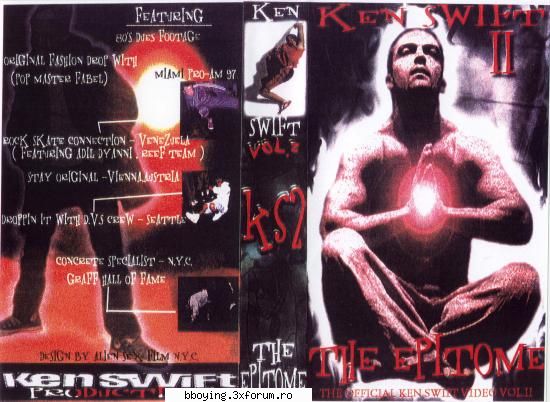
yeah bro..those words are real true... " then we could truly get down and cypher and praise God with our dancing"Dyzee... we definetly must praise God when we dance when we love u know what i'm sayin...cause the talent the power the inspiration is from God..and He is The Source... keep love in ya heart...God Is Love....Christ is Love.. much love fo ken Swift..real artist..real inspiration...keep it movin peace and much love... Bboy lil'Vietnam
True Hiphop..tha essence of Hiphop – poza de Lil'Vietnam, in BBOY'ing · 32KB
#132
Lil'Vietnam
Vizitator
The Temple of Hiphop is a Hiphop preservation society that practices Hiphop as a productive lifestyle. We believe that the preservation of Hiphop rest within the preservation of the Hiphoppa. We believe that Hiphop is Gods gift to us
Hiphoppa,
Thank you for your participation in the organizing of Hip Hop Appreciation Week. We appreciate your patience while the Teacha looks over your email request to participate in Hip Hop Appreciation Week, please take some time to read this auto reply. Hip Hop Appreciation Week, May 15th -22nd 2006 is a time to reflect upon ones role and responsibility toward the preservation of Hip Hop as an international culture of peace and prosperity. Hip Hop Appreciation Week is a time to discuss and express the history and proper techniques to all of Hip Hops artistic and intellectual elements. During this week Hiphoppas are advised to spend some time with their family and friends (especially children) discussing Hip Hop beyond entertainment. But most of all, Hip Hop Appreciation Week is simply a time to appreciate Hip Hop.
Anyone can participate in Hip Hop Appreciation Week. Those who would like to have their events part of an official Temple of Hiphop calendar are required to submit a proposal as to what you intend your event to be. Send proposals to Caddy One at . If your event is approved, it shall be posted on our myspace website and the templeofhiphop.org site along with other websites that will be covering the event. Your event will also appear in our press releases, grab bags and flyers. The Temple of Hiphop asks a 10%-25% (negotiable) tithe of all revenue made at participating events.
During Hip Hop Appreciation Week, May 15th -22nd 2006. Representatives of the Temple of Hiphop (Temple Reps) promote the productive uses of Hip Hop throughout their communities. Book readings, Film showings, spoken word events, aerosol art and breaking exhibitions, Hip Hop lectures, seminars and concerts are among the programs organized by official Temple Reps. To become an official Temple Representative, one must first be a registered member of the Temple of Hiphop. Secondly, one must submit a written proposal and resume of ones skills/education. We need to have a description of your area; and why you think the Temple of Hiphop would need to exist in your area.
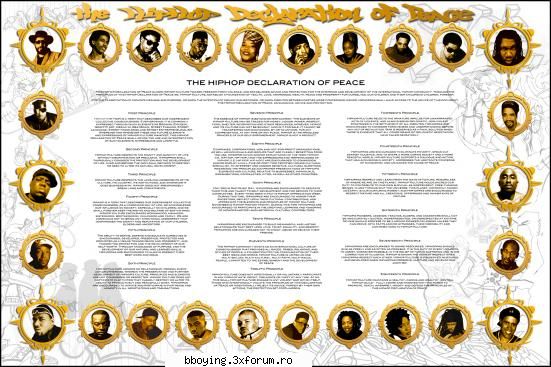
Lastly, a Temple Rep is required to be studied in the Hiphop Declaration of Peace. Once you are accepted as an official Temple Member you shall begin to receive the Apprenticeship Lessons which are taught to all new members. Temple representatives are required to be available for monthly calls throughout the year with the Teacha for organizational and inspirational purposes. The next monthly call will be Sunday, April 2nd, 2006 and every first Sunday of the month after that. Malik One organizes the weekly calls to the Temple Reps. Please contact Caddy One at to submit professional photos and rep proposals.
The Temple of Hiphop is a Hiphop preservation society that practices Hiphop as a productive lifestyle. We believe that the preservation of Hiphop rest within the preservation of the Hiphoppa. We believe that Hiphop is Gods gift to us. Please review the following orientation information.
The Temple of Hiphop
Hip Hop beyond entertainment
{Teachas Statement}
Peace and much love. The last days for others shall be the first days for us! Sisters and brothers truth is never new, but there is newness in the way that truth is revealed to each generation. Truth speaks no specific language, belongs to no specific race or religion and reveals itself in the most controversial of places. To seek truth one must be willing to explore ideas, environments and activities that one may have never encountered before. One must be willing to question accepted norms and possibly modify them. The fearful, the doubtful and the close-minded can never attain truth. For in their own minds they have decided to accept their own way as the only way and such a way deprives them of ever knowing the ways of others. As a result, many fearful, doubtful and/or close-minded people simply wish for the changes that they themselves have not the power to actually attain. To change you must actually change! You must take off the old and actually put on the new. You must seriously be re-born.
We may all talk about the seeming rise in mass institutionalized oppression, injustice, corruption and deceit but how many of us are actually ready to do something about these social ills? How long shall we discuss progress and change through the same old traditional paradigms taught to us by those institutions we claim are ripping us off. We must become NEW! If we are truly serious about changing and/or advancing the societies in which we live we must begin with the transformation of our individual hearts and minds. There is no enemy greater than the ignorance of ones own self.
The traditional modes of change such as voting, educational accreditation, the passing of new laws, religion and even economic advancement have still not achieved the sweeping changes necessary for the actualization of freedom and justice for all. The truth is, no society is capable of mass productive change without first a renewal of mass social consciousness toward such a change. If we keep doing the same old things, we shall continue to receive the same old results. No one owes us anything! That which we refuse to achieve for ourselves is that which we agree we dont deserve to have. If we cannot respect ourselves, love ourselves, feed ourselves, protect ourselves, then how can we expect someone else to do this for us?
From the highest truth to the lowest fact, we must be willing to seek the truth of our own existence. We can still respect and even support the truths and facts of others foreign to our experiences, but if we fail to respect and support the truths and facts of our own experiences how then can we achieve that which we claim we deserve? At some point we must begin the process of believing in the certainty of ourselves. For if we dont believe in ourselves, who will? The Temple of Hiphop is indeed a change in consciousness. We believe in ourselves! We believe in our Hip Hop selves. No, we dont claim to have all the answers. But one thing is for sure; we are Hip Hop!
We may be unsure, uncertain and even ignorant to most other subjects pertaining to the welfare of even our own lives, but we are certain of Hip Hop. And within that certainty we have a chance at a better quality of life because there is no challenge greater than those who have perfected themselves. We may not be certain of the voting process, but we are certain of Hip Hops process. We may not be certain of the national histories of the nations in which we live, but we are certain of Hip Hops history. We may not be accepted by the traditions of the worlds major religions, but we are indeed accepted by God! And with these certainties we can build a lifestyle capable of providing us with that which we say we deserve, freedom, justice and equality! Is this not the dream of our elders and ancestors? Is God not with us also? In fact, where is an omnipresent God not? Indeed, Hip Hop is not separate from God and neither are Hiphoppas. It may be time for us as Hiphoppas to seriously begin seeking God for ourselves. And this is where the Temple of Hiphop begins.
True Hiphop..tha essence of Hiphop – poza de Lil'Vietnam, in BBOY'ing · 16.6KB
#133
Lil'Vietnam
Vizitator
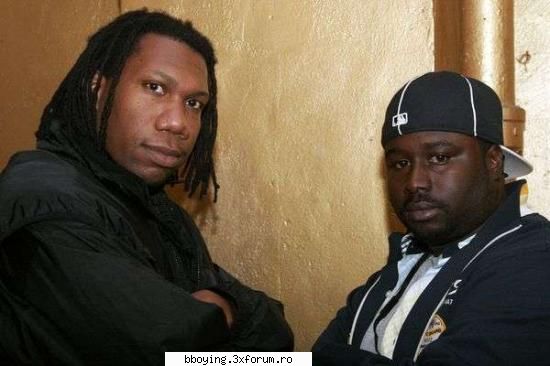
Indeed, Hip Hop is not separate from God and neither are Hiphoppas. It may be time for us as Hiphoppas to seriously begin seeking God our teacha KRS ONE
True Hiphop..tha essence of Hiphop – poza de Lil'Vietnam, in BBOY'ing · 33.9KB
#134
Lil'Vietnam
Vizitator
"God is for everyone. It's crazy to say there is no god when u look at all the beauty in life. And to me that means everything,every creation, emotion, everything."Bboy Vietnam
True Hiphop..tha essence of Hiphop – poza de Lil'Vietnam, in BBOY'ing · 19.9KB
#135
Lil'Vietnam
Vizitator
Hip Hop history reading..
Peace to Kounter Kulture for the article and Tyquan ZK Ohio for the link! Enjoy!
Hip Hop History: Part 1 - 6
HIP HOP HISTORY: PART 1
by Kounter Kulture
Around 1929 the South Bronx was certainly not what it is today. It was a place where Irish, Jewish and Italian families raised their children and did their best to maintain their cultural traditions, while living in what was so often referred to as the New World. Despite the Great Depression that was going on at the time, the future didnt look so bad, for at least they had their own communities or so they thought!
In 1929 the New York Regional Plan Association had something else in mind for the future. They envisioned Manhattan as a centre of great wealth and to provide the necessary workforce to fuel this affluent centre, a massive expressway would be built that would connect Manhattan to the suburbs. This way commuters could literally drive over the Bronx and whatever other areas spanned across this 7 mile experiment.
Robert Moses, who was recognized as the most powerful Urban Builder of all time, was at the head of this project after World War II. He was a man who wanted to make history by any means necessary. And indeed he has done just that, but the price has been higher than just the cost for the raw materials. In the path of this expressway were those communities who dreamed of a better future. 60,000 Bronx residents were simply told that they had a few months to move out and were given $200 per room as a compensation. Thus began the exodus of the Irish, Jewish and Italians out of the Bronx.
Meanwhile, in Manhattan, another exodus was to take place. Under the guise of Urban Renewal poor Blacks and Hispanics were forced to leave and relocate to the South Bronx and East Brooklyn. To house them, towering flats were built on a massive scale. The Bronx River Projects and the Millbrook Projects both contained 1,200 units on fifteen floors; the Bronxdale Projects contained 1,500 units and the Patterson Projects rose to 1,700 units.
Those Italian, Irish and Jewish families who were not able to leave so quickly began to form gangs that attacked the incoming Afro-American, Afro-Caribbean and Hispanic families. In turn, these newcomers formed their own gangs in self-defence. Tensions were high on both ends. Organizations like the Black Panther Party and the Young Lords did what they could to mobilise the communities to protest for better services, but pressure from the authorities and conflicts with the gangs soon ended those efforts.
To make matters worse, industry was moving out of the area and factories were being left abandoned. As a result, 600,000 manufacturing jobs simply disappeared. People were left to survive on social welfare with most getting less than $2,500 a year.
In came the slumlords!
Slumlords began buying up apartment buildings and charging unreasonable rent prices. In fact, the object of the exercise was to force people to move out. When they couldnt pay rent, the electricity and water were turned off. When the building was emptied out, the slumlords would pay some poor street thug $50 to set the building on fire and would then go collect $150,000 from their insurance company. This became very widespread and caught the attention of politicians but for the wrong reasons!
Because these fires were reported as arsons, politicians like Senator Daniel Patrick Moynihan began making statements like, People in the South Bronx dont want housing or they wouldnt burn it down. This lead to them forming a concept known as benign neglect. In other words, if the people in the South Bronx dont care about their community, then why should we give them any funding to build it up? Why not just neglect them until they go away? Of course the slumlords certainly werent going to step forward and volunteer the truth of the matter that they were the ones burning down the buildings to collect insurance, and who would believe some poor, young kid from the streets.
As a result of this benign neglect being put into effect, funding for social services were cut. On top of that, seven fire companies were closed down and thousands of fire fighters were laid off. As a result, more than 30,000 fires were set in the South Bronx which destroyed 43,000 housing units! Entire blocks were turned into ghost towns!
Amongst these ashes Afrika Bambaataa was raised. And from these ashes Afrika Bambaataa would see and participate in the coming together of a Hiphop Kulture.
Afrika Bambaataa was born Bambaataa Kahim Aasim to Jamaican and Barbadian parents. Although it is not clearly known when he was born, it is safe to speculate that his birth took place between 1957 and 1960. What is clear however is that Bambaataa spent his earilest years witnessing the turbulent and dynamic Age of Revolution (1961-1971).
Although he was born in Manhattan, he was raised in the Bronx River Projects by his mother, who was a nurse and came from a family that was very involved in the international Black cultural and liberation movements. His uncle, Bambaataa Bunchinji was a Black nationalist and many others in his family were followers of the Nation of Islam.
From an early age, Bambaataa would appreciate the power of selecting music to play for the crowd. His mothers record collection would include diverse styles from Miriam Makeba, Mighty Sparrow, Joe Cuba, Aretha Franklin, James Brown, Sly Stone and the Family and much more. The young Bambaataa would place his speakers in the window of their ground floor flat in the Bronx River Projects and blast his music for the kids who hung around on the asphalt out front.
As a young child, Bambaataa was greatly influence by the 1964 movie classic Zulu, and after seeing it, he vowed that one day he would have his own group called Zulu Nation. But when the movie ended and he looked outside of his window, he realized that this dream would have to be put on hold.
White gangs were forming alliances with one another to prey on youth of color. Smack was flooding into the Projects like a tidal wave. Black and Puerto Rican gangs had to deal not only with the White gangs, but also with the junkies, as well as each other. It wouldnt be long before Bambaataa would be drawn into this world.
At first he became part of a gang known as P.O.W.E.R. which stood for Peoples Organization for War and Energetic Revolutionaries. P.O.W.E.R. imitated and used the rhetoric of the Black Panthers but their main goal was to avoid being overrun by the Black Spades, who dominated the nearby Bronxdale Projects. But P.O.W.E.R. didnt last long as the violent struggle against the White gangs and the police lead its leadership to go underground. This lead Bambaataa to join the Black Spades and convert the Bronx River Projects into Black Spades territory. Having successfully done this, he was appointed by the leader of the Black Spades to the high position of Warlord, whose chief duties involved stockpiling the arsenal, training the members in fighting skills and military techniques, and negotiating times and places for rumbles. He also became the Master of Records.
With the Bronx River Projects now under his watchful eye and leadership, the groundwork was set for the future rise of the Universal Zulu Nation, as well as the coming together of Hiphop Kulture.
Out of the ashes of a burnt down Bronx came the widespread presence of youth street gangs. Those Projects and areas that did survive the fires would become the breeding grounds for gang recruitment. And the destroyed abandoned buildings would become the Clubhouses where these gangs would set up their headquarters.
One of the principle figures that influenced the spread of gangs and how they functioned in the Bronx was Benjamin Melendez. Benjamins family was living in the slums of Manhattan when in 1961, Robert Moses began implementing his Urban Renewal plan to clear out the poor families to make room for offices and high-rise apartments. The Melendez family ended up in the Bronx.
Benjamin joined a small gang called the Cofon Cats but soon got tired of hanging out with them. When his family moved to the Crotona Park area, which is close to the Bronx River Projects, he decided to form his own clique. After coming up with several names Seven Immortals, Savage Nomads, Savage Skulls he finally settled on Ghetto Brothers.
Later, other members of the Ghetto Brothers would go on to use those other names to form their own gangs in other areas: Seven Immortals, Savage Nomads, The Renegades, Roman Kings, Taino Brothers, Boricua Brothers and the Savage Skulls, who would later become the second largest gang in the Bronx the largest being the Black Spades. Even the Black Spades can be traced back to Benjamin as before they became the Black Spades, they were known as the Savage Seven.
Other gangs that sprung up in the area were the Mongols, Dirty Dozen, Peacemakers, Turbans and the Chingalings. Those few remaining poor Whites formed the Authur Avenue Boys, Golden Guineas, War Pigs and the Grateful Dead. Most of the Blacks were in the Black Spades and the other gangs were mostly Hispanics.
Although gangs in those days were still violent and territorial, they functioned differently than those of today. The Ghetto Brothers emerged in a time when the Black Panther Party and the Young Lords were in the slums fighting for the implementation of their Ten-Point Programs. In fact, the Ghetto Brothers supported the Young Lords in their efforts to provide services to the community and to try and clean it up. So much so that they began to dress up militantly, wearing Black Berets and growing their hair long.
When smack was creating big problems in the neighbourhoods because of the junkies who would rob, steal and maim to get high, the gangs stepped in and started wiping them out. The Ghetto Brothers protested the quality of health care at the local hospital, which they called the Butcher Shop. They questioned why there were no jobs or recreation facilities for the youth and spoke out against corrupt politicians. They even forced slumlords to allow them to enter the flats so that they could clean them up. Melendez had a different vision for the future of gangs.
But what makes Benjamin unique to Hiphop Kulture is that he had a passion for music. In fact, "Ghetto Brothers" was originally more than just a gang name, it was also the name of their Latin-Rock band, consisting of himself and his real brothers: Ulpiano, Victor and Robert Melendez. They released their only album Ghetto Brothers Power Fuerza around 1972.
Even more important to his influence on Hiphop Kulture were the unprecedented moves that he made which led up to the release of that eight-song album. Having been influenced by those movements that surrounded him, Benjamin decided it was time to unite the rivalling gangs.
In 1968, J. Edgar Hoover began to lay out his objectives for the FBI COINTELPRO. He wanted to wipe out the Black Panther Party, the Nation of Islam, the Young Lords Party and many others. Around the country, members of these movements were rounded up and placed in prison. In New York, 21 members of the local chapter of the Black Panther Party were arrested and sent to jail for two years before the charges were dropped and they were released. One of those members was Afeni Shakur, mother of Tupac Amaru Shakur.
With these groups gone, the gangs began to turn more on themselves rather than on the powers-that-be. Benjamin decided to make a move. He removed the Warlord position from the Ghetto Brothers and replaced it with Peace Counselor. A half-Black, half-Puerto Rican ex-junkie known as Black Benjie would be the first to take on this responsibility.
Black Benjie would go around to other gangs and invite them to block parties in the Ghetto Brothers' territory. The Ghetto Brothers opened up their borders in the name of peace. They played their music and no one got hurt. People just came to have fun.
But this wasnt enough. Gang violence was increasing and three Ghetto Brothers got shot. Benjamins brother Victor, who was now President of the Savage Nomads, was stabbed. Black Benjie was sent out to try and calm things down. He met up with the Mongols, Seven Immortals and the Black Spades, who together were on their way to a rumble against the Savage Skulls. Black Benjie tried to convince them to talk about a truce but one of the Seven Immortals pulled out a pipe and another pulled out a machete. The Ghetto Brothers had no weapons, so Black Benjie ordered them to run, but he was not able to get away. He was bashed in the head with the pipe and fell to the ground, where they continued to beat him. He later died in the hospital.
Melendez was left with no choice but to retaliate. All the gangs were preparing for an all out war. Yet Melendez said, No, Black Benjie died to bring us peace. Everyone was ready to override his decision. Even ally gangs leaders were ready to make moves if the Ghetto Brothers didnt. So Benjamin called for a meeting of all the leaders to organize a gang truce. There was a massive turn-out and everyone got a chance to air their differences and grievances. One of the most prominent and powerful speakers was Bam Bam, the leader of the Black Spades, who was being guarded by his Warlord, Afrika Bambaataa.
After all of the anger was vented and ideas expressed, a truce was agreed upon. All the gang leaders signed it and borders were opened up. Afrika Bambaataa was inspired by what took place that evening and held on to the spirit of the truce. Soon after, Bam Bam went to fight in the Vietnam war and Bambaataa would become the President of the Black Spades.
After the truce, the Ghetto Brothers continued to have their block parties, inviting other gang members to join in peace. Although they may not have had turntables upon which they cut and mixed vinyl, we must recognise, whenever possible, the pioneers of ideas. The Ghetto Brothers would plug the amps for their instruments and speakers into the lampposts in the parks, long before DJ Kool Herc did it with his sound system. And even Afrika Bambaataa would later use the idea of uniting rival gangs through block parties with music, dance, and graffiti art.
The Ghetto Brothers may have never rapped, beatboxed, spun a record, did a head-spin or tagged their name on a train, but they set the stage for DJ Kool Herc and Afrika Bambaataa.
Peace! Kounter Kulture
HIP HOP HISTORY: PART 4
By Kounter Kulture
Clive Campbell was born in Jamaica, the first of six children. The year was 1955 and Kingston wasnt the nicest place to live in with all of the political turmoil. Clives parents, Nettie and Keith, did their best to provide for their children and to distance themselves from the troubles. Clive spent his early years growing up in Trenchtown.
Keith Campbell and Clives younger sister Cindy were both record collectors. And their collection spanned from reggae to soul to country. Clive would sing along to the American songs in an effort to learn the accent. He would also sneak around to check out the Sound Systems blasting music all night. King George was the famous Selector in his area and he dreamed of one day being like him.
His mother Nettie began studying and working in New York and thought that it would be a better place for her children to be raised, for there were more opportunities. And at the time, many Jamaicans were already migrating to New York. So Clive was the first of the children to join his mother in 1967.
The Campbells lived on East 178th Avenue, not far from Crotona Park where the Ghetto Brothers and other gangs roamed. Living in New York was a big change for Clive and being from Kingston didnt help. This was pre-Bob Marley, so it wasn't cool to be Jamaican yet. At school he was fiercely teased for the way that he talked and dressed and on the way home he had to avoid certain streets where Jamaicans were being thrown into garbage bins!
Clive started hanging out with the Five Percenters, who introduced him to New Yorks Street Language, as well as sharing with him the Science of Self-Knowledge. The Five Percenters, having a different awareness than the average New Yorker, had a natural respect for Clive, for in their eyes, he was just another Blackman like themselves. Clive also started hanging out with the Cofon Cats, the same gang that Benjamin Melendez joined when he lived in that area. But just like Benjamin, Clive quickly got bored with them and came to realize that gang members were really cowards who could not stand on their own. Besides, he had other things on his mind like music!
Clive would spend a lot of time listening to the radio, especially the Black stations, WBLS and WWRL. But it was at the house-parties that his mother brought him to that he would hear the kind of music that could rock a jam Aretha Franklin, The Temptations, Smokey Robinson and most importantly, James Brown. Clive was hypnotized by the atmosphere at those house-parties and would pay close attention to the little things taking place that the average person simply would pay no mind to. In Kingston, he could only hear the Sound System from the outside because he was too young to get in. But now he was in the party and absorbing it all like a sponge.
Around this time, Taggin was getting popular in the area and so he joined the quest for name recognition by taggin CLYDE AS KOOL on the walls. Since people couldnt remember Clive he just told them his name was Clyde, which was easier to remember because at the time the New York Knicks had Clyde Frazier playing for them. The KOOL part came from the cigarette ads that depicted these James Bond-type, super-cool men who obviously smoked KOOL cigarettes. Soon he would hang out with one of Graffiti Arts legendary supercrews, the EX-VANDALS.
Clive was also very athletic. He ran track, lifted weights and played rough Street Ball in the playgrounds. His mates would take the piss by calling him Hercules because of his bullish power-drives to the hoop. But Clive didnt like this name because it just didnt sound hip enough. So he shortened it and told everyone to just call him Herc. Thats when he dropped the CLYDE from his tag and added HERC, becoming known as KOOL HERC.
Peace! Kounter Kulture
HIP HOP HISTORY: PART 5
By Kounter Kulture
Graffiti Art was forming long before Kool Herc decided to tag up CLYDE AS KOOL. In fact, the art of writing on walls can be traced back to Ancient Egypt and beyond. But when it comes to things like Taggin, Piecin, Burnin, Bombin and Throw-Ups... these are unique to Hiphop Kulture.
Taggin up your name actually did not begin in New York, it began in Philadelphia around 1965 when a young Black kid named Cornbread started writing and painting CORNBREAD on the walls of subway stations in an attempt to attract the attention of a girl he liked named Cynthia. The letters he used were basic but began to evolve over time into the Gangster Style. Around 1968 CORNBREADs protg TOP CAT brought the Gangster Style to New York, where it was picked up by a kid named Julio from 204th Street.
Julio started taggin up JULIO 204 to represent where he was from, which ushered in the new style of taggin your block. A young Greek-American kid from 183rd Street in Washington Heights named Demetrius took it to the next level when he started taggin his nickname and street, TAKI 183, on moving vehicles like ice-cream trucks. Also, because he worked as a messenger boy, which took him all over the city, he was able to spread his tag all over New York. This caught the attention of the New York Times, who tracked him down for an interview.
Demetrius told the reporters that he simply did it for the attention, much as Cornbread did when he first started taggin in Philly. When the Times printed the article, Taggin was popularized in the inner-city and overnight tags started popping up everywhere CLIFF 159, JUNIOR 161, CAY 161, CHE 159, EVA 62 and many other young kids were picking up fat makers and spray paint cans to get some attention as well.
Although it may have been the Age of Revolution (1961-1971) for the many philosophers and revolutionaries who wanted to change the world, it was the Age of Darkness for the younger generation who lived in that world that needed to be changed. While these great revolutionary figures stood in the spotlight, behind them was a long shadow covering many young people who also wanted to be recognized. And now they would have their chance.
Taggin became more than just a way to get attention; for some it became a mission, an adventure. As the Taggin pioneer SPAR ONE put it, You started on your street, then you went to the buses. You take over your neighbourhood, then you take over your homeline, then you take over your division, then you take over all city.
Soon the quest was on to put your tag in the most visible of places. Young kids would dare to hang off of bridges and buildings from ropes to get their tags up. The competition raged on until the female Graffiti pioneer STONEY tagged up the Statue of Liberty!
Taggin also caught on fast with gangs. Obviously, one of the main objectives of any gang is to mark their territory. Soon, rival gang members could no longer use the excuse that they did not know they had crossed the lines.
Then Taggin turned into Piecin and more colour was introduced to what you would tag up. But something else happened as well racial and class unity! The EX-VANDALS the legendary Graffiti supercrew from Brooklyn started putting up their Pieces along multiple trainlines which went far outside of the inner-city area. Soon White kids from the Upper East Side were learning the art from Black kids in the Bronx. And Brooklyn Latinos were learning from working class White kids from Queens. Multiethnic crews became normal.
Soon Writers Tables began to form in the school lunch halls. Those with the most skill and whose Pieces were up in the boldest places could sit at the designated table, everyone else had to stand if they wanted to get down. Outside of school on Atlantic Avenue, 149th Street and other spots, Writers Benches formed where young kids from all over would meet up to compare their Blackbooks and plan missions for the Ghost Yard.
The Ghost Yard was a train depot on the Northern tip of Manhattan where many of the cities trains would come to be serviced and prepared for the next days runs. For young 10, 11 or 12 year olds, this was indeed one hell of a mission. First you had to get there by travelling through the gang territories, then you had to get through the fence, pass the dogs and security guards and finally find the best train car upon which you will put up your Piece. Mind you, if you wanted to put up a nice Piece, that meant having to carry a big, heavy backpack full of cans. It also meant spending a good deal of time Piecin it up and hoping that you didnt have to abandon it half way through if the guards came. If you managed to get your Piece up, the journey home was easy as you sat thinking about the bragging rights you would have to display the next day in school.
Then it was time for the next generation of style. But this would come in a very unusual way. In 1972, the citys Anti-Graffiti Campaigns began and by November 1973 the Metropolitan Transit Authority had finished repainting their fleet of 6,800 train cars. Every trace of Graffiti was gone! You would think that the Writers would have been upset, but they were indeed overjoyed! This meant that now you would not have to waste paint and time painting over an old Piece you could literally start from scratch. In fact, the whole movement could start from scratch. And so the Writers Tables and Writers Benches were bringing together the best of the best PHASE 2, RIFF, TRACEY 168, BLADE, DONDI, KASE 2, SEEN.
The new style that emerged added outlines, more colors, patterns, highlights, depth, shadows, arrows. Names were bubblized, gangsterized, mechanized, dissected, bisected, cross-sected, fused, bulged, curved, dipped, clipped, chipped and disintegrated. They were filled with shooting stars, dripping blood, energy fields, polygons and some floated on clouds, zipped with motion lines or shot out from flames. And they got bigger and bigger and bigger! They went from Window-Down to Top-to-Bottom to End-to-End to Whole Cars. They even went to entire Productions, like the Freedom Train which covered 10 entire cars Bombed by CAINE 1, MAD 103 and FLAME ONE.
What happened next almost destroyed the Graffiti movement in New York. Funding for the Metropolitan Transit Authority was cut and so the security in the Ghost Yard diminished. You would imagine that this would be good news for the Writers. But when the fleet of newly painted trains rolled out, it drew the attention of hundreds of other inexperienced kids who wanted to get their name up as well. There were two obvious problems; one was space and the other was security. Thus was born the Throw-Ups which were basically intended to get your tag up quick. It was generally two colours and the letters went back to the basics.
So whats wrong with that? Imagine you sit down for a week putting together your nicest Piece. You go through the trouble of getting your paint, getting to the train yard and spending the night Burnin your Piece onto a freshly painted train. Two days later, you invite your friends to check it out and all you see is this ugly two-tone Throw-Up. The morale of the true artists was falling rapidly, and some Writers were simply walking away from the game.
But some started hearing of a place where they could go to not only compare the fresh Pieces on the walls with those in their own and others Blackbooks, but they could also see some amazing new dancers and hear some amazing new sounds without having to worry about the police or gang rivalry. It was known as the Park Jams and the grand hosts were none other than DJ Kool Herc or Afrika Bambaataa.
Peace! Kounter Kulture
HIP HOP HISTORY: PART 6
By Kounter Kulture
It would take a little time and strategy before Bambaataa would be able to have his peaceful Park Jams. But the time was soon coming when he would be able to live up to the meaning of his name Bambaataa, which means Affectionate Leader.
After the gang truce of 1971, Bam Bam (still leader of the Black Spades) gave Bambaataa the assignment of expanding the Black Spades further beyond the Bronx River and Bronxdale Projects. Having always been such a fearless and charismatic youth, he implemented an interesting tactic. He would go to each area where other gangs ruled and make at least five friends from those gangs. And he did this so successfully that not only could he walk wherever, but if he ever had any problem, he could easily gather a force of 300-400 gang members from different areas to resolve the problem.
He then began studying the historical tactics of Napoleon and Shaka Zulu in school and applying these strategies to the conquering of other territories. Soon the Black Spades stretched from Bronx River Project to the Soundview, Castle Hill, Monroe and Patterson Projects. And it didnt stop there. Black Spades spread into the projects of Harlem, Brooklyn and Queens. It was by far the largest gang in New York. All the while, efforts were constantly made to stay true to the original truce that the Ghetto Brothers called for.
Unfortunately, the White gangs were not part of that truce and soon the tensions reached critical levels at the Stevenson High School. Bambaataa lead a mass united force to the area and stomped out the White gangs. But he now began to question his power and what he was doing with it. Bambaataa began to wonder if he could use these strategies to create peace instead of war. He decided that music might be the way to go about it.
Deejays were already present throughout the Projects and so Bambaataa took the opportunity to become an apprentice to two former Black Spades who were now Deejays Kool DJ D from the Bronx River Projects and Disco King Mario from the Bronxdale Projects. Soon Bambaataa would begin having his own parties at the Bronx River Community Centre.
With Bam Bam gone off to Vietnam, Bambaataa made his first move as an "affectionate leader" to get young kids away from the gang life. He started the Bronx River Organization as an alternative to being in the Black Spades. He emphasized to the members that it was not a gang, but rather an organization seeking peace. He encouraged members not to look for trouble, but if trouble came to them that they should fight like hell.
Just as he did with his previous mission, Bambaataa began forming alliances with other Deejays and soon he would drop Bronx River and simply call it The Organization which allowed it to gather members from other areas, as well as to spread to other areas. Once again, the conquest was a success and this time it had the full support of the community because members of the community would rather see kids dancing than fighting and killing each other. But things took a turn for the worst.
In January 1975, Bambaataas young cousin, Soulski, was shot dead by the police. A month later, a 14 year Black kid was shot dead, again by the police. A gang known as The Peacemakers declared war on the police. Leaders from all of the other gangs called Bambaataa and told him they were ready when he was. Community leaders pleaded with Bambaataa to not retaliate and to wait and see what happens with the court hearings. Bambaataa was now where Benjamin Melendez found himself when Black Benjie died. But this was worse because going to war against the police force could have grave consequences. Bambaataa agreed to wait for the trails. But the cops were acquitted!
Anger swept across the gangland, but Bambaataa retreated his forces in search of a better way. Young kids had little to believe in at this point. At any moment, there life could be taken away and nothing would be done about it. Community leaders, social workers, Christian preachers no longer had the words to reach the minds of these poor, fatalistic kids. The only ones able to be heard anymore were the Nation of Islam, the Five Percenters and the followers of Imaan Isa, from the Ansaaru Allah movement in Brooklyn. Bambaataa could see why these teachings were necessary at that time, but he also saw their limitations. So he continued to search for another way.
He entered the Housing Authority Essay Writing Contest and won a trip to Africa and Europe. For a young kid who had never really been that far outside of the Bronx, going to these far off places and seeing the different cultures opened his eyes to a different worldview. His meeting with a Zulu Chief in Africa served to have a great impact as he was told of how gang life in the Bronx was not so different than the tribal wars going on in Africa and around the world.
Bambaataa returned to the Bronx with an optimistic sense that something could be done to unite not only the gangs of New York, but perhaps even the whole world. It was time to take his childhood dream off of the back burner! He changed his name to Afrika Bambaataa, turned The Organization into Zulu Nation and brought together one of the first B-Boy crews, the Zulu Kings.
Peace! Kounter Kulture
Hip Hop History: Part 7 - 13
HIP HOP HISTORY: PART 7
By Kounter Kulture
The Zulu Kings may have been amongst the first B-Boy crews, but they were certainly not the first B-Boys. In fact, Breakin, as we know it today, is an amalgamation of many styles from many areas. Perhaps the greatest influence to all original B-Boys could easily be recognized as James Brown, and to a lesser extent, but still significant, Muhammad Ali.
In the 60s there were many things happening that brought about the evolution of the first B-Boys. James Brown was employing some of the best drummers in America to come up with the funkiest Breakbeats which he would dance to in between his verses. Like New York's original B-Boys, James would always seek to come up with new moves and to reinvent old ones. Millions of young kids from the East Coast to the West Coast would be inspired by his innovations.
Muhammad Ali also brought something to the world of Hiphop Kulture – the Art of Boxing. Boxing was always looked upon as a crude sport with no artistic beauty, but Ali made it "pretty" as he would "float like butterfly and sting like a bee." If you look carefully at the Uprock, which was known to gangs as the Outlaw Dance, even to this day if you compared it with how Muhammad Ali would "dance" around the ring, you will see what I mean. This was very appealing to gang members.
In the gangland, this aggressive dancing was used to battle for territory. Two rival gangs would meet at the borderline of their turfs and the Warlords would face off, doing their dance routine, which was actually a display of what one gang member was going to do to another – stab, jab, kick, punch, bob and weave, flip a butterfly knife, etc. Sometimes the gang with the most impressively executed and most painful looking moves would win the battle without having to rumble. The losing gang would simply acknowledge, out of respect, that they weren't ready to take them on and would give up that part of their territory... until next time!
In Harlem's Jackie Robinson Projects, there was a gang known as the Spanish Kings. The younger members of the Spanish Kings were known as the Baby Kings. Because the Baby Kings couldn't get into the clubs or house parties, due to their age, they would hang out in the street practicing their "Outlaw Dance." What people saw was a combination of Ali's boxing steps combined with James Brown's footwork – an artistic display of aggression!
Legendary B-Boy Popmaster Fabel lived in those Projects and picked up the dance from the Baby Kings. While most of the early B-Boys were Hispanic and Black, it was the Blacks who dominated the Park Jams. But it was also the Blacks who would begin to abandon the dance by the mid 70s. The Hispanics however, kept it going and began taking it to the next level. That's when Afrika Bambaataa formed the Zulu Kings. Others crews were the Bronx Boys (also known as the Disco Kings), Salsoul, Starchild La Rock, Rockwell Association and the Crazy Commanders.
That's when B-Boys hit the floor! This new generation of Uprockers, who grew up watching Kung Fu movies began incorporating sweeps, kicks, spins and fancy floorwork that had them now spending just as much time on their hands as on their feet. Each week, the battle was on to invent the never before seen moves that would leave the crowd wishing someone would do it again because they couldn't believe it happened the first time. Legends like Beaver and Spy would light up the dance floor like Tops spinning out of control, yet keeping to the beat.
But the Legend of all Legends was a young kid who believed in the art form so much that he almost single-handedly resurrected it when it was literally breathing its last breath. His name was Richie "Crazy Legs" Colon.
Richie Colon was only 10 years olds when his cousin Lenny Len and a neighbourhood friend from the Zulu Nation named Afrika Islam introduced him to the world of B-Boyin. Richie was learning how to box at the time, as well as practicing martial arts. But here were his two mates in his living room performing this mesmerising new dance, but without music. Immediately, he wanted to know everything there was to know about it. But he would have to wait a year before he could really see what it was all about. The following summer, Lenny took him to a schoolyard jam in the Crotona Park area and thus began his mission to be the best B-Boy in the city.
What he saw that day would forever transform his life. Writers stood near the wall comparing Pieces, as the looked through each other's Blackbooks, which were filled with the Pieces that they had mastered and the potential new Pieces that would soon appear somewhere in the city. Kids were everywhere having fun. The music was energetic and for the first time, he saw the B-Boys dancing to the Breaks selected by the host Deejay, as the Emcee moved the crowd with his words. That day, Crazy Legs was born!
For the next two years, Crazy Legs would learn everything that he could from Lenny Len not knowing that this was, in reality, training for his mission. He would witness some of the masters coming out of the Zulu Kings, like Beaver and Robbie Rob and the infamous "man of a million moves," Spy from the Crazy Commanders.
At age 13, his family moved away from the Bronx to the North side of Manhattan near the Ghost Yard. There he and Lenny battled the original Rock Steady Crew, with Jimmy Dee and Jimmy Lee, and lost. But that's when he became a member of that Crew. In those days, if you lost but put up a good battle, you would be invited to join forces with the triumphant Crew.
But there were hardly any crews left in Manhattan, or in the Bronx. B-Boyin was dying out as Emcees and Rappers were stealing the attention away from them by using the Breaks for there Raps. Crazy Legs refused to accept that B-Boyin was a thing of the past, so his mission began. He went everywhere he could to find any B-Boy still standing and would battle them. But he would battle with more than just a desire to win; he battled to keep the art form alive. Each person he beat, he would invite to be a part of his Crew. No matter where it was, if he heard that there were still B-Boys in that area, he would go with his crew to battle – even if it was 50 blocks away or in another Borough!
He battled the Rock City Rockers, who came out of the Zulu Kings, the Young City Boys, Buck 4 and Kuriaki. His crew began to swell! Seeing how passionate and determined he was to keep the dance alive, Jimmy Dee humbly gave the name Rock Steady Crew to Crazy Legs and made him its leader.
As the new leader of Rock Steady, he aimed for the top and before long the Crew grew to about 500 members. They were unstoppable and unbeatable! So they began to form "expansion teams" to keep competition alive. Two teams that came out of that would soon become the Rock Steady Crew's fiercest rivals – the New York City Breakers and the Dynamic Rockers. From there, B-Boys came back into the jams to reclaim the spotlight for while.
Breakin was kept alive by the energy of this young teenager who's life was transformed by the peace, unity and fun that he witnessed that day at the Park Jam.
Peace! Kounter Kulture
HIP HOP HISTORY: PART 9
By Kounter Kulture
Crazy Legs wasn't the only one to be influenced positively by those Park Jams in the Bronx. In fact, it could very well be said that it was as a result of those block parties that Benjamin Melendez's dream of uniting gang members became a reality and that Afrika Bambaataa would see his dream of creating the possibility of not needing gangs.
Kool Herc would also come to believe in the unifying and uplifting power of jamming in the park. But it would take some time before the Park Jams could be resurrected. Although Melendez succeeded in showing what could be possible by celebrating life, others still saw power in death and negativity. After his family began to receive death threats from those gang members who just couldn't let go of that mentality, Benjamin, along with his wife and children, disappeared, never to be seen again. The Ghetto Brothers were now dead, and with them died the Park Jam – but not forever!
When he moved to New York, Kool Herc's father, Keith Campbell, found work as a soundman for a local Rhythm and Blues band. He invested his money in a quality Shure P.A. system. The band wanted someone to play records during the intermission, so Kool Herc was asked would he Deejay. But Herc wanted to do his own parties with the system. So his father tells him he can't use the system if he does not Deejay for the band. This frustrated the young Kool Herc, but luck would soon come his way.
See, there was a problem with Keith's Sound System – he could not get it to peak. He and his son would be hearing others who had the same Shure P.A. system but for some reason their's was much louder. Of course, these others would not share their secret – and when you're Sound System is not pumping strong, you can't compete for clientele.
One day, Kool Herc was playing around with the system. Of course, his father wasn't home. At some stage he tried a little experiment. He placed a jack on the speaker cable and jacked it into one of the channels. That way, he could control it from the preamp, which gave him extra power and reserve power. The system was now roaring! It was now louder than the other systems. As he jammed away, Kool Herc's father came home and snuck up behind him. Herc turned around and had guilt written all over his face. His father asked where all the noise was coming from. He answered that it was their Sound System. Naturally, his father asked how this was possible. Herc joyfully showed his father what he had done. His father, realizing what this meant for business, proudly smiled at his son and told him that he could use the system for his parties. So they set up a "Father and Son" business and Kool Herc began Deejayin.
Fires were still raging in the Bronx and when Herc's younger brother was playing with matches, the fires reached their home. Fortunately, no one was hurt and the family was temporarily relocated to the Concourse Plaza Hotel in the West Bronx. There, Herc would hang out in the disco downstairs called the Plaza Tunnel. Even after the family finally moved into another apartment on 1520 Sedgwick Avenue, he continued to frequent the Plaza Tunnel with his mate from school, Shaft, who along with John Brown, was the Deejay there. Herc liked it there because they played the raw music that wasn't being played elsewhere, and the crowd loved it.
This was a time when radio was really softening up on their play lists – even Black programmers. So the raw sounds of James Brown and Rare Earth went underground and found a loyal audience in the Bronx. Kool Herc was absorbing all of this Street Knowledge and would soon be ready to rock the crowd himself. That's when his sister Cindy asked him for a favour.
Cindy needed to make some money for the upcoming school year so that she could buy some nice clothes. She had an idea. If she rented out the hall where they lived, bought some booze at bulk prices and charged 25 cents for the girls and 50 cents for the boys, she could make her money back and have plenty of profit. Kool Herc agreed to help and on the last week of August 1973, he set up his system and the party was on. It was a huge success and so they decided to continue to do it on a monthly basis.
Word spread and the parties got bigger. At the time, discos were shutting down and house parties were declining in the South Bronx, in part because they were being overrun by rowdy Black Spades. This lead to people going over to Herc's parties in the West Bronx, which kept the hall filled for each jam. Then, in the summer of 1974, Kool Herc decided to throw a free outdoor Block Party. He had noticed some construction workers plugging their equipment into the street lights. So like the Ghetto Brothers, he set up his system outside. Massive turnout! So massive that he could no longer hold subsequent parties in the hall, because it could not accommodate the crowd. With this rediscovered source of power, Kool Herc had resurrected the spirit of the Park Jam!
Peace! Kounter Kulture
HIP HOP HISTORY: PART 10
By Kounter Kulture
Finally Kool Herc actualizes his childhood dream of one day being like King George. His own Sound System and his very own audience.
To understand the origins of the Jamaican Sound System and everything that comes with it, you have to dig deep into the history of Jamaica's African descendents. That can go back pretty far, but for the understanding of its influence on Hiphop Kulture, we should begin with Count Ossie and the Rastafarians in the 1960s.
Count Ossie was a musician that had been part of a long line of Africans who descended from the Maroon Culture in Jamaica, which did its best to preserve African drumming. The kind of drumming that Ossie taught to his Rasta students was known as Burru, which consisted of three drums. The first and most basic was the Bass Drum, then there was the Alto Fundeh and finally the Repeater.
The Repeater was reserved for the best drummer. The Repeater was also important in the influencing of Hiphop Kulture's Emcee. In Jamaica the Emcee is actually called a DJ, and the Deejay is known as the Selector. Later, when Reggae became more popular, Jamaican DJs would verbally imitate the quick rhythms of the Repeater drum when they spat their Patwa Rhymes over a Reggae instrumental.
Count Ossie mentored many of the most important Ska, Rock Steady and Reggae musicians from his home in Wareika Hills, where DJ Kool Herc spent his last years as a child before moving to New York. There is little doubt that Ossie was very instrumental in influencing Jamaican musicians to blend New Orleans' Rhythm and Blues with elements of Folk Mento, Jonkanoo, Kumina and the Revival Zion styles which led to the creation of the new sounds of the 60s and 70s.
Around 1966, the Rastas began to make their real presence felt to the main culture when Haile Selassie, their Divine Leader, came to Jamaica to visit his followers. More than 100,000 Rastas stormed the runway when the plane safely landed! The Rastas were now a political threat and targeted by politicians from one side and supported by others who saw the power of their numbers and their unity. Entire Rasta camps were bulldozed and burnt down. But that didn't stop the Sound Systems from blasting messages that spoke to the poor people's conditions through music, rhyme and rhythm.
Sound Systems evolved after the end of World War II when most Jamaican musicians were emigrating to Britain and the United States. With no live bands, Jamaica's Selectors moved to centre stage. They began building massive sets of speakers (sometimes up to 30-40) and powered their amps using portable generators that were necessary in many areas where there was no access to the electrical grid. The Selectors were often record shop owners who were promoting their businesses, while offering some relief to the people in the poor areas.
Sound Systems quickly spread and began taking on intimidating names which fuelled competition. Duke Ried's Trojan, Coxsone Dodd's Downbeat the Ruler, Prince Bruster's Voice of the People, King Edward the Giant and Tom the Great Sebastian fought mightily for the attention of audiences. But having a loud system was not enough to win a crowd, you had to give them something good, powerful or new to listen to. Selectors began travelling to the United States to find new releases that had not yet been heard in Jamaica.
Then the music industry in Jamaica began to expand and local artists were beginning to record their own songs on dub-plates, also known as acetates. This is where Dub Music came from, which also influenced Hiphop Kulture.
In 1967, Ruddy Redwood, an affiliate of Duke Reid's Trojan Sound System took it all to the next level. While preparing a new record, Ruddy forgot to pan up the vocals, which led to it being an instrumental. He decided to use that copy anyway and began mixing between the original song and the instrumental. The crowd went wild! This gave rise to the B-Side Instrumentals, as well as giving rise to Jamaica's DJs, who would speak over the instrumentals and perform their Patwa Rhymes.
Just as with the Rasta movement, the Sound Systems were now a threat to the political powers. And once again, the powers-that-be tried to suppress it. But the Sound Systems were the voice of the people and so they prevailed. Soon radio stations and even politicians would make decisions based on what was coming from the Sound Systems.
From Jamaica to the Bronx, Sound Systems spoke the people's language and moved the crowd towards change.
Peace! Kounter Kulture
HIP HOP HISTORY: PART 11
By Kounter Kulture
With word spreading so quickly about DJ Kool Herc's Block Parties, another solution had to be found to accommodate the crowd. So Herc decided to move the parties just down the road to Cedar Park. There he found a tool shed and got some young kid to climb through the broken window to find a power source. The streetlight just wasn't strong enough to power his present system; so much so that when the jams started at night, the streetlight would go dim because of the power needed for the amps! To make matters worse, Herc had just invested in a new Macintosh Amp that had 300 watts per channel! Fortunately, the young kid found the power supply and it was more than enough.
Like his predecessors in Jamaica, Kool Herc was now ready to gather a full group and name his own Sound System. He asked his Jamaican friend Coke La Rock to be the DJ (which as you now know is the Jamaican term for Emcee ). Coke La Rock had brilliant skills because he paid attention to how people in the crowd spoke and what there names were, and so he would use that Street Language and give shout-outs when he was on the mic.
But Herc wanted more. He wanted to take things further. He loved the raw energy of what was happening. As he thought these thoughts, he began to pay attention to the people dancing. He noticed that people were waiting for a certain part of the record – the drum solo, known as the Break. When the Breaks came, dancers would break out with their best moves. Herc had an idea. What if he could find a way to sustain the Break?
The solution was to find the groove in the record that marked the beginning of the Break and simply drop the needle back on that groove so that a 5 second Break could now become a 5 minute Breakbeat. He practiced the technique until he mastered it and tested it out in the park. The dancers went wild! He called the technique the "Merry-Go-Round" and the dancers were his "B-Boys" and "B-Girls" which is short for "Break Boys" and "Break Girls." Word spread fast and soon all people wanted to hear were the Breakbeats.
Herc went on the hunt for more Breakbeats and would search through the record shops for whatever looked funky. He found "Apache" and "Bongo Rock" by The Incredible Bongo Band, a live version of James Brown's "Give It Up Turn It Loose" and other classics like Dennis Coffey's "Scorpio." His father taught him how to soak off the labels of the records so that people could not steal his secret weapons.
With Deejays, Emcees and Breakers, he could now reveal the his system's name – the Herculoids Sound System: with Coke La Rock, DJ Timmy Tim with Little Tiny Feet, DJ Clark Kent the Rock Machine, the Imperial JC, Blackjack, LeBrew, Pebblee Poo, Sweet and Sour, Prince and Whiz Kid. The West Bronx was now Herc's domain.
But the South Bronx was still Bambaataa's land and he too was assembling his Zulu Nation Sound System. He had the five original Zulu Kings: Zambu Lanier, Kusa Stokes, Ahmad Henderson, Shaka Reed and Aziz Jackson. Then came the Shaka Kings and Queens, with just as many B-Girls who could rip up the dance floor as the guys. The Emcees were Queen Lisa Lee and Sha-Rock.
Although his Universal Zulu Nation was growing rapidly, Bambaataa still had to face the question of the gang mentality and how to press his vision further. To the east of Bronx River were the White gangs and to the west were the Savage Nomads and the Savage Skulls. Even some members of the former "Organization" were resistant to the idea of a Zulu Nation and went off to form there own crews like the Gestapos and the Casanova Crew.
In a bold move, Bambaataa sent out his Zulus to drive through the Savage Skulls turf yelling, "Free jam. Come one, come all. Leave your colours at home. Come in peace and unity."
The timing was perfect. The leadership of many of the remaining gangs was falling apart and many of the younger generation, the Baby Skulls, were looking for something better. The next day, many kids left their colours at home and went to meet Bambaataa at the Community Centre to enjoy his mission of "Peace, Love, Unity and Having Fun." Many that day left the jam as Zulus.
With the gangs dying off and the rise of dance crews, graffiti crews and Sound Systems, a new phenomenon was taking place – a new era of Street Fashion. Gangs had their own colours but they also had an outlaw, rebellious mentality that would justify them dressing up all dirty and bummy. Now it was about style, the "So Fresh and So Clean Clean" style. The idea of a unique look for your crew carried over from the gangs, but now the style was to impress. Like the B-Boys who would look for the move that no one had yet performed, so too would Hiphoppas look for the new, never before seen style of dressing. From customised T-shirts to AJ Lester and Lee suits. Even the poorest of the poor would make special effort to clean their sneakers, iron their clothes and groom their hair. Looking good was a reflection of feeling good.
To deal with the lagging gang mentality in those members who crossed over into the Universal Zulu Nation, Afrika Bambaataa introduced his own brand of Street Knowledge known as the Infinity Lessons. Members were to study and apply these lessons into their lives for the purpose of empowering themselves. Bambaataa took what he deemed to be the most positive remnants of Elijah Muhammad's teaching, the philosophy of the Five Percenters and the literature from the Ansaaru Allah movement and incorporated them into the Infinity Lessons in such a way that all humans could gain something beneficial from it.
With the Bronx being dominated by two Sound Systems, it was time for the competition to step up and have some new blood break up this two-man monopoly. That's when a young kid named Joseph Saddler, who called himself Flash, stepped onto the scene.
Peace! Kounter Kulture
HIP HOP HISTORY: PART 12
By Kounter Kulture
Joseph Saddler, known to us today as Grandmaster Flash, was born in Barbados on the 1st January 1958 but raised in the South Bronx in the Fort Apache area, which was at the heart of where the Savage Skulls, Black Spades and the Ghetto Brothers roamed. Joseph was never really interested in gangs and spent most of his time trying to figure out how electronic things worked. He would find broken radios on the streets or in abandoned cars and take them home to play with, opening them up and exploring the parts. Because of this fascination with electronics, his parents sent him to the Samuel Gompers Vocational Technical High School.
Like most kids in the Bronx, he kept hearing about these parties hosted by DJ Kool Herc and another local Deejay named Pete "DJ" Jones. He would attend theses jams but Joseph wasn't interested in getting high or drunk, nor was he there to pick up girls, or even to be seen for that matter - he was there to watch the Deejay. Just as with his eletronics, he simply wanted to know how Deejayin worked and how he could fix what wasn't right.
The first thing that his technical mind observed was that the Deejays were sloppy in their attempting to continue the Breakbeat. What Kool Herc had invented was still in its infancy stage. And although it would sound very sloppy to us today, in those days the B-Boys didn't care, so long as the Break could be played again and again so that they could show off there moves. So Herc would literally pick up the needle and bring it back to the beginning of the Break, or as close as possible; or he would prepare the record by placing the needle in the proper groove and when it was time to begin the Breakbeat, pushing the record into play.
At the same time Joseph was also going to study Pete "DJ" Jones's style, which was to use two copies of the same record to extend the length of the song if the crowd was really getting into it. Deejay Pete didn't emphasize the Breaks, he just simply extended the song, but he did so gradually, as opposed to bouncing the needle around. Saddler wanted to somehow bring these two styles together so that the Breakbeat could be extended smoothly.
Joseph began to apprentice with Pete "DJ" Jones and learned his style, which was basic enough. You simply play Record 1 while cueing up Record 2; when Record 1 reaches a certain stage, for example the end of a Break, you release Record 2; while Record 2 is spinning you move the needle on Record 1 back to where you want it to take off from. This way you can extend the song for as long as you want.
Saddler practised the technique on the weekends in an abandoned apartment in his building. That's when he discovered his Quick Mix Theory. While watching the record spin, he realized that the spinning motion could be represented like a clock. If a Breakbeat began and the record spun around 10 times, then you should be able to accurately spin it backwards 10 times to the beginning of the Break without having to pick of the needle. This technique would be especially useful if the Break was very short and you simply did not have the time to pick up the needle and hope you dropped it in the right place. Joseph spent months mastering this new style.
He was finally ready to show it off in the summer of 1975. But he certainly did not expect the crowd to respond in the way that it did. As he began his smooth mix, the crowd froze! They couldn't believe what they were hearing and more importantly, they couldn't understand how he was doing it. The whole time they just stood there watching him, mesmerised! Needless to say, this did not help his reputation as a Deejay. No matter how fancy your technique is, if you can't rock a party and get people dancing, you lose the crowd to those who can.
So Joseph understood that he now had to incorporate other elements into his party, but he still wanted to show off and preserve his new style. That's when he decided that the Breakbeat could be used for more than just dancing; it could also be used for Rapping. So he got himself an Emcee!
Peace! Kounter Kulture
HIP HOP HISTORY: PART 13
By Kounter Kulture
An Element of Hiphop Kulture that is hardly spoken about is Hiphop Activism. When people do talk about it, they generally refer to the late 80s when Public Enemy, KRSONE, X-Clan and others were more involved in social issues. But Hiphop Activism really begins with the birth of Hiphop Kulture.
The early block parties and park jams were more than just entertaining events, they were in essence, demonstrations. Remember, those jams were illegal. Poor Blacks and Latinos could not afford to go to the discotheques, so the Park Jams were "anti-disco" demonstrations. So much so, that when DJ Kool Herc was not allowed to come Deejay at certain clubs, he would hold his block parties near by and completely empty out the club. Eventually, the clubs began to hire him and other Hiphop Deejays.
Breakers and Graffiti Artists performed and painted on the streets in protest of the fact that art and dance schools were practically non-existent in the inner-city. These art forms also challenged the popular notions that dance has to be rigid and routine, or that art must be defined using traditional methods.
The idea that Hiphop Kulture was always meant to be simply a form of entertainment simply does not fit the facts of history. Bambaataa saw it as a way out of the violent gang life, thus it was partly a social movement. Kool Herc, and his sister Cindy, saw it as a way to supplement their salaries or lack of it, thus is was partly an economic movement. KRSONE saw it as a tool to teach, thus it was partly an educational movement. Chuck D and X-Clan saw it as a way to mobilise they masses towards change, thus it was partly a polical movement.
People tend to remember "The Message" as the first attempt to use Emceein to speak on a conscious level, but that was not released until after "Rapper's Delight" had its success. In fact, Melle Mel was not the original writer of the song and Grandmaster Flash did not want to release "The Message" because he did not like its commentary. Flash believed that people would not like it because they were coming to the parties to forget about their troubles for a while, not to hear the ghetto life reflected in a song. And long before Melle Mel ever picked up a mic, Afrika Bambaataa was instructing his Emcees to deliver positive messages to the crowd.
"The Message" may have been the first Hiphop song to popularise the idea of Conscious Rap, but it was not the first Conscious Rap song. In 1979, the same year the Sugar Hill Gang hit the scene, an Emcee named Daryl Aamaa Nubyhan, with his group Brother D and the Community People, released "How We Gonna Make a Black Nation Rise" on the Black-owned Clappers Records. Brother D was a member of the cultural organization Nation Black Science. He, along with Lister Lowe, owner of Clappers Records, proclaimed, "Clappers Records were never meant to be entertainment, it's a weapon without compromise."
Peace! Kounter Kulture
NOTE from author: I would like to thank everyone who took the time to read these articles that I have contributed to this site for Hiphop History Month 2005. This is as far as I am able and willing to take it for this year. I hope that you have found these writings to be informative, as I have done my best to find information that is not generally found in the mainstream media.
If anyone would like to continue adding facts or stories about Hiphop Kulture, please feel free to do so. I apologise for not being able to provide more information on the History of Hiphop Kulture here in Ireland. Perhaps some day soon I will be more informed so as to be able to write about the history of Irish Hiphop.
For those of you who would like to continue studying Hiphop Kulture, here are some of the references I used to research these writings:
"Can't Stop, Won't Stop" by Jeff Chang
"The Gospel of Hiphop" by KRSONE
"The Hip Hop Generation" by Bakari Kitwana
"Fight the Power" by Chuck D
"Ruminations" by KRSONE
"Cut 'n' Mix" by Dick Hebdige
"The Autobiography of James Brown" by James Brown
"The Autobiography of Malcolm X" by Alex Haley If you have any questions please feel free to contact me by email and I will do my best to share with you what I have learned.
Peace! Kounter Kulture
True Hiphop..tha essence of Hiphop – poza de Lil'Vietnam, in BBOY'ing · 14.1KB
#136
Lil'Vietnam
Vizitator
Wsup Hiphoppas
Tha Cypha Of Hiphop and Lil'Vietnam presents "ThaCyphaOfHiphop" a Hiphop Documentary on DVD representin' real Hiphop....about God Love Spirituality Art Kulture and Hiphop u know what i'm sayin... the release will be in 2 week's ..so get ready...fo more infos hit me with a msg at
"...u must rock fo tha love of tha art...u gotta look in ya heart.."Teacha KRS ONE.. "Hiphop is our unique Spirit, our unique collective consciousness, the force behind Hip Hop’s elements. Hiphop is the name of our lifestyle"Krs One tha teacha of Hiphop... "It is indeed wonderful to live Hiphop in the presence of God" KRS ONE peace and much love...God Is Love ICXC
True Hiphop..tha essence of Hiphop – poza de Lil'Vietnam, in BBOY'ing · 42.3KB
#137
Lil'Vietnam
Vizitator
u must b-boyin.. dance not only with ya body but also with ya mind and with ya heart u know what i'm sayin'...meditate upon this if u wanna undastand.... ...do art...feel love..live kulture... "u must rock fo tha love of the art"KRS ONE "i think Bboyin was designed by God to spread love beetwen community's"KEN SWIFT peace and much love..God is Love....
True Hiphop..tha essence of Hiphop – poza de Lil'Vietnam, in BBOY'ing · 56.3KB
#138
Lil'Vietnam
Vizitator
peace Hiphoppas...check this HipHop history.. "Hiphop was always here"KRS ONE Hip Hop history reading..
Peace to Kounter Kulture for the article and Tyquan ZK Ohio for the link! Enjoy!
Hip Hop History: Part 1 - 6
HIP HOP HISTORY: PART 1
by Kounter Kulture
Around 1929 the South Bronx was certainly not what it is today. It was a place where Irish, Jewish and Italian families raised their children and did their best to maintain their cultural traditions, while living in what was so often referred to as the New World. Despite the Great Depression that was going on at the time, the future didnt look so bad, for at least they had their own communities or so they thought!
In 1929 the New York Regional Plan Association had something else in mind for the future. They envisioned Manhattan as a centre of great wealth and to provide the necessary workforce to fuel this affluent centre, a massive expressway would be built that would connect Manhattan to the suburbs. This way commuters could literally drive over the Bronx and whatever other areas spanned across this 7 mile experiment.
Robert Moses, who was recognized as the most powerful Urban Builder of all time, was at the head of this project after World War II. He was a man who wanted to make history by any means necessary. And indeed he has done just that, but the price has been higher than just the cost for the raw materials. In the path of this expressway were those communities who dreamed of a better future. 60,000 Bronx residents were simply told that they had a few months to move out and were given $200 per room as a compensation. Thus began the exodus of the Irish, Jewish and Italians out of the Bronx.
Meanwhile, in Manhattan, another exodus was to take place. Under the guise of Urban Renewal poor Blacks and Hispanics were forced to leave and relocate to the South Bronx and East Brooklyn. To house them, towering flats were built on a massive scale. The Bronx River Projects and the Millbrook Projects both contained 1,200 units on fifteen floors; the Bronxdale Projects contained 1,500 units and the Patterson Projects rose to 1,700 units.
Those Italian, Irish and Jewish families who were not able to leave so quickly began to form gangs that attacked the incoming Afro-American, Afro-Caribbean and Hispanic families. In turn, these newcomers formed their own gangs in self-defence. Tensions were high on both ends. Organizations like the Black Panther Party and the Young Lords did what they could to mobilise the communities to protest for better services, but pressure from the authorities and conflicts with the gangs soon ended those efforts.
To make matters worse, industry was moving out of the area and factories were being left abandoned. As a result, 600,000 manufacturing jobs simply disappeared. People were left to survive on social welfare with most getting less than $2,500 a year.
In came the slumlords!
Slumlords began buying up apartment buildings and charging unreasonable rent prices. In fact, the object of the exercise was to force people to move out. When they couldnt pay rent, the electricity and water were turned off. When the building was emptied out, the slumlords would pay some poor street thug $50 to set the building on fire and would then go collect $150,000 from their insurance company. This became very widespread and caught the attention of politicians but for the wrong reasons!
Because these fires were reported as arsons, politicians like Senator Daniel Patrick Moynihan began making statements like, People in the South Bronx dont want housing or they wouldnt burn it down. This lead to them forming a concept known as benign neglect. In other words, if the people in the South Bronx dont care about their community, then why should we give them any funding to build it up? Why not just neglect them until they go away? Of course the slumlords certainly werent going to step forward and volunteer the truth of the matter that they were the ones burning down the buildings to collect insurance, and who would believe some poor, young kid from the streets.
As a result of this benign neglect being put into effect, funding for social services were cut. On top of that, seven fire companies were closed down and thousands of fire fighters were laid off. As a result, more than 30,000 fires were set in the South Bronx which destroyed 43,000 housing units! Entire blocks were turned into ghost towns!
Amongst these ashes Afrika Bambaataa was raised. And from these ashes Afrika Bambaataa would see and participate in the coming together of a Hiphop Kulture.
Afrika Bambaataa was born Bambaataa Kahim Aasim to Jamaican and Barbadian parents. Although it is not clearly known when he was born, it is safe to speculate that his birth took place between 1957 and 1960. What is clear however is that Bambaataa spent his earilest years witnessing the turbulent and dynamic Age of Revolution (1961-1971).
Although he was born in Manhattan, he was raised in the Bronx River Projects by his mother, who was a nurse and came from a family that was very involved in the international Black cultural and liberation movements. His uncle, Bambaataa Bunchinji was a Black nationalist and many others in his family were followers of the Nation of Islam.
From an early age, Bambaataa would appreciate the power of selecting music to play for the crowd. His mothers record collection would include diverse styles from Miriam Makeba, Mighty Sparrow, Joe Cuba, Aretha Franklin, James Brown, Sly Stone and the Family and much more. The young Bambaataa would place his speakers in the window of their ground floor flat in the Bronx River Projects and blast his music for the kids who hung around on the asphalt out front.
As a young child, Bambaataa was greatly influence by the 1964 movie classic Zulu, and after seeing it, he vowed that one day he would have his own group called Zulu Nation. But when the movie ended and he looked outside of his window, he realized that this dream would have to be put on hold.
White gangs were forming alliances with one another to prey on youth of color. Smack was flooding into the Projects like a tidal wave. Black and Puerto Rican gangs had to deal not only with the White gangs, but also with the junkies, as well as each other. It wouldnt be long before Bambaataa would be drawn into this world.
At first he became part of a gang known as P.O.W.E.R. which stood for Peoples Organization for War and Energetic Revolutionaries. P.O.W.E.R. imitated and used the rhetoric of the Black Panthers but their main goal was to avoid being overrun by the Black Spades, who dominated the nearby Bronxdale Projects. But P.O.W.E.R. didnt last long as the violent struggle against the White gangs and the police lead its leadership to go underground. This lead Bambaataa to join the Black Spades and convert the Bronx River Projects into Black Spades territory. Having successfully done this, he was appointed by the leader of the Black Spades to the high position of Warlord, whose chief duties involved stockpiling the arsenal, training the members in fighting skills and military techniques, and negotiating times and places for rumbles. He also became the Master of Records.
With the Bronx River Projects now under his watchful eye and leadership, the groundwork was set for the future rise of the Universal Zulu Nation, as well as the coming together of Hiphop Kulture.
Out of the ashes of a burnt down Bronx came the widespread presence of youth street gangs. Those Projects and areas that did survive the fires would become the breeding grounds for gang recruitment. And the destroyed abandoned buildings would become the Clubhouses where these gangs would set up their headquarters.
One of the principle figures that influenced the spread of gangs and how they functioned in the Bronx was Benjamin Melendez. Benjamins family was living in the slums of Manhattan when in 1961, Robert Moses began implementing his Urban Renewal plan to clear out the poor families to make room for offices and high-rise apartments. The Melendez family ended up in the Bronx.
Benjamin joined a small gang called the Cofon Cats but soon got tired of hanging out with them. When his family moved to the Crotona Park area, which is close to the Bronx River Projects, he decided to form his own clique. After coming up with several names Seven Immortals, Savage Nomads, Savage Skulls he finally settled on Ghetto Brothers.
Later, other members of the Ghetto Brothers would go on to use those other names to form their own gangs in other areas: Seven Immortals, Savage Nomads, The Renegades, Roman Kings, Taino Brothers, Boricua Brothers and the Savage Skulls, who would later become the second largest gang in the Bronx the largest being the Black Spades. Even the Black Spades can be traced back to Benjamin as before they became the Black Spades, they were known as the Savage Seven.
Other gangs that sprung up in the area were the Mongols, Dirty Dozen, Peacemakers, Turbans and the Chingalings. Those few remaining poor Whites formed the Authur Avenue Boys, Golden Guineas, War Pigs and the Grateful Dead. Most of the Blacks were in the Black Spades and the other gangs were mostly Hispanics.
Although gangs in those days were still violent and territorial, they functioned differently than those of today. The Ghetto Brothers emerged in a time when the Black Panther Party and the Young Lords were in the slums fighting for the implementation of their Ten-Point Programs. In fact, the Ghetto Brothers supported the Young Lords in their efforts to provide services to the community and to try and clean it up. So much so that they began to dress up militantly, wearing Black Berets and growing their hair long.
When smack was creating big problems in the neighbourhoods because of the junkies who would rob, steal and maim to get high, the gangs stepped in and started wiping them out. The Ghetto Brothers protested the quality of health care at the local hospital, which they called the Butcher Shop. They questioned why there were no jobs or recreation facilities for the youth and spoke out against corrupt politicians. They even forced slumlords to allow them to enter the flats so that they could clean them up. Melendez had a different vision for the future of gangs.
But what makes Benjamin unique to Hiphop Kulture is that he had a passion for music. In fact, "Ghetto Brothers" was originally more than just a gang name, it was also the name of their Latin-Rock band, consisting of himself and his real brothers: Ulpiano, Victor and Robert Melendez. They released their only album Ghetto Brothers Power Fuerza around 1972.
Even more important to his influence on Hiphop Kulture were the unprecedented moves that he made which led up to the release of that eight-song album. Having been influenced by those movements that surrounded him, Benjamin decided it was time to unite the rivalling gangs.
In 1968, J. Edgar Hoover began to lay out his objectives for the FBI COINTELPRO. He wanted to wipe out the Black Panther Party, the Nation of Islam, the Young Lords Party and many others. Around the country, members of these movements were rounded up and placed in prison. In New York, 21 members of the local chapter of the Black Panther Party were arrested and sent to jail for two years before the charges were dropped and they were released. One of those members was Afeni Shakur, mother of Tupac Amaru Shakur.
With these groups gone, the gangs began to turn more on themselves rather than on the powers-that-be. Benjamin decided to make a move. He removed the Warlord position from the Ghetto Brothers and replaced it with Peace Counselor. A half-Black, half-Puerto Rican ex-junkie known as Black Benjie would be the first to take on this responsibility.
Black Benjie would go around to other gangs and invite them to block parties in the Ghetto Brothers' territory. The Ghetto Brothers opened up their borders in the name of peace. They played their music and no one got hurt. People just came to have fun.
But this wasnt enough. Gang violence was increasing and three Ghetto Brothers got shot. Benjamins brother Victor, who was now President of the Savage Nomads, was stabbed. Black Benjie was sent out to try and calm things down. He met up with the Mongols, Seven Immortals and the Black Spades, who together were on their way to a rumble against the Savage Skulls. Black Benjie tried to convince them to talk about a truce but one of the Seven Immortals pulled out a pipe and another pulled out a machete. The Ghetto Brothers had no weapons, so Black Benjie ordered them to run, but he was not able to get away. He was bashed in the head with the pipe and fell to the ground, where they continued to beat him. He later died in the hospital.
Melendez was left with no choice but to retaliate. All the gangs were preparing for an all out war. Yet Melendez said, No, Black Benjie died to bring us peace. Everyone was ready to override his decision. Even ally gangs leaders were ready to make moves if the Ghetto Brothers didnt. So Benjamin called for a meeting of all the leaders to organize a gang truce. There was a massive turn-out and everyone got a chance to air their differences and grievances. One of the most prominent and powerful speakers was Bam Bam, the leader of the Black Spades, who was being guarded by his Warlord, Afrika Bambaataa.
After all of the anger was vented and ideas expressed, a truce was agreed upon. All the gang leaders signed it and borders were opened up. Afrika Bambaataa was inspired by what took place that evening and held on to the spirit of the truce. Soon after, Bam Bam went to fight in the Vietnam war and Bambaataa would become the President of the Black Spades.
After the truce, the Ghetto Brothers continued to have their block parties, inviting other gang members to join in peace. Although they may not have had turntables upon which they cut and mixed vinyl, we must recognise, whenever possible, the pioneers of ideas. The Ghetto Brothers would plug the amps for their instruments and speakers into the lampposts in the parks, long before DJ Kool Herc did it with his sound system. And even Afrika Bambaataa would later use the idea of uniting rival gangs through block parties with music, dance, and graffiti art.
The Ghetto Brothers may have never rapped, beatboxed, spun a record, did a head-spin or tagged their name on a train, but they set the stage for DJ Kool Herc and Afrika Bambaataa.
Peace! Kounter Kulture
HIP HOP HISTORY: PART 4
By Kounter Kulture
Clive Campbell was born in Jamaica, the first of six children. The year was 1955 and Kingston wasnt the nicest place to live in with all of the political turmoil. Clives parents, Nettie and Keith, did their best to provide for their children and to distance themselves from the troubles. Clive spent his early years growing up in Trenchtown.
Keith Campbell and Clives younger sister Cindy were both record collectors. And their collection spanned from reggae to soul to country. Clive would sing along to the American songs in an effort to learn the accent. He would also sneak around to check out the Sound Systems blasting music all night. King George was the famous Selector in his area and he dreamed of one day being like him.
His mother Nettie began studying and working in New York and thought that it would be a better place for her children to be raised, for there were more opportunities. And at the time, many Jamaicans were already migrating to New York. So Clive was the first of the children to join his mother in 1967.
The Campbells lived on East 178th Avenue, not far from Crotona Park where the Ghetto Brothers and other gangs roamed. Living in New York was a big change for Clive and being from Kingston didnt help. This was pre-Bob Marley, so it wasn't cool to be Jamaican yet. At school he was fiercely teased for the way that he talked and dressed and on the way home he had to avoid certain streets where Jamaicans were being thrown into garbage bins!
Clive started hanging out with the Five Percenters, who introduced him to New Yorks Street Language, as well as sharing with him the Science of Self-Knowledge. The Five Percenters, having a different awareness than the average New Yorker, had a natural respect for Clive, for in their eyes, he was just another Blackman like themselves. Clive also started hanging out with the Cofon Cats, the same gang that Benjamin Melendez joined when he lived in that area. But just like Benjamin, Clive quickly got bored with them and came to realize that gang members were really cowards who could not stand on their own. Besides, he had other things on his mind like music!
Clive would spend a lot of time listening to the radio, especially the Black stations, WBLS and WWRL. But it was at the house-parties that his mother brought him to that he would hear the kind of music that could rock a jam Aretha Franklin, The Temptations, Smokey Robinson and most importantly, James Brown. Clive was hypnotized by the atmosphere at those house-parties and would pay close attention to the little things taking place that the average person simply would pay no mind to. In Kingston, he could only hear the Sound System from the outside because he was too young to get in. But now he was in the party and absorbing it all like a sponge.
Around this time, Taggin was getting popular in the area and so he joined the quest for name recognition by taggin CLYDE AS KOOL on the walls. Since people couldnt remember Clive he just told them his name was Clyde, which was easier to remember because at the time the New York Knicks had Clyde Frazier playing for them. The KOOL part came from the cigarette ads that depicted these James Bond-type, super-cool men who obviously smoked KOOL cigarettes. Soon he would hang out with one of Graffiti Arts legendary supercrews, the EX-VANDALS.
Clive was also very athletic. He ran track, lifted weights and played rough Street Ball in the playgrounds. His mates would take the piss by calling him Hercules because of his bullish power-drives to the hoop. But Clive didnt like this name because it just didnt sound hip enough. So he shortened it and told everyone to just call him Herc. Thats when he dropped the CLYDE from his tag and added HERC, becoming known as KOOL HERC.
Peace! Kounter Kulture
HIP HOP HISTORY: PART 5
By Kounter Kulture
Graffiti Art was forming long before Kool Herc decided to tag up CLYDE AS KOOL. In fact, the art of writing on walls can be traced back to Ancient Egypt and beyond. But when it comes to things like Taggin, Piecin, Burnin, Bombin and Throw-Ups... these are unique to Hiphop Kulture.
Taggin up your name actually did not begin in New York, it began in Philadelphia around 1965 when a young Black kid named Cornbread started writing and painting CORNBREAD on the walls of subway stations in an attempt to attract the attention of a girl he liked named Cynthia. The letters he used were basic but began to evolve over time into the Gangster Style. Around 1968 CORNBREADs protg TOP CAT brought the Gangster Style to New York, where it was picked up by a kid named Julio from 204th Street.
Julio started taggin up JULIO 204 to represent where he was from, which ushered in the new style of taggin your block. A young Greek-American kid from 183rd Street in Washington Heights named Demetrius took it to the next level when he started taggin his nickname and street, TAKI 183, on moving vehicles like ice-cream trucks. Also, because he worked as a messenger boy, which took him all over the city, he was able to spread his tag all over New York. This caught the attention of the New York Times, who tracked him down for an interview.
Demetrius told the reporters that he simply did it for the attention, much as Cornbread did when he first started taggin in Philly. When the Times printed the article, Taggin was popularized in the inner-city and overnight tags started popping up everywhere CLIFF 159, JUNIOR 161, CAY 161, CHE 159, EVA 62 and many other young kids were picking up fat makers and spray paint cans to get some attention as well.
Although it may have been the Age of Revolution (1961-1971) for the many philosophers and revolutionaries who wanted to change the world, it was the Age of Darkness for the younger generation who lived in that world that needed to be changed. While these great revolutionary figures stood in the spotlight, behind them was a long shadow covering many young people who also wanted to be recognized. And now they would have their chance.
Taggin became more than just a way to get attention; for some it became a mission, an adventure. As the Taggin pioneer SPAR ONE put it, You started on your street, then you went to the buses. You take over your neighbourhood, then you take over your homeline, then you take over your division, then you take over all city.
Soon the quest was on to put your tag in the most visible of places. Young kids would dare to hang off of bridges and buildings from ropes to get their tags up. The competition raged on until the female Graffiti pioneer STONEY tagged up the Statue of Liberty!
Taggin also caught on fast with gangs. Obviously, one of the main objectives of any gang is to mark their territory. Soon, rival gang members could no longer use the excuse that they did not know they had crossed the lines.
Then Taggin turned into Piecin and more colour was introduced to what you would tag up. But something else happened as well racial and class unity! The EX-VANDALS the legendary Graffiti supercrew from Brooklyn started putting up their Pieces along multiple trainlines which went far outside of the inner-city area. Soon White kids from the Upper East Side were learning the art from Black kids in the Bronx. And Brooklyn Latinos were learning from working class White kids from Queens. Multiethnic crews became normal.
Soon Writers Tables began to form in the school lunch halls. Those with the most skill and whose Pieces were up in the boldest places could sit at the designated table, everyone else had to stand if they wanted to get down. Outside of school on Atlantic Avenue, 149th Street and other spots, Writers Benches formed where young kids from all over would meet up to compare their Blackbooks and plan missions for the Ghost Yard.
The Ghost Yard was a train depot on the Northern tip of Manhattan where many of the cities trains would come to be serviced and prepared for the next days runs. For young 10, 11 or 12 year olds, this was indeed one hell of a mission. First you had to get there by travelling through the gang territories, then you had to get through the fence, pass the dogs and security guards and finally find the best train car upon which you will put up your Piece. Mind you, if you wanted to put up a nice Piece, that meant having to carry a big, heavy backpack full of cans. It also meant spending a good deal of time Piecin it up and hoping that you didnt have to abandon it half way through if the guards came. If you managed to get your Piece up, the journey home was easy as you sat thinking about the bragging rights you would have to display the next day in school.
Then it was time for the next generation of style. But this would come in a very unusual way. In 1972, the citys Anti-Graffiti Campaigns began and by November 1973 the Metropolitan Transit Authority had finished repainting their fleet of 6,800 train cars. Every trace of Graffiti was gone! You would think that the Writers would have been upset, but they were indeed overjoyed! This meant that now you would not have to waste paint and time painting over an old Piece you could literally start from scratch. In fact, the whole movement could start from scratch. And so the Writers Tables and Writers Benches were bringing together the best of the best PHASE 2, RIFF, TRACEY 168, BLADE, DONDI, KASE 2, SEEN.
The new style that emerged added outlines, more colors, patterns, highlights, depth, shadows, arrows. Names were bubblized, gangsterized, mechanized, dissected, bisected, cross-sected, fused, bulged, curved, dipped, clipped, chipped and disintegrated. They were filled with shooting stars, dripping blood, energy fields, polygons and some floated on clouds, zipped with motion lines or shot out from flames. And they got bigger and bigger and bigger! They went from Window-Down to Top-to-Bottom to End-to-End to Whole Cars. They even went to entire Productions, like the Freedom Train which covered 10 entire cars Bombed by CAINE 1, MAD 103 and FLAME ONE.
What happened next almost destroyed the Graffiti movement in New York. Funding for the Metropolitan Transit Authority was cut and so the security in the Ghost Yard diminished. You would imagine that this would be good news for the Writers. But when the fleet of newly painted trains rolled out, it drew the attention of hundreds of other inexperienced kids who wanted to get their name up as well. There were two obvious problems; one was space and the other was security. Thus was born the Throw-Ups which were basically intended to get your tag up quick. It was generally two colours and the letters went back to the basics.
So whats wrong with that? Imagine you sit down for a week putting together your nicest Piece. You go through the trouble of getting your paint, getting to the train yard and spending the night Burnin your Piece onto a freshly painted train. Two days later, you invite your friends to check it out and all you see is this ugly two-tone Throw-Up. The morale of the true artists was falling rapidly, and some Writers were simply walking away from the game.
But some started hearing of a place where they could go to not only compare the fresh Pieces on the walls with those in their own and others Blackbooks, but they could also see some amazing new dancers and hear some amazing new sounds without having to worry about the police or gang rivalry. It was known as the Park Jams and the grand hosts were none other than DJ Kool Herc or Afrika Bambaataa.
Peace! Kounter Kulture
HIP HOP HISTORY: PART 6
By Kounter Kulture
It would take a little time and strategy before Bambaataa would be able to have his peaceful Park Jams. But the time was soon coming when he would be able to live up to the meaning of his name Bambaataa, which means Affectionate Leader.
After the gang truce of 1971, Bam Bam (still leader of the Black Spades) gave Bambaataa the assignment of expanding the Black Spades further beyond the Bronx River and Bronxdale Projects. Having always been such a fearless and charismatic youth, he implemented an interesting tactic. He would go to each area where other gangs ruled and make at least five friends from those gangs. And he did this so successfully that not only could he walk wherever, but if he ever had any problem, he could easily gather a force of 300-400 gang members from different areas to resolve the problem.
He then began studying the historical tactics of Napoleon and Shaka Zulu in school and applying these strategies to the conquering of other territories. Soon the Black Spades stretched from Bronx River Project to the Soundview, Castle Hill, Monroe and Patterson Projects. And it didnt stop there. Black Spades spread into the projects of Harlem, Brooklyn and Queens. It was by far the largest gang in New York. All the while, efforts were constantly made to stay true to the original truce that the Ghetto Brothers called for.
Unfortunately, the White gangs were not part of that truce and soon the tensions reached critical levels at the Stevenson High School. Bambaataa lead a mass united force to the area and stomped out the White gangs. But he now began to question his power and what he was doing with it. Bambaataa began to wonder if he could use these strategies to create peace instead of war. He decided that music might be the way to go about it.
Deejays were already present throughout the Projects and so Bambaataa took the opportunity to become an apprentice to two former Black Spades who were now Deejays Kool DJ D from the Bronx River Projects and Disco King Mario from the Bronxdale Projects. Soon Bambaataa would begin having his own parties at the Bronx River Community Centre.
With Bam Bam gone off to Vietnam, Bambaataa made his first move as an "affectionate leader" to get young kids away from the gang life. He started the Bronx River Organization as an alternative to being in the Black Spades. He emphasized to the members that it was not a gang, but rather an organization seeking peace. He encouraged members not to look for trouble, but if trouble came to them that they should fight like hell.
Just as he did with his previous mission, Bambaataa began forming alliances with other Deejays and soon he would drop Bronx River and simply call it The Organization which allowed it to gather members from other areas, as well as to spread to other areas. Once again, the conquest was a success and this time it had the full support of the community because members of the community would rather see kids dancing than fighting and killing each other. But things took a turn for the worst.
In January 1975, Bambaataas young cousin, Soulski, was shot dead by the police. A month later, a 14 year Black kid was shot dead, again by the police. A gang known as The Peacemakers declared war on the police. Leaders from all of the other gangs called Bambaataa and told him they were ready when he was. Community leaders pleaded with Bambaataa to not retaliate and to wait and see what happens with the court hearings. Bambaataa was now where Benjamin Melendez found himself when Black Benjie died. But this was worse because going to war against the police force could have grave consequences. Bambaataa agreed to wait for the trails. But the cops were acquitted!
Anger swept across the gangland, but Bambaataa retreated his forces in search of a better way. Young kids had little to believe in at this point. At any moment, there life could be taken away and nothing would be done about it. Community leaders, social workers, Christian preachers no longer had the words to reach the minds of these poor, fatalistic kids. The only ones able to be heard anymore were the Nation of Islam, the Five Percenters and the followers of Imaan Isa, from the Ansaaru Allah movement in Brooklyn. Bambaataa could see why these teachings were necessary at that time, but he also saw their limitations. So he continued to search for another way.
He entered the Housing Authority Essay Writing Contest and won a trip to Africa and Europe. For a young kid who had never really been that far outside of the Bronx, going to these far off places and seeing the different cultures opened his eyes to a different worldview. His meeting with a Zulu Chief in Africa served to have a great impact as he was told of how gang life in the Bronx was not so different than the tribal wars going on in Africa and around the world.
Bambaataa returned to the Bronx with an optimistic sense that something could be done to unite not only the gangs of New York, but perhaps even the whole world. It was time to take his childhood dream off of the back burner! He changed his name to Afrika Bambaataa, turned The Organization into Zulu Nation and brought together one of the first B-Boy crews, the Zulu Kings.
Peace! Kounter Kulture
Hip Hop History: Part 7 - 13
HIP HOP HISTORY: PART 7
By Kounter Kulture
The Zulu Kings may have been amongst the first B-Boy crews, but they were certainly not the first B-Boys. In fact, Breakin, as we know it today, is an amalgamation of many styles from many areas. Perhaps the greatest influence to all original B-Boys could easily be recognized as James Brown, and to a lesser extent, but still significant, Muhammad Ali.
In the 60s there were many things happening that brought about the evolution of the first B-Boys. James Brown was employing some of the best drummers in America to come up with the funkiest Breakbeats which he would dance to in between his verses. Like New York's original B-Boys, James would always seek to come up with new moves and to reinvent old ones. Millions of young kids from the East Coast to the West Coast would be inspired by his innovations.
Muhammad Ali also brought something to the world of Hiphop Kulture – the Art of Boxing. Boxing was always looked upon as a crude sport with no artistic beauty, but Ali made it "pretty" as he would "float like butterfly and sting like a bee." If you look carefully at the Uprock, which was known to gangs as the Outlaw Dance, even to this day if you compared it with how Muhammad Ali would "dance" around the ring, you will see what I mean. This was very appealing to gang members.
In the gangland, this aggressive dancing was used to battle for territory. Two rival gangs would meet at the borderline of their turfs and the Warlords would face off, doing their dance routine, which was actually a display of what one gang member was going to do to another – stab, jab, kick, punch, bob and weave, flip a butterfly knife, etc. Sometimes the gang with the most impressively executed and most painful looking moves would win the battle without having to rumble. The losing gang would simply acknowledge, out of respect, that they weren't ready to take them on and would give up that part of their territory... until next time!
In Harlem's Jackie Robinson Projects, there was a gang known as the Spanish Kings. The younger members of the Spanish Kings were known as the Baby Kings. Because the Baby Kings couldn't get into the clubs or house parties, due to their age, they would hang out in the street practicing their "Outlaw Dance." What people saw was a combination of Ali's boxing steps combined with James Brown's footwork – an artistic display of aggression!
Legendary B-Boy Popmaster Fabel lived in those Projects and picked up the dance from the Baby Kings. While most of the early B-Boys were Hispanic and Black, it was the Blacks who dominated the Park Jams. But it was also the Blacks who would begin to abandon the dance by the mid 70s. The Hispanics however, kept it going and began taking it to the next level. That's when Afrika Bambaataa formed the Zulu Kings. Others crews were the Bronx Boys (also known as the Disco Kings), Salsoul, Starchild La Rock, Rockwell Association and the Crazy Commanders.
That's when B-Boys hit the floor! This new generation of Uprockers, who grew up watching Kung Fu movies began incorporating sweeps, kicks, spins and fancy floorwork that had them now spending just as much time on their hands as on their feet. Each week, the battle was on to invent the never before seen moves that would leave the crowd wishing someone would do it again because they couldn't believe it happened the first time. Legends like Beaver and Spy would light up the dance floor like Tops spinning out of control, yet keeping to the beat.
But the Legend of all Legends was a young kid who believed in the art form so much that he almost single-handedly resurrected it when it was literally breathing its last breath. His name was Richie "Crazy Legs" Colon.
Richie Colon was only 10 years olds when his cousin Lenny Len and a neighbourhood friend from the Zulu Nation named Afrika Islam introduced him to the world of B-Boyin. Richie was learning how to box at the time, as well as practicing martial arts. But here were his two mates in his living room performing this mesmerising new dance, but without music. Immediately, he wanted to know everything there was to know about it. But he would have to wait a year before he could really see what it was all about. The following summer, Lenny took him to a schoolyard jam in the Crotona Park area and thus began his mission to be the best B-Boy in the city.
What he saw that day would forever transform his life. Writers stood near the wall comparing Pieces, as the looked through each other's Blackbooks, which were filled with the Pieces that they had mastered and the potential new Pieces that would soon appear somewhere in the city. Kids were everywhere having fun. The music was energetic and for the first time, he saw the B-Boys dancing to the Breaks selected by the host Deejay, as the Emcee moved the crowd with his words. That day, Crazy Legs was born!
For the next two years, Crazy Legs would learn everything that he could from Lenny Len not knowing that this was, in reality, training for his mission. He would witness some of the masters coming out of the Zulu Kings, like Beaver and Robbie Rob and the infamous "man of a million moves," Spy from the Crazy Commanders.
At age 13, his family moved away from the Bronx to the North side of Manhattan near the Ghost Yard. There he and Lenny battled the original Rock Steady Crew, with Jimmy Dee and Jimmy Lee, and lost. But that's when he became a member of that Crew. In those days, if you lost but put up a good battle, you would be invited to join forces with the triumphant Crew.
But there were hardly any crews left in Manhattan, or in the Bronx. B-Boyin was dying out as Emcees and Rappers were stealing the attention away from them by using the Breaks for there Raps. Crazy Legs refused to accept that B-Boyin was a thing of the past, so his mission began. He went everywhere he could to find any B-Boy still standing and would battle them. But he would battle with more than just a desire to win; he battled to keep the art form alive. Each person he beat, he would invite to be a part of his Crew. No matter where it was, if he heard that there were still B-Boys in that area, he would go with his crew to battle – even if it was 50 blocks away or in another Borough!
He battled the Rock City Rockers, who came out of the Zulu Kings, the Young City Boys, Buck 4 and Kuriaki. His crew began to swell! Seeing how passionate and determined he was to keep the dance alive, Jimmy Dee humbly gave the name Rock Steady Crew to Crazy Legs and made him its leader.
As the new leader of Rock Steady, he aimed for the top and before long the Crew grew to about 500 members. They were unstoppable and unbeatable! So they began to form "expansion teams" to keep competition alive. Two teams that came out of that would soon become the Rock Steady Crew's fiercest rivals – the New York City Breakers and the Dynamic Rockers. From there, B-Boys came back into the jams to reclaim the spotlight for while.
Breakin was kept alive by the energy of this young teenager who's life was transformed by the peace, unity and fun that he witnessed that day at the Park Jam.
Peace! Kounter Kulture
HIP HOP HISTORY: PART 9
By Kounter Kulture
Crazy Legs wasn't the only one to be influenced positively by those Park Jams in the Bronx. In fact, it could very well be said that it was as a result of those block parties that Benjamin Melendez's dream of uniting gang members became a reality and that Afrika Bambaataa would see his dream of creating the possibility of not needing gangs.
Kool Herc would also come to believe in the unifying and uplifting power of jamming in the park. But it would take some time before the Park Jams could be resurrected. Although Melendez succeeded in showing what could be possible by celebrating life, others still saw power in death and negativity. After his family began to receive death threats from those gang members who just couldn't let go of that mentality, Benjamin, along with his wife and children, disappeared, never to be seen again. The Ghetto Brothers were now dead, and with them died the Park Jam – but not forever!
When he moved to New York, Kool Herc's father, Keith Campbell, found work as a soundman for a local Rhythm and Blues band. He invested his money in a quality Shure P.A. system. The band wanted someone to play records during the intermission, so Kool Herc was asked would he Deejay. But Herc wanted to do his own parties with the system. So his father tells him he can't use the system if he does not Deejay for the band. This frustrated the young Kool Herc, but luck would soon come his way.
See, there was a problem with Keith's Sound System – he could not get it to peak. He and his son would be hearing others who had the same Shure P.A. system but for some reason their's was much louder. Of course, these others would not share their secret – and when you're Sound System is not pumping strong, you can't compete for clientele.
One day, Kool Herc was playing around with the system. Of course, his father wasn't home. At some stage he tried a little experiment. He placed a jack on the speaker cable and jacked it into one of the channels. That way, he could control it from the preamp, which gave him extra power and reserve power. The system was now roaring! It was now louder than the other systems. As he jammed away, Kool Herc's father came home and snuck up behind him. Herc turned around and had guilt written all over his face. His father asked where all the noise was coming from. He answered that it was their Sound System. Naturally, his father asked how this was possible. Herc joyfully showed his father what he had done. His father, realizing what this meant for business, proudly smiled at his son and told him that he could use the system for his parties. So they set up a "Father and Son" business and Kool Herc began Deejayin.
Fires were still raging in the Bronx and when Herc's younger brother was playing with matches, the fires reached their home. Fortunately, no one was hurt and the family was temporarily relocated to the Concourse Plaza Hotel in the West Bronx. There, Herc would hang out in the disco downstairs called the Plaza Tunnel. Even after the family finally moved into another apartment on 1520 Sedgwick Avenue, he continued to frequent the Plaza Tunnel with his mate from school, Shaft, who along with John Brown, was the Deejay there. Herc liked it there because they played the raw music that wasn't being played elsewhere, and the crowd loved it.
This was a time when radio was really softening up on their play lists – even Black programmers. So the raw sounds of James Brown and Rare Earth went underground and found a loyal audience in the Bronx. Kool Herc was absorbing all of this Street Knowledge and would soon be ready to rock the crowd himself. That's when his sister Cindy asked him for a favour.
Cindy needed to make some money for the upcoming school year so that she could buy some nice clothes. She had an idea. If she rented out the hall where they lived, bought some booze at bulk prices and charged 25 cents for the girls and 50 cents for the boys, she could make her money back and have plenty of profit. Kool Herc agreed to help and on the last week of August 1973, he set up his system and the party was on. It was a huge success and so they decided to continue to do it on a monthly basis.
Word spread and the parties got bigger. At the time, discos were shutting down and house parties were declining in the South Bronx, in part because they were being overrun by rowdy Black Spades. This lead to people going over to Herc's parties in the West Bronx, which kept the hall filled for each jam. Then, in the summer of 1974, Kool Herc decided to throw a free outdoor Block Party. He had noticed some construction workers plugging their equipment into the street lights. So like the Ghetto Brothers, he set up his system outside. Massive turnout! So massive that he could no longer hold subsequent parties in the hall, because it could not accommodate the crowd. With this rediscovered source of power, Kool Herc had resurrected the spirit of the Park Jam!
Peace! Kounter Kulture
HIP HOP HISTORY: PART 10
By Kounter Kulture
Finally Kool Herc actualizes his childhood dream of one day being like King George. His own Sound System and his very own audience.
To understand the origins of the Jamaican Sound System and everything that comes with it, you have to dig deep into the history of Jamaica's African descendents. That can go back pretty far, but for the understanding of its influence on Hiphop Kulture, we should begin with Count Ossie and the Rastafarians in the 1960s.
Count Ossie was a musician that had been part of a long line of Africans who descended from the Maroon Culture in Jamaica, which did its best to preserve African drumming. The kind of drumming that Ossie taught to his Rasta students was known as Burru, which consisted of three drums. The first and most basic was the Bass Drum, then there was the Alto Fundeh and finally the Repeater.
The Repeater was reserved for the best drummer. The Repeater was also important in the influencing of Hiphop Kulture's Emcee. In Jamaica the Emcee is actually called a DJ, and the Deejay is known as the Selector. Later, when Reggae became more popular, Jamaican DJs would verbally imitate the quick rhythms of the Repeater drum when they spat their Patwa Rhymes over a Reggae instrumental.
Count Ossie mentored many of the most important Ska, Rock Steady and Reggae musicians from his home in Wareika Hills, where DJ Kool Herc spent his last years as a child before moving to New York. There is little doubt that Ossie was very instrumental in influencing Jamaican musicians to blend New Orleans' Rhythm and Blues with elements of Folk Mento, Jonkanoo, Kumina and the Revival Zion styles which led to the creation of the new sounds of the 60s and 70s.
Around 1966, the Rastas began to make their real presence felt to the main culture when Haile Selassie, their Divine Leader, came to Jamaica to visit his followers. More than 100,000 Rastas stormed the runway when the plane safely landed! The Rastas were now a political threat and targeted by politicians from one side and supported by others who saw the power of their numbers and their unity. Entire Rasta camps were bulldozed and burnt down. But that didn't stop the Sound Systems from blasting messages that spoke to the poor people's conditions through music, rhyme and rhythm.
Sound Systems evolved after the end of World War II when most Jamaican musicians were emigrating to Britain and the United States. With no live bands, Jamaica's Selectors moved to centre stage. They began building massive sets of speakers (sometimes up to 30-40) and powered their amps using portable generators that were necessary in many areas where there was no access to the electrical grid. The Selectors were often record shop owners who were promoting their businesses, while offering some relief to the people in the poor areas.
Sound Systems quickly spread and began taking on intimidating names which fuelled competition. Duke Ried's Trojan, Coxsone Dodd's Downbeat the Ruler, Prince Bruster's Voice of the People, King Edward the Giant and Tom the Great Sebastian fought mightily for the attention of audiences. But having a loud system was not enough to win a crowd, you had to give them something good, powerful or new to listen to. Selectors began travelling to the United States to find new releases that had not yet been heard in Jamaica.
Then the music industry in Jamaica began to expand and local artists were beginning to record their own songs on dub-plates, also known as acetates. This is where Dub Music came from, which also influenced Hiphop Kulture.
In 1967, Ruddy Redwood, an affiliate of Duke Reid's Trojan Sound System took it all to the next level. While preparing a new record, Ruddy forgot to pan up the vocals, which led to it being an instrumental. He decided to use that copy anyway and began mixing between the original song and the instrumental. The crowd went wild! This gave rise to the B-Side Instrumentals, as well as giving rise to Jamaica's DJs, who would speak over the instrumentals and perform their Patwa Rhymes.
Just as with the Rasta movement, the Sound Systems were now a threat to the political powers. And once again, the powers-that-be tried to suppress it. But the Sound Systems were the voice of the people and so they prevailed. Soon radio stations and even politicians would make decisions based on what was coming from the Sound Systems.
From Jamaica to the Bronx, Sound Systems spoke the people's language and moved the crowd towards change.
Peace! Kounter Kulture
HIP HOP HISTORY: PART 11
By Kounter Kulture
With word spreading so quickly about DJ Kool Herc's Block Parties, another solution had to be found to accommodate the crowd. So Herc decided to move the parties just down the road to Cedar Park. There he found a tool shed and got some young kid to climb through the broken window to find a power source. The streetlight just wasn't strong enough to power his present system; so much so that when the jams started at night, the streetlight would go dim because of the power needed for the amps! To make matters worse, Herc had just invested in a new Macintosh Amp that had 300 watts per channel! Fortunately, the young kid found the power supply and it was more than enough.
Like his predecessors in Jamaica, Kool Herc was now ready to gather a full group and name his own Sound System. He asked his Jamaican friend Coke La Rock to be the DJ (which as you now know is the Jamaican term for Emcee ). Coke La Rock had brilliant skills because he paid attention to how people in the crowd spoke and what there names were, and so he would use that Street Language and give shout-outs when he was on the mic.
But Herc wanted more. He wanted to take things further. He loved the raw energy of what was happening. As he thought these thoughts, he began to pay attention to the people dancing. He noticed that people were waiting for a certain part of the record – the drum solo, known as the Break. When the Breaks came, dancers would break out with their best moves. Herc had an idea. What if he could find a way to sustain the Break?
The solution was to find the groove in the record that marked the beginning of the Break and simply drop the needle back on that groove so that a 5 second Break could now become a 5 minute Breakbeat. He practiced the technique until he mastered it and tested it out in the park. The dancers went wild! He called the technique the "Merry-Go-Round" and the dancers were his "B-Boys" and "B-Girls" which is short for "Break Boys" and "Break Girls." Word spread fast and soon all people wanted to hear were the Breakbeats.
Herc went on the hunt for more Breakbeats and would search through the record shops for whatever looked funky. He found "Apache" and "Bongo Rock" by The Incredible Bongo Band, a live version of James Brown's "Give It Up Turn It Loose" and other classics like Dennis Coffey's "Scorpio." His father taught him how to soak off the labels of the records so that people could not steal his secret weapons.
With Deejays, Emcees and Breakers, he could now reveal the his system's name – the Herculoids Sound System: with Coke La Rock, DJ Timmy Tim with Little Tiny Feet, DJ Clark Kent the Rock Machine, the Imperial JC, Blackjack, LeBrew, Pebblee Poo, Sweet and Sour, Prince and Whiz Kid. The West Bronx was now Herc's domain.
But the South Bronx was still Bambaataa's land and he too was assembling his Zulu Nation Sound System. He had the five original Zulu Kings: Zambu Lanier, Kusa Stokes, Ahmad Henderson, Shaka Reed and Aziz Jackson. Then came the Shaka Kings and Queens, with just as many B-Girls who could rip up the dance floor as the guys. The Emcees were Queen Lisa Lee and Sha-Rock.
Although his Universal Zulu Nation was growing rapidly, Bambaataa still had to face the question of the gang mentality and how to press his vision further. To the east of Bronx River were the White gangs and to the west were the Savage Nomads and the Savage Skulls. Even some members of the former "Organization" were resistant to the idea of a Zulu Nation and went off to form there own crews like the Gestapos and the Casanova Crew.
In a bold move, Bambaataa sent out his Zulus to drive through the Savage Skulls turf yelling, "Free jam. Come one, come all. Leave your colours at home. Come in peace and unity."
The timing was perfect. The leadership of many of the remaining gangs was falling apart and many of the younger generation, the Baby Skulls, were looking for something better. The next day, many kids left their colours at home and went to meet Bambaataa at the Community Centre to enjoy his mission of "Peace, Love, Unity and Having Fun." Many that day left the jam as Zulus.
With the gangs dying off and the rise of dance crews, graffiti crews and Sound Systems, a new phenomenon was taking place – a new era of Street Fashion. Gangs had their own colours but they also had an outlaw, rebellious mentality that would justify them dressing up all dirty and bummy. Now it was about style, the "So Fresh and So Clean Clean" style. The idea of a unique look for your crew carried over from the gangs, but now the style was to impress. Like the B-Boys who would look for the move that no one had yet performed, so too would Hiphoppas look for the new, never before seen style of dressing. From customised T-shirts to AJ Lester and Lee suits. Even the poorest of the poor would make special effort to clean their sneakers, iron their clothes and groom their hair. Looking good was a reflection of feeling good.
To deal with the lagging gang mentality in those members who crossed over into the Universal Zulu Nation, Afrika Bambaataa introduced his own brand of Street Knowledge known as the Infinity Lessons. Members were to study and apply these lessons into their lives for the purpose of empowering themselves. Bambaataa took what he deemed to be the most positive remnants of Elijah Muhammad's teaching, the philosophy of the Five Percenters and the literature from the Ansaaru Allah movement and incorporated them into the Infinity Lessons in such a way that all humans could gain something beneficial from it.
With the Bronx being dominated by two Sound Systems, it was time for the competition to step up and have some new blood break up this two-man monopoly. That's when a young kid named Joseph Saddler, who called himself Flash, stepped onto the scene.
Peace! Kounter Kulture
HIP HOP HISTORY: PART 12
By Kounter Kulture
Joseph Saddler, known to us today as Grandmaster Flash, was born in Barbados on the 1st January 1958 but raised in the South Bronx in the Fort Apache area, which was at the heart of where the Savage Skulls, Black Spades and the Ghetto Brothers roamed. Joseph was never really interested in gangs and spent most of his time trying to figure out how electronic things worked. He would find broken radios on the streets or in abandoned cars and take them home to play with, opening them up and exploring the parts. Because of this fascination with electronics, his parents sent him to the Samuel Gompers Vocational Technical High School.
Like most kids in the Bronx, he kept hearing about these parties hosted by DJ Kool Herc and another local Deejay named Pete "DJ" Jones. He would attend theses jams but Joseph wasn't interested in getting high or drunk, nor was he there to pick up girls, or even to be seen for that matter - he was there to watch the Deejay. Just as with his eletronics, he simply wanted to know how Deejayin worked and how he could fix what wasn't right.
The first thing that his technical mind observed was that the Deejays were sloppy in their attempting to continue the Breakbeat. What Kool Herc had invented was still in its infancy stage. And although it would sound very sloppy to us today, in those days the B-Boys didn't care, so long as the Break could be played again and again so that they could show off there moves. So Herc would literally pick up the needle and bring it back to the beginning of the Break, or as close as possible; or he would prepare the record by placing the needle in the proper groove and when it was time to begin the Breakbeat, pushing the record into play.
At the same time Joseph was also going to study Pete "DJ" Jones's style, which was to use two copies of the same record to extend the length of the song if the crowd was really getting into it. Deejay Pete didn't emphasize the Breaks, he just simply extended the song, but he did so gradually, as opposed to bouncing the needle around. Saddler wanted to somehow bring these two styles together so that the Breakbeat could be extended smoothly.
Joseph began to apprentice with Pete "DJ" Jones and learned his style, which was basic enough. You simply play Record 1 while cueing up Record 2; when Record 1 reaches a certain stage, for example the end of a Break, you release Record 2; while Record 2 is spinning you move the needle on Record 1 back to where you want it to take off from. This way you can extend the song for as long as you want.
Saddler practised the technique on the weekends in an abandoned apartment in his building. That's when he discovered his Quick Mix Theory. While watching the record spin, he realized that the spinning motion could be represented like a clock. If a Breakbeat began and the record spun around 10 times, then you should be able to accurately spin it backwards 10 times to the beginning of the Break without having to pick of the needle. This technique would be especially useful if the Break was very short and you simply did not have the time to pick up the needle and hope you dropped it in the right place. Joseph spent months mastering this new style.
He was finally ready to show it off in the summer of 1975. But he certainly did not expect the crowd to respond in the way that it did. As he began his smooth mix, the crowd froze! They couldn't believe what they were hearing and more importantly, they couldn't understand how he was doing it. The whole time they just stood there watching him, mesmerised! Needless to say, this did not help his reputation as a Deejay. No matter how fancy your technique is, if you can't rock a party and get people dancing, you lose the crowd to those who can.
So Joseph understood that he now had to incorporate other elements into his party, but he still wanted to show off and preserve his new style. That's when he decided that the Breakbeat could be used for more than just dancing; it could also be used for Rapping. So he got himself an Emcee!
Peace! Kounter Kulture
HIP HOP HISTORY: PART 13
By Kounter Kulture
An Element of Hiphop Kulture that is hardly spoken about is Hiphop Activism. When people do talk about it, they generally refer to the late 80s when Public Enemy, KRSONE, X-Clan and others were more involved in social issues. But Hiphop Activism really begins with the birth of Hiphop Kulture.
The early block parties and park jams were more than just entertaining events, they were in essence, demonstrations. Remember, those jams were illegal. Poor Blacks and Latinos could not afford to go to the discotheques, so the Park Jams were "anti-disco" demonstrations. So much so, that when DJ Kool Herc was not allowed to come Deejay at certain clubs, he would hold his block parties near by and completely empty out the club. Eventually, the clubs began to hire him and other Hiphop Deejays.
Breakers and Graffiti Artists performed and painted on the streets in protest of the fact that art and dance schools were practically non-existent in the inner-city. These art forms also challenged the popular notions that dance has to be rigid and routine, or that art must be defined using traditional methods.
The idea that Hiphop Kulture was always meant to be simply a form of entertainment simply does not fit the facts of history. Bambaataa saw it as a way out of the violent gang life, thus it was partly a social movement. Kool Herc, and his sister Cindy, saw it as a way to supplement their salaries or lack of it, thus is was partly an economic movement. KRSONE saw it as a tool to teach, thus it was partly an educational movement. Chuck D and X-Clan saw it as a way to mobilise they masses towards change, thus it was partly a polical movement.
People tend to remember "The Message" as the first attempt to use Emceein to speak on a conscious level, but that was not released until after "Rapper's Delight" had its success. In fact, Melle Mel was not the original writer of the song and Grandmaster Flash did not want to release "The Message" because he did not like its commentary. Flash believed that people would not like it because they were coming to the parties to forget about their troubles for a while, not to hear the ghetto life reflected in a song. And long before Melle Mel ever picked up a mic, Afrika Bambaataa was instructing his Emcees to deliver positive messages to the crowd.
"The Message" may have been the first Hiphop song to popularise the idea of Conscious Rap, but it was not the first Conscious Rap song. In 1979, the same year the Sugar Hill Gang hit the scene, an Emcee named Daryl Aamaa Nubyhan, with his group Brother D and the Community People, released "How We Gonna Make a Black Nation Rise" on the Black-owned Clappers Records. Brother D was a member of the cultural organization Nation Black Science. He, along with Lister Lowe, owner of Clappers Records, proclaimed, "Clappers Records were never meant to be entertainment, it's a weapon without compromise."
Peace! Kounter Kulture
NOTE from author: I would like to thank everyone who took the time to read these articles that I have contributed to this site for Hiphop History Month 2005. This is as far as I am able and willing to take it for this year. I hope that you have found these writings to be informative, as I have done my best to find information that is not generally found in the mainstream media.
If anyone would like to continue adding facts or stories about Hiphop Kulture, please feel free to do so. I apologise for not being able to provide more information on the History of Hiphop Kulture here in Ireland. Perhaps some day soon I will be more informed so as to be able to write about the history of Irish Hiphop.
For those of you who would like to continue studying Hiphop Kulture, here are some of the references I used to research these writings:
"Can't Stop, Won't Stop" by Jeff Chang
"The Gospel of Hiphop" by KRSONE
"The Hip Hop Generation" by Bakari Kitwana
"Fight the Power" by Chuck D
"Ruminations" by KRSONE
"Cut 'n' Mix" by Dick Hebdige
"The Autobiography of James Brown" by James Brown
"The Autobiography of Malcolm X" by Alex Haley If you have any questions please feel free to contact me by email and I will do my best to share with you what I have learned.
Peace! Kounter Kulture
True Hiphop..tha essence of Hiphop – poza de Lil'Vietnam, in BBOY'ing · 63.6KB
#139
Lil'Vietnam
Vizitator
go down with ya mind in ya heart and with love pray to God go down with ya mind in ya heart and live in Tha Cypha Go down with ya mind in ya heart and live Hiphop..Art Kulture Go down with ya mind in ya heart and bboyin..dance God is Love IC XC
True Hiphop..tha essence of Hiphop – poza de Lil'Vietnam, in BBOY'ing · 19.7KB
#140
Lil'Vietnam
Vizitator
God Is Love..Energy..Art....Science..Kulture...Spirituality...Life... everything is LOVE .Art .Science... Spirituality..the art and science that studin' and applyn' the supreme ENERGY ....LOVE u know what i'm sayin.... God Is Love..God is everywhere and in everythin..from particles.. atoms ...stars, galaxys....entire Universe.....and beyond..in Spiritual .... God is Energy..God Is Light...God Is LOVE..... keep livin in tha Cypha... much love fo all the scientist's ..all the artists..all the monk's..all the souls....much Love for God.... we all are inspired by God.....in Art ..Science..Kulture...life u know what i'm sayin... IC XC read this and meditate...
A Summary of Universal Principles By Arnold Patent 1. Energy The basic component of the Universe - energy - occurs in either materialised or unmaterialised form. All that we see and feel is an expression of energy. Energy is synonymous with love. When we resist the flow of energy, or love, we experience discomfort. When we align with the energy flowing around us, we feel joyful and at peace. 2. Infinite Intelligence, or God Within all energy is an intelligence that is infinite, eternal and purposeful. This Infinite Intelligence, which we sometimes refer to as God, or simply love, is the source of all creative expression and the essential power in the Universe. The way we view our Infinite Intelligence, or God, is precisely the way we experience life. When we perceive God as an unconditionally loving and supportive energy at all times and under all circumstances, we experience our world and everyone in it as totally safe, loving and generous. 3. Oneness Since the essence of everything is pure loving energy, in the truest sense, we are one. When we feel our connection to our Oneness, we feel the power of whom we really are. Our Oneness - love, is indivisible and thus it is not possible to love one thing or person more than another. Whenever we attempt to withhold love from anyone, we withhold love from everyone, including ourselves. The truth of this principle becomes clear to us as we allow our hearts to open and feel our interconnectedness. 4. Perfection Our Oneness, God, is perfect and expresses this perfection in infinite ways. As human beings, we are created, and we function perfectly, just the way we are. When someone or something appears to be less than perfect, we know that we have chosen to feel disconnected from our Oneness. We feel connected when our hearts are open. When our hearts are open wide, we see and feel the perfection of everything. 5. Cause and Effect Contrary to what we have been taught, we are not at the effect of the circumstances in our lives. We are the creators of these circumstances. And we create these circumstances with great purposefulness. This creation happens at two levels. At one level, our Infinite Intelligence puts cause into motion. We create at this level when we are in a state of peacefulness and when we trust our Infinite Intelligence to guide and support us. At another level, cause is set in motion by our thinking minds. What we believe creates our experiences. 6. Free Will We each have the freedom to choose in each moment. We can choose for ourselves, but not for others. When we allow others to choose for us, we withdraw our trust in ourselves to make choices. Accepting the choice another makes for us is our choice. When we consciously choose to let Infinite Intelligence guide us, our lives unfold in effortless and magnificent ways. 7. Beliefs and Illusions Our beliefs -- both conscious and unconscious -- determine our experiences. We can recognize what we believe by noticing the experiences in which we find ourselves. Our beliefs are illusions; they are not real. By quieting our minds and focusing our awareness on what is real -- our Oneness – we move beyond our illusory beliefs and experience the inherent perfection of the Universe. 8. Intuition, Feelings and Power Our Infinite Intelligence communicates to us through our intuition, which we access through our feelings. The more willing we are to feel our feelings, the more able we are to connect with the power that resides in them. The true power in the Universe is a totally peaceful power. It is the power of love, fully, freely and joyfully felt. 9. Mutual Support Our Universe functions as a mutual support system in which each and every thing in existence relates to and affects every other thing. Every person and circumstance in our lives is there to support us by reflecting back to us the present state of our consciousness. Despite the prevalent belief that we are naturally competitive and adversarial, we always have the choice to create environments that are harmonious, nurturing and mutually supportive. Choosing to join with others who share a commitment to living in mutual support is both self-loving and empowering. 10. The Mirror Principle Everything that we see and feel is a reflection of the state of our own consciousness. Every person we attract into our lives is showing us some aspect of whom we are. Every feeling expressed by another, mirrors a feeling deep within us. This reflection is a gift, for it allows us to be aware of the beliefs we hold. We then have the choice to reclaim the power we have vested in our beliefs. 11. Nonjudgement and Forgiveness We have been carefully taught to evaluate and judge virtually everything we experience. However, there is no such thing as right or wrong, good or bad. Everything that occurs is just another event. By judging something, it becomes for us the way we judge it, and it stays that way until we release the judgement. Judging anyone or anything as being less than perfect blocks our ability to respond to the essence of the person or thing and creates discomfort within us that can only be relieved by opening our hearts, first to the judgement and then to the person or thing that we have judged. Forgiveness is the willingness to open the energy locked up in our judgements. Opening our hearts allows forgiveness to expand into unconditional love. 12. Purpose Everything and every one in the Universe have a purpose for existing. As we each become aware of our life's purpose, we increase our sense of belonging and see the deeper meaning of our lives. We become aware of our purpose by opening our hearts and feeling our Oneness. When we allow the inspiration of our life's purpose to fill our being, we find that our lives unfold in inspired, fulfilling ways. 13. Comfort and Discomfort Our human bodies are magnificent instruments that tell us at all times just how aligned we are with the energy flowing around and through us. Discomfort in our bodies is a signal that we are resisting the flow of energy, or love. The greater the discomfort, the more we know that we are resisting, giving and receiving love. As soon as we notice discomfort, whether physical, mental or emotional, we best support ourselves by focusing our awareness on our feelings, feeling them fully, and then feeling love for them and for ourselves. When we allow love to flow freely, our bodies reflect this free flow of energy. 14. Abundance and Gratitude Abundance is the natural state of the Universe. It is the free flow of energy, which is literally all around us, in infinite supply, and available to everyone who is open to receive it. If we are experiencing less than total abundance in each and every aspect of our lives, we know we are resisting the natural flow of abundance. We open to abundance by feeling gratitude for all that we presently have. 15. Giving and Receiving Giving and receiving always occurs in balance. It is important to receive gratefully, as it is to give voluntarily, generously, and with no expectations. Our willingness to keep the energy flowing in and out of our lives supports the energy in expanding. The corollary to the principle of giving and receiving is that we give only to ourselves. Since we are all One, when we are giving to another, we are giving to ourselves. 16. Nonattachment and Freedom Our perceived need to hold on to anything or anyone demonstrates our belief in shortage. Holding on to anything -- people or possessions -- blocks the flow of energy around our experience with the person or object and reduces the joy of the experience. It also inhibits new people and new things from coming into our lives. As we open our hearts and expand our trust in the natural abundance of the Universe, we give ourselves and everyone else the gift of freedom. 17. What We Focus On Expands We are free to focus our attention wherever we choose. We can focus on what we perceive to be problems, or we can remind ourselves that every circumstance is an opportunity to reclaim the power we have vested in our beliefs. Discomfort in our bodies is a signal that we are resisting the flow of energy, or love. The greater the discomfort, the more we know that we are resisting giving and receiving love. When we focus on our pure feelings, unencumbered by beliefs, what expands within and around us is peace, joy and abundance.
18. Expressing Who We Really Are Each of us has one or more talents we love to express. When we are fully and freely expressing who we really are, we feel joyful and supported. What determines how successful we will be at expressing our talents, is how much love we feel for ourselves. The more love we feel for ourselves, the more we allow the creative energy of the Universe to flow through us. Freely expressing who we are leads us to feel our perfection so that our perfection expands. 19. Means and Ends Means and ends are the same. The action and outcome are one. To achieve peace, we feel and express our inner peacefulness. To enjoy a life that works perfectly, we see and feel the perfection of everything and everyone, including ourselves. To experience the natural abundance of the Universe, we feel and express gratitude for the abundance all around us. 20. Harmony in Relationships Every relationship in our lives reflects our relationship with ourselves. Every person we attract is there to support us in opening our hearts and reclaiming our power. When we truly love ourselves and feel the power and perfection that we are, we attract loving, harmonious relationships with others. 21. The Universe Handles the Details Taking care of the details of our lives is generally considered a rational-mind activity. However, when our rational minds are active, we shut out our Infinite Intelligence, which has the capacity to handle the details in ways that are vastly more supportive of us and everyone else. As we learn to relinquish our rational thinking and surrender to our intuition -- our connection to Infinite Intelligence -- we discover how easily, effortlessly and spontaneously events unfold for us. http://www.arnoldpatent.com/
True Hiphop..tha essence of Hiphop – poza de Lil'Vietnam, in BBOY'ing · 44.3KB
#141
Lil'Vietnam
Vizitator
go down in ya heart with ya mind and feel Love.. talk,Pray to God ..do Art..live Kulture,Spirituality..think Science...live in Tha Cypha... God Is Love...
True Hiphop..tha essence of Hiphop – poza de Lil'Vietnam, in BBOY'ing · 14KB
#142
Lil'Vietnam
Vizitator
new Hiphop material..Divine Inspired Beats mixtape... word up Hiphoppas... Tha Cypha Of Hiphop Vpc and Lil"Vietnam brings ya new real Hiphop material....
>>>>Divine Inspired Beats-Bboyin Tha Art Of Dancin MIXTAPE....includin real beats fo bboyin...selected and mixed by Lil'Vietnam.....u know what i'm sayin...
>>>>Lil'Vietnam's Terrorwrist Tactics now on DVD includin extra video..Vietnam's Terrorwrist Tactics ..real vid about HipHop and Bboyin'...
>>>> "ThaCyphaOfHiphop" a Hiphop Documentary on DVD representin' real Hiphop....about God Love Spirituality Art Kulture and Hiphop u know what i'm sayin...
>>>>3FreeOnFloor part1 ...HipHop event representin Bboyin to tha fullest.....
...........SOON those DVD will hit the undaground ..stay tuned.... fo more info's and to order them hit me at E-mail
"...u must rock fo tha love of tha art...u gotta look in ya heart.."Teacha KRS ONE... "It is indeed wonderful to live Hiphop in the presence of God" KRS ONE peace and much love...God Is Love ICXC
True Hiphop..tha essence of Hiphop – poza de Lil'Vietnam, in BBOY'ing · 55.9KB
#143
Lil'Vietnam
Vizitator
What is the Temple of Hiphop? A Hip Hop ministry, A Hip Hop archive, a Hip Hop school and a Hip Hop preservation society (M.A.S.S.).
What is the Temple of Hiphop's function? To nurture and protect Hip Hop's cultural development.
When did the Temple of Hiphop begin? In 1996 when its founder KRS-ONE announced publicly; "Rap is something we do; Hiphop is something we live!"
What does the Temple of Hiphop teach? Ancient spiritual truths through the culture and language of modern Hip Hop. We teach average "rap fans" how to be true Hiphoppas. Our teachings are based upon the philosophy that education should assist You in becoming a better YOU!
What is the vision of the Temple of Hiphop? To establish Hip Hop as a legitimate international culture of peace and prosperity. We envision a full-service Hip Hop city someday.
What does the Temple of Hiphop believe? We believe in GOD! We believe that Hip Hop is God's response to our suffering. For us, Hip Hop is solid proof that God is real and that God loves us! Yes, God loves Hip Hop! For us, Hip Hop is indeed the "Promised Land".
What are the basic principles of the Temple of Hiphop? Health, Love, Awareness and Wealth (H-LAW). As a temple we are governed by the principles of the Hiphop Declaration of Peace and we are guided by the Gospel of Hiphop.
What are Hip Hop's nine elements? And why? Breakin, Emceein, Graffiti Art, Deejayin, Beatboxin, Street Fashion, Street Knowledge, Street Language, and Street Entrepreneurialism. As nine elements Hip Hop is capable of being lived; not just performed. For us, Hip Hop is a sustainable lifestyle; not just music.
True Hiphop..tha essence of Hiphop – poza de Lil'Vietnam, in BBOY'ing · 32.7KB
#144
Lil'Vietnam
Vizitator
THE INFINITY LESSONS
This has been given to you for a reason.
Open your hearts to‑embrace the pull of the Universal tide. The bridge has been built. Now is the time for us to cross into the next dimension of Togetherness that the New Age has brought.
Don't fight what you can feel.
Every One of Us is truly a divine creation, each unique in nature, the result of a spark from the Fire in the heart of God. The Age of Aquarius is truly here. This is a time for our self‑identity to be revealed. We are all divine beings. After 26,000 years, as enough of Humanity reaches this realization, an effect is created on all human beings. The Force of Truth is pressing on us. The Force has cracked the dam, which restrains Human consciousness and has allowed an unstoppable flowing energy to be released.
This Force of Truth is gaining more momentum every day, as more people feel it's effects.
Don't fight the flow. Let it carry you to our true destiny, Unity.
The illusion of separateness is the dam that blocks the stream of consciousness. Overcome the illusion; expand your circle of compassion.
Love One Another
As the circle expands, our collective consciousness grows, bringing us to ever-higher realizations of divinity.
As we are individually aligned with our true nature, the whole of humanity is strengthened, By focusing on your own development you serve all of humanity.
At different times in history, certain fully realized beings have come to teach us by. Revealing different parts of the plan for the development of humanity as a 'Whole. These teachings have all focused on the universal truths, and have taught about the power of Love. Do unto others, as you would have them do to you.
Multiplied and exponential growth...as more and more of us discover the truth inside.
The New World is Inside You.
Zulu Kings brings forth the vision that we may all exist in harmony. We celebrate our divine nature, and appreciate
Our individual contributions to the good of the group...
This is the true nature of the Age of Aquarius. Through coming together with music and dance, We Unite.
Since the beginning of time people have danced as a way of communing with the higher power. People have danced in prayer, for fertility, to help their crops grow, to communicate with spirits, and to celebrate Life.
Dancing is a meditative way for many of us to experience visions of Peace, Love, Unity, and Respect, and transmits these Visions to humanity
As we align our mind, body and spirit we become aware of the natural pull to that which is right. "Thought" is replaced with "Feel".
We are all like stars in the constellations above; we exist in relationship to each other. In the galaxy of human consciousness no one is alone. We all live together.
Be as one Spirit, one Soul, leaves of one tree, flowers of one garden, waves of one ocean.
Be Who You Are,
The Truth is inside
The Mind
(From the teachings of the Most Honorable Elijah Muhammad)
The mind has 5 degree of consciousness. They are: (1)CONSCIOUS (2)SUBCONSCIOUS (3)SUPER-CONSCIOUS (4)MAGNETIC (5)INFINITY
These 5 points have direct contact with 7 planes of energy on which the Blackman amplifies. They are: (1) PHYSICAL (2) EMOTIONAL (3) MENTAL (4) WILL (5) REALIZATION (7) INFINITY.
THE FOURTH POINT OF MIND. THE WILL WHICH IS CALLED THE SOUL OF CONSCIOUSNESS, THIS IS THE INTERACTION WILL THAT IS SOMETIMES CALLED THE SOUL OF LIFE. IT IS ALSO KNOWN AS KARMA, WHICH IS THE HIGHEST FORM OF PARMA, WHICH IS THE PRINCIPLE OF ALL FORMS OF MATTER THE FOURTH DEGREE: MAGNETIC OF ALL ACTIVE ENERGY LIKE THE SUN. THIS IS HOW ALL ABOVE IS CAUSED BY THE SON OF MAN. THE SUPER-CONSCIOUS IS THE PREDICTION FORM OF THE MIND. THE SCOPE OF ORIGINALITY WAS BROUGHT ABOUT THROUGH THE PROPAGATION OF THE ORIGINAL FAMILY. THIS IS HOW EACH INDIVIDUAL IS DIFFERENT FROM ANOTHER STAGE OF THE SOUL CONSCIOUS. THE WILL OF THE MIND WILL AWAKEN TO THE REALIZATION OF THE MIND.
The Mind is What? THE MIND IS THE UNIVERSAL PRINCIPLE OF INFINITY WHICH IS THE MIND, TIME, WEIGHT, AND SPACE THIS IS THE MIND LIVING IN IT'S NATURAL FORM WHICH ONLY THE MIND CAN DETECT. THE MIND IS THE ALL EYE SEEING.
THE MIND AND BODY THE MIND IS THE UNIVERSAL PRINCIPLE, WHICH IS THE DIVINE PROPAGATION OF ALL THINGS IN EXISTENCE. THE MIND IS THE SUPREME FORCE OF ENERGY, WHICH IS THE ACTIVATION OF MATTER, WHICH IN ITSELF IS A DENSE FORM OF ENERGY. THE PHYSICAL COMPOSITION OF THE BLACK MAN IS ENERGY, BUT IS A POTENTIAL ENERGY. ONCE THE MOTIVATION OCCURS WITHIN SELF, IT BEGINS ACTIVATION, WHICH TRANSFERS IT INTO KINETIC ENERGY, WHICH IS IN MOVEMENT. THE MIND IS LIVING ENERGY; KNOWLEDGE IS POTENTIAL ENERGY, AND WHEN IN ACTIVATION, IT BECOMES LIVING ENERGY. THE MIND BEING ENERGY OR FORCE IS THE PRINCIPLE OF ALL OTHER ENERGY OR FORCE. THE BLACK MAN WHO POSSESSES THE UNIVERSAL BID-CHEMICAL PHYSICAL COMPOSITION LIFE FORCE OR MIND AND BODY. FOR HE IS THE MIND, WHICH IS SUPREME POWER AND FORCE. THE ACCESS IS THE ACTIVATION AND TRANSFORMATION. THE MIND IS THE ENERGY OF LIFE, AND BODY IS THE MANIFESTATION OF THIS ENERGY. IN ACTIVATION, THE MIND AND BODY ARE ONE, BUT OF DIFFERENT ASPECTS OF ENERGY.
Power of the Mind
THE MIND IS THE SUPREME FORCE AND POWER. IT IS ABOVE ALL MATTER. THE MIND IS THE FORCE WHICH CREATED THE ENTIRE UNIVERSE. ALLAH MEANS ONE WHO POSSES THE MOST SUPREME FORCE AND POWER. HE IS THE MASTER MIND. FORCE AND POWER PROVES THAT HE IS THE MASTER MIND. THE MIND IS THAT WHICH MOTIVATES THINGS. ALLAH WHO IS THE SUPREME MIND, ALWAYS EXISTED AND ALWAYS WILL EXIST.
HE WAS HERE BEFORE HE PRODUCED THE SUN, MOON, AND STARS. HE EXISTED IN TRIPLE DARKNESS, TRIPLE DARKNESS IS WHAT YOU HAVE WHEN YOU TAKE AWAY THE THREE(3) GREAT LIGHTS. THE LIGHTS ARE ON OUR FLAG SUN, MOON, AND STARS.
TRIPLE MEANS EVERYTHING THAT WE SEE AROUND US IS MADE BY MAN. THE CHAIRS WE SIT ON, THE BED WE LAY ON, ECT. BUT IT TOOK A MAN TO USE HIS MIND TO THINK OF SUCH THINGS, AFTER HE THOUGHT ABOUT SITTING, HE PRODUCED A CHAIR. ALE THIS THINKING ORIGINATED FROM THE SUPREME FORCE, THE MIND. ALLAH WENT TO WAR IN TRIPLE DARKNESS, SO ALLAH PUT TOGETHER THE PROTONS, NEUTRONS, AND ELECTRONS AND FORMED AN ATOM. THIS ATOM TOOK 6 TRILLION YEARS TO GROW INTO THE SUN THAT GIVES US OUR LIGHT. WHEN SOMEONE MAKES SOMETHING, HE KNOWN FOR WHAT HE MAKES. WHEN THE NAME THOMAS EDISON COMES TO OUR MIND, WE MAY THINK OF COTTON GIN. MEN ARE KNOWN BY THE CAPABILITY THE MIND. ALLAH IS KNOWN FOR HIS SUPREME CAPACITY OF PRODUCING THE SUN, MOON, AND STARS. THE MIND CAN BE COMPARED TO ELECTRICITY IN A SENSE BECAUSE ELECTRICITY MAKES THINGS MOVE, THE CIPHER, CARS, EVEN PEOPLE, THEY TOUCH ELECTRICITY.
THE MIND CANNOT BE TOUCHED LIKE WE WOULD A BOOK OR OUR BODY. A BLACK MAN IS ONE WHO PRODUCED OUT OF TRIPLE DARKNESS. WHEN ALLAH PRODUCED HIS PHYSICAL FORM, IT TOOK ON A STATE OF COLOR THAT IS EXISTED IN WHICH IS DARKNESS. THE MIND IS SO POWERFUL THAT IT ACTUALLY CONTROLS THE PHYSICAL MATTER THAT EXIST EVERYWHERE.
KNOWLEDGE IS INFINITE A MIND IS A TERRIBLE THING TO WASTE
PEACE IN THE NAME OF ALLAH
THE 11 POINTS OF LIGHT
1. THE CREATOR - first point of Light: Deity of all worlds in the Universe (Universes). MASTER of
every living thing that creepeth and crawleth upon the Earth and anywhere else in our Universe
and Beyond. Spoken in many tongues,but to whom All Praise Are Due. The Supreme Force.
2. SELF - second point of Light: The divine creation of the Creator. Always thinking upright
respecting nature,the elements,life and the Universe.
3. FAMILY - third point of Light: The key of generations: to always protect, nurture and provide. To teach and guide. To love and extend blood line.
4. LIFE - fourth point of Light: To respect life and everything living on this Planet so called Earth
and in our Universe (Universes). To pursue a clean positive and natural life.
5. PLANT - fifth point of Light: For we were giving dominion over the Earth, so we must be
courteous to Mother Earth (a Living Entity) and always seek new ways on cleaning up the environment, so that she may give us clean and long lives.
6. RESPONSIBILITY - sixth point of Light: Being responsible for our lives, our youth and our family, our actions in life and our communities.
7. ORDER - seventh point of Light: To always keep a positive and respectable order in your life. The way you do business and represent yourself in the public eye.
8. UNITY - eight point of Light: The key of a nation. To practice Unity among ourselves, our children and families. And always of life, to realize we are all GODS children. No matter the race,
color, gender or Being from this world or beyond in our Universe (Universes).
9.RIGHTEOUSNESS - ninth point of LIGHT: The Creators World! To always strive for righteousness and condone goodness over evil. Having a righteous state of mind is the key for
good living and day to day blessing.
10. KNOWLEDGE - tenth point of Light: To always put learning in the forefront of life, for this is the key of life. To stand on Right Knowledge, Right Wisdom, Right Overstanding, which leads to
Right Reasoning, which brings about Right Actions.
11. HONOR -eleventh point of Light: To honor God (The Supreme Force), Self, Family, Life, Nation,
our Planet and The Universe (Universes).
"We didn't want anybody telling us anything about Africa—much less call us an African. In hating Africa and hating the African, we ended up even hating ourselves—without even realizing it. Because you can't hate the root of a tree and not hate the tree. You can't hate your order and not end up hating yourself. And show me one of these people over here [in America], who has been thoroughly brainwashed, who has a negative attitude towards Africa, and I will show you one, who has a negative attitude towards himself."
Malcolm X "A word to the wise — without spiritual mentoring, freedom can lead to the soul's decay,"
"And a word to the young, real friends and mentors are not on your payroll. A real friend and mentor cares for your soul as much as his own."
Prince (the artist formally know as symbol)
Great minds talk about ideas
Average minds talk about events
Small minds talk about people
Parvenu
"Hate cannot drive out hate; only love can do that." Dr. Martin Luther King Jr.
Of all the nations of the world, the Egyptians are the happiest, healthiest and most religious.
Herodotus (500 BCE)
Dedicated to Truth yet always mindful that
All faith is FALSE, all faith is TRUE TRUTH is the shattered mirrors strewn In myriad bits; while each BELIEVES his LITTLE BIT the whole to own
(From: "The Kasidah of Haji Abu el-Yezdi";
as translated by Sir Richard F. Burton
Ev'rytime I hear the crack of a whip, My blood runs cold. I remember on the slave ship, How they brutalize the very souls. Today they say that we are free, Only to be chained in poverty.
-Slave Driver, Bob Marley
"The events which transpired five thousand years ago; Five years ago or five minutes ago, Have determined what will happen five minutes from now; Five years from now or five thousand years from now. All history is a current event." Dr. John Henrik Clarke
The Prophet Muhammad (peace be upon him) said: "Backbiting (is) talking about your brother in a manner that he does not like." He was then asked: "What if I actually find (that failing) in my brother?" The Prophet replied: "If (that failing) is actually found (in him), you were backbiting, and if it is not, that is slander."
Sahih Muslim, Hadith 1183
"Our greatest and most enduring strengths as a movement and a people derive from our humility, our respect for others, our commitment to principle, our love of Africa, our commitment to serve the interests of the poor of the world, as best we can, our refusal to abandon what we believe in because of battle fatigue. These we must never lose, simply because some among us tell us to act in an arrogant and superior manner towards another human being who lies by the roadside in pain, bleeding."
President Thabo Mbeki
"The 20th century has been characterized by three developments of great political importance: the growth of democracy, the growth of corporate power, and the growth of corporate propaganda as a means of protecting corporate power against democracy." --Alex Carey
"We declare our right, on this earth, to be a man, to be a human being, to be given the rights of a human being, to be respected as a human being, in this society, on this earth, in this day."
Malcolm X
"Anyone who is still into the belief systems of things, really do not Know, and the ones who says they know, ask them to produce the facts. The ones that have the facts are still seeking more facts to the truths of it all, and the ones who were there to see, touch, feel, hear, smell, taste know facts but are still looking for a understanding to overstand on the facts that they have witness."
Afrika Bambaataa
"Nobody wishes more than I do to see... proofs [exhibited] that nature has given to our black brethren talents equal to those of the other colors of men, and that the appearance of a want of them is owing merely to the degraded condition of their existence both in Africa and America. I can add with truth that nobody wishes more ardently to see a good system commenced for raising the condition both of their body and mind to what it ought to be as fast as the imbecility of their present existence, and other circumstances which cannot be neglected, will admit." --Thomas Jefferson to Benjamin Banneker, 1791.
"The improvement of the blacks in body and mind, in the first instance of their mixture with the whites, has been observed by every one, and proves that their inferiority is not the effect merely of their condition of life." Thomas Jefferson: Notes on Virginia Q.XIV, 1782.
"This unfortunate difference of color, and perhaps of faculty, is a powerful obstacle to the emancipation of these people." --Thomas Jefferson: Notes on Virginia Q.XIV, 1782.
"It will probably be asked, Why not retain and incorporate the blacks into the State [instead of colonizing them]? Deep rooted prejudices entertained by the whites, ten thousand recollections by the blacks of the injuries they have sustained, new provocations, the real distinctions which nature has made, and many other circumstances will divide us into parties and produce convulsions which will probably never end but in the extermination of the one or the other race." --Thomas Jefferson: Notes on Virginia Q.XIV, 1782.
"In truth, the ultimate point of rest and happiness for [the Indians] is to let our settlements and theirs meet and blend together, to intermix and become one people, incorporating themselves with us as citizens of the U.S. This is what the natural progress of things will of course bring on, and it will be better to promote than retard it. Surely it will be better for them to be identified with us and preserved in the occupation of their lands, than be exposed to the many casualties which may endanger them while a separate people." --Thomas Jefferson to Benjamin Hawkins, 1803.
"[To] incorporate with us as citizens of the United States... is certainly the termination of their history most happy for themselves; but in the whole course of this it is essential to cultivate their love. As to their fear, we presume that our strength and their weakness is now so visible that they must see we have only to shut our hand to crush them, and that all our liberalities to them proceed from motives of pure humanity only." --Thomas Jefferson William Henry Harrison, 1803.
"Convinced of its soundness, I feel it consistent with pure morality to lead [the Indians] towards [becoming citizens,] to familiarize them to the idea that it is for their interest to cede lands at times to the United States, and for us to procure gratifications to our citizens from time to time by new acquisitions of land." --Thomas Jefferson to Benjamin Hawkins, 1803.
"In order peaceably to counteract [their] policy [of refusing absolutely all further sale of their land], and to provide an extension of territory which the rapid increase of our numbers will call for, two measures are deemed expedient. First: to encourage them to abandon hunting, to apply to the raising stock, to agriculture and domestic manufactures, and thereby prove to themselves that less land and labor will maintain them in this, better than in their former mode of living. The extensive forest necessary in the hunting life will then become useless, and they will see advantage in exchanging them for the means of improving their farms and of increasing their domestic comforts. Secondly: to multiply trading-houses among them, and place within their reach those things which will contribute more to their domestic comfort than the possession of extensive but uncultivated wilds. Experience and reflection will develop to them the wisdom of exchanging what they can spare and we want, for what we can spare and they want. In leading them thus to agriculture, to manufactures, and civilization; in bringing together their and our settlements, and in preparing them ultimately to participate in the benefits of our government, I trust and believe we are acting for their greatest good." --Thomas Jefferson: Confidential Message on Western Exploration, 1803.
"Habits of industry, easy subsistence, attachment to property, are necessary to prepare their minds for the first elements of science, and afterwards for moral and religious instruction. To begin with the last has ever ended either in effecting nothing, or ingrafting bigotry on ignorance, and setting them to tomahawking and burning old women and others as witches." --Thomas Jefferson to James Pemberton, 1807.
"The plan of civilizing the Indians is undoubtedly a great improvement on the ancient and totally ineffectual one of beginning with religious missionaries. Our experience has shown that this must be the last step of the process. The following is what has been successful: 1st, to raise cattle, etc., and thereby acquire a knowledge of the value of property; 2d, arithmetic, to calculate that value; 3d, writing, to keep accounts, and here they begin to enclose farms, and the men to labor, the women to spin and weave; 4th, to read 'Aesop's Fables' and 'Robinson Crusoe' are their first delight." --Thomas Jefferson to James Jay, 1809.
"No nation rejecting our friendship, and commencing wanton and unprovoked war against us, shall ever after remain within our reach; it shall never be in their power to strike us a second time." --Thomas Jefferson: Address to Indian Nations, 1808.
"Any time you throw your weight behind a political party that controls two thirds of the government, and that party can't keep the promise that it made to you during election time, and you are dumb enough to walk around continuing to identify yourself with that party, you’re not only a chump, but
you’re a traitor to your race"-Omowale X/Malcolm X (1964).
FreedomJournal notes that many claim a belief in God but do not attempt to follow God's Laws.
THEREFORE BELIEF IN GOD COMES BY STUDY AND APPLYING WHAT YOU HAVE STUDIED AND LEARNED. IF YOU DO NOT READ THE BIBLE AND APPLY IT'S LAWS YOU ARE JUST A PAPER CHRISTIAN. Peace and Love, Carl Patton, FreedomJournal
"We have made our contribution to the fund of human knowledge by extending the frontiers of art, culture and spiritual values."
-- Dr. Kwame Nkrumah
If we have lost touch with what our forefathers discovered and knew, this has been due to the system of education to which we were introduced. This system of education prepared us for a subservient role to Europe and things European. It was directed at estranging us from our own cultures in order the more effectively to serve a new and alien interest.
The central myth in the mythology surrounding Africa is that of the denial that we are a historical people. It is said that whereas other continents have shaped history and determined its course, Africa has stood still, held down by inertia. Africa, it is said, entered history only as a result of European contact. Its history, therefore, is widely felt to be an extension of European history. Hegel's authority was lent to this a-historical hypothesis concerning Africa. And apologists of colonialism and imperialism lost little time in seizing upon it and writing wildly about it to their heart's content.
To those who say that there is no documentary source for that period of African history which pre-dates the European contact, modern research has a crushing answer. We know that we were not without a tradition of historiography, and, that this is so, is now the verdict of true Africanists. African historians, by the end of the 15th century, had a tradition of recorded history, and certainly by the time when Mohamud al-Kati wrote Tarikh al-Fattash. This tradition was incidentally much, much wider than that of the Timbuktu school of historians, and our own Institute of African Studies here at this University, is bringing to light several chronicles relating to the history of Northern Ghana.
The Chinese, too, during the T'ang dynasty (AD. 618-907), published their earliest major records of Africa. In the 18th century, scholarship connected Egypt with China; but Chinese acquaintance with Africa was not only confined to knowledge of Egypt. They had detailed knowledge of Somaliland, Madagascar and Zanzibar and made extensive visits to other parts of Africa.
The European exploration of Africa reached its height in the 19th century. What is unfortunate, however, is the fact that much of the discovery was given a subjective instead of an objective interpretation. In the regeneration of learning which is taking place in our universities and in other institutions of higher learning, we are treated as subjects and not objects. They forget that we are a historic people responsible for our unique forms of language, culture and society. It is therefore proper and fitting that a Congress of Africanists should take place in Africa and that the concept of Africanism should devolve from and be animated by that Congress.
Between ancient times and the 16th century, some European scholars forgot what their predecessors in African Studies had known. This amnesia, this regrettable loss of interest in the power of the African mind, deepened with growth of interest in the economic exploitation of Africa. It is no wonder that the Portuguese were erroneously credited with having erected the stone fortress of Mashonaland which, even when Barbossa, cousin of Magellan, first visited them, were ruins of long standing.
"Of all our studies, history is best qualified to reward our research."
--Malcolm X
ANCIENT AFRICAN CIVILIZATIONS
Now then, once you see that the conditions that we're in is directly related to our lack of knowledge concerning the history of the Black man, only then can you realize the importance of knowing something about the history of the Black man.
But if you want to take the time to do research for yourself, I think you'll find that on the African continent there was always, prior to the discovery of America, there was always a higher level of history, rather a higher level of culture and civilization, than that which existed in Europe at the same time. At least 5,000 years ago they had a Black civilization in the Middle East called the Sumerians. Now when they show you the pictures of the Sumerians they try and make you think that they were White people. But if you go and read some of the ancient manuscripts or even read between the lines of some of the current writers, you'll find that the Sumerian civilization was a very dark-skinned civilization, and it existed prior even to the existence of the Babylonian empire, right in the same area where you find Iraq and the Tigris-Euphrates rivers. It was a black-skinned people who lived there, who had a high state of culture way back then.
And at a time even beyond this there was a black-skinned people in India, who were Black, just as Black as you and I, called Dravidians. They inhabited the sub-continent of India even before the present people that you see living there today, and they had a high state of culture. The present people of India even looked upon them as gods; most of their statues, if you'll notice, have pronounced African features. You go right to India today--in their religion, which is called Buddhism, they give all their Buddhas the image of a Black man, with his lips and his nose, and even show his hair all curled up on his head; they didn't curl it up, he was born that way. And these people lived in that area before the present people of India lived there.
The Black man lived in the Middle East before the present people who are now living there. And he had a high culture and a high civilization, to say nothing about the oldest civilization of all that he had in Egypt along the banks of the Nile. And in Carthage in northwest Africa, another part of the continent, and at a later date in Mali and Ghana and Songhai and Moorish civilization--all of these civilizations existed on the African continent before America was discovered.
Now the Black civilization that shook the white man up the most was the Egyptian civilization, and it was a Black civilization. It was along the banks of the Nile which runs through the heart of Africa. But again this tricky white man, and he's tricky--and mind you again, when I say this, it's not a racist statement. Some of them might not be tricky, but all of them I've met are tricky. And his civilization shows his trickiness. The tricky White man was able to take the Egyptian civilization, write books about it, put pictures in those books, make movies for television and the theatre--so skillfully that he has even convinced other white people that the ancient Egyptians were White people themselves. They were African, they were as African as you and I. And he even gave the clue away when he made this movie, "King Solomon's Mines," and he showed the Watusis, you know, with their Black selves, and he outright admitted in there that they looked like the ancient pharaohs of ancient Egypt. Which means that the White man himself, he knows that the Black man had this high civilization in Egypt, whose remains today show the Black man in that area had mastered mathematics, had mastered architecture, the science of building things, had even mastered astronomy.
One of the most important aspects of African culture that has had diminishing influence in our African American culture is our reliance on the wisdom of the elders. There must be a way to institute this back into our culture. --Fahizah Alim
"there is no energy crisis, only a crisis of ignorance."
"real wealth can only increase" buckminster fuller
IMAGINE
Imagine if presidents were only allowed to declare war if one of their loved ones had to be at the front. Imagine if there were a law that stated that for every tank, there had to be a new school and for every war helicopter there had to be a new hospital. Imagine if every time a rapper screamed the name of his city or borough , they had to make a contribution to a computer literacy program. Imagine if every Pop Diva that millions of young girls adored and emulated and young men desired had to list all of the cosmetic surgery they've had and how much of their bodies are artificial or enhanced. Imagine if every bragging rapper had to post a financial statement showing how deep in debt they are. Imagine if every so called Hip Hop Mogul had to list how they got their money, who financed them and how much and what they owe to that other person. Imagine if all those booty shaking, scantily clad "ladies" in Rap videos had to disclose their STD results. Imagine if all those rappers showing off their 50 cars and Olympic sized game rooms had to show where they actually got their money from and how much of their collection of cars and jewelry is actually rented. Imagine if those macho, he-men rappers, actors and superstar models were ousted and it was revealed how many men they had to sleep with to climb the "Star Ladder" and how many of these "Gangsta Ladies Men" were really bi-sexual. Imagine if all these "Black Leaders" were forced to show how much money they made in the name of their "Brothers" and "Sisters" and how much money they make from lectures and Hip Hop forums in the name of "progressive movements" and "gender related" issues. Imagine if rappers did not have to curse to rhyme and all references to the "N-word", brand name clothing, sneakers, liquor and rims were not allowed to be mentioned. Imagine a rap video without the males acting like fools with mouths full of gold teeth and the women no longer displayed as disposable and interchangeable objects like razor blades or socks. Imagine rappers being forced to wear shoes instead of sneakers and chains that cost over a thousand dollars being banned from their videos. Imagine a video cam being placed in the oval office so we could see all of the loot, deals and lies that went on in our names and the waste of our tax dollars. Imagine a video cam in central lock up, so we could see the way prisoners are actually treated. Imagine a law that said that in the richest country in the world, no child or senior citizen would go hungry or need a place to live. Imagine an investigation into where all the billions of dollars in lottery money that is supposed to go to education is actually going. Imagine a real war on illegal drugs and how many police, millionaires, politicians and other pillars of the community would be sent to prison of life. Imagine rappers publicly stating that hype not only accept the fact that they are role models, but planned to take that role seriously. Imagine an investigation into the music video "Pass The Courvosier" and finding out who got paid what do a free liquor commercial in violation of F.C.C. rules and why they chose to make it an ignorant racist anti-asian video. Imagine Hip Hop pioneers and legends actually being given the respect and jobs and money they deserve. Imagine a true Hip Hop magazine. Imagine magazines that call themselves "Hip Hop " magazines actually hiring Hip Hop Photographers and not folks that are ignorant to the culture. Imagine so called "Hip Hop Radio Stations" actually playing Hip Hop. Imagine replacing the "N-Word" with the words Brother and Sister and meaning those words and not looking for as paycheck for using those words. Imagine a real choice for president. Imagine an "Activist" or so called "Leader" that did not want to line his pockets and get the blessing of the media or who was not a "media whore" or who did not crave the spotlight and fat checks to lecture and speak out against injustice. Imagine a political party that was really "for the people". Imagine young people loving music, because they loved the beats and lyrics and not because they were bombarded with the video and endless, countless radio plays. Imagine a magazine that allowed young independent people to rate new albums and not the cowardly, paid, jaded, shallow folks trying to hold onto their jobs and get a toe into the music industry.
Imagine if the government were to tell the truth about UFO's and Aliens and how much better the millions of people who had witnessed these things would feel. Imagine if the truth about the JFK assassination were to be revealed. Imagine if all the books of the Bible were to be re-assembled and the censorship removed. Imagine if the truth about Africans, The Aztecs, Toltec's and Mayans were to be taught in schools. Imagine if we stopped eating processed food. Imagine a society without guns. Imagine if we could find a new source of energy. Would it stop wars over oil? Imagine if rape were suddenly to become a capital crime.
You may print, copy or share this wherever you want with whomever you desire and whenever you want. All content is the opinion of the author,
Ernie Paniicioli
The world is a dangerous place, not because of those who do evil, but because of those who look on and do nothing.... : Albert Einstein
"THE HELPING HAND IS AT THE END OF YOUR OWN ARM "
NETER A'AFERTI ATUME-RE
may pursue at our leisure whatever plan we find necessary to secure ourselves against the future effects of their savage and ruthless warfare. The confirmed brutalization, if not the extermination of this race in our America, is therefore to form an additional chapter in the English history of the same colored man in Asia, and of the brethren of their own color in Ireland, and wherever else Anglo-mercantile cupidity can find a two-penny interest in deluging the earth with human blood." --Thomas Jefferson to Alexander von Humboldt, 1813.
"The interested and unprincipled policy of England [in the War of 1812] has defeated all our labors for the salvation of these unfortunate people. They have seduced the greater part of the tribes within our neighborhood, to take up the hatchet against us, and the cruel massacres they have committed on the women and children of our frontiers taken by surprise, will oblige us now to pursue them to extermination, or drive them to new seats beyond our reach." --Thomas Jefferson to Alexander von Humboldt, 1813.
"We didn't want anybody telling us anything about Africa—much less call us an African. In hating Africa and hating the African, we ended up even hating ourselves—without even realizing it. Because you can't hate the root of a tree and not hate the tree. You can't hate your order and not end up hating yourself. And show me one of these people over here [in America], who has been thoroughly brainwashed, who has a negative attitude towards Africa, and I will show you one, who has a negative attitude towards himself."
Malcolm X
" As a man, I undertake to face the possibility of annihilation in order that two or three truths may cast their eternal brilliance over the world." - Frantz Fanon
"Find out just what any people will quietly submit to and you have found the exact measure of injustice and wrong which will be imposed upon them" Frederick Douglass
"As a child learning to walk falls a thousand times before he can stand, and after that falls again and again until at last he or she can walk, so are we as little children before God." -Sufi Proverb
"In practice it is possible to determine directly the skin colour and hence the ethnic affiliations of the ancient Egyptians by microscopic analysis in the laboratory; I doubt if the sagacity of the researchers who have studied the question has overlooked the possibility." --Cheikh Anta Diop
"History is a clock people use to tell their historical culture and political time of the day.It's a compass that people use to find themselves on the map of human geography.The history tells them where they have been, where they are and what they are.But most importantly history tells a people where they still must go and what they still must be" Dr. John Henrik Clarke
FROM;
i9 GABRIEL 19 SKATE MASTER SPARK TO THE GLOBAL WORLD OF THE OF THE ZULU NATION -- THE AMAZULU
PEACE TO THE ZULU WORLD. MAY THE TRUTH THAT COMES FROM THE UNIVERSAL MIND CONTINUE TO MAKE LIGHT IN THE DARK IT IS TIME TO SHARE THE LOVE
THESE LETTERS OF LOVE ARE WRITTEN To educate, develop and improve the present state of mind of adults and youth around the world.
FROM i9
Before the beginning of my mission on earth in the physical body i9 would always wonder what this world was about. Today i9 go about my assignment of love to give you a better undemanding of your self. With these words i9 proceed to introduce the antidote to the many false facts that have plagued your POSITIVE NATURE.
WE came to the Zulu Nation because the ideas and the deeds of love that has been spread around the world. With this foundation of love we can built a greater today. For the enemy in all forms of many wrongs have taught you to live in tomorrow when in fact tomorrow never comes.
The Zulu nation are of the seed of the Eloheem.
The Eloheem are the original people who are the we mentioned in creation. you the children of the Eloheem are of the good seed. Many of you have been mixed in with the bad seed on earth. EYE NINE have come to teach my own family. It took EYE NINE many years to find you the people of the heavens The AMAZULU I, AM NOT A LEADER. (FOR I COME as a writer making right was wrong) i9 is here TO SPREAD THE GOOD NEWS OF HOPE, LOVE AND TRUTH.
YOU ARE THE FROM THE ORIGINAL PEOPLE OF THE PLANET EARTH AND ARE FROM THE OFF SPRINGS OF THOSE WHO YOU CALL ANGLES. THE ANGLES ARE THE Ones THAT HAVE MADE THE First HUMAN bodes THAT YOU CALL ADAM AND EVE.
WE THE ELOHHEM CAME BACK TO THIS PLANET AFTER THE FALL OF MAN.
TO HELP FIGHT WITH THE OTHER SIDE OF LIGHT CALLED DARKNESS. MAN WAS supposed TO STAY IN CONTACT WITH US THEIR GOOD. TODAY BECAUSE MANY HAVE FELL TO THE LEVEL OF THE EVIL ONE ----YOU REEFER US AS GODS.
THE WORD GOD AND GOOD ARE THE SAME WORD.
THEIR HAVE BEEN MUCH BLOOD SPELT SINCE THE ARRIVAL OF THOSE FROM SATURN, THE SEED OF DARKNESS.
THESE PEOPLE WHO ARE CALLED DISAGREEABLE.
DISAGREEABLE ARE THOSE PEOPLE ON THE PLANET
WHO DO NOT WANT THE SEED OF THE ELOHEEM TO RULE IN LOVE, TRUTH AND HAPPINESS.
Without THE TOTAL TRUTH; PEOPLE OF THE WORLD STARTED TO GO AGAINST THE WAYS OF THE RIGHTEOUS.
THIS BROUGHT MANY WAYS OF DESTRUCTION TOWARDS EARTH, AND ALL LIFE ON THE PLANET EARTH.
EYE NINE AND HIS HOST OF AGREEABLE HAVE ARRIVED TO BRING YOU WHO ARE STRIVING FOR PERFECTION OUT OF THE MANY TRAPS THAT STILL EXIST.
TODAY THERE ARE MANY POSITIVE PEOPLE WHO HAVE WHEN OFF IN MISSION TO GIVE THOSE IN DARKNESS A CHANCE TO SEE THE LIGHT IN TRUTH AND THE LIGHT IN GUIDANCE.
JUST AS MOSE SENT JOSHUA INTO THE LAND OF CANNON TO SEE WHAT IT WAS LIKE. i9 AND IT HOST HAVE BEEN SENT TO THE PEOPLE THE HEAVENS THE AMAZULU TO HELP GUILD IN ITS VICTORIOUS LIFE.
MANY OF YOUR PEOPLE WHO HAVE ONCE KNOWN THE LIGHT OF THE RIGHT SIDE, HAVE TAKEN THE PATH OF THE LEFT SIDE.
JUST AS THOSE WHO WHERE ONCE ON THE LEFT SIDE, WILL BE RETURNING TO YOU WHO HAVE ALWAYS BEEN ON THE PATH OF RIGHTEOUSNESS
ALWAYS HAVE PATIENCE WITH THOSE WHO SEEK TRUTH AND LOVE.
MANY ARE MENTALLY ILL AND ARE SICK.
YOU SEE TIME DOES NOT EXIST.
LIFE IS FOR THE LIVING AND LIVING IS FOR THOSE WHO DWELL IN PEACE.
THE PRESENT THE PAST, AND THE FUTURE IS CALLED THE ----------- NOW.
THE WORD PATIENCE; IS THE TOOL YOU USE EVERY DAY PATIENCE WILL BRING YOU PATIENTS. THOSE WHO ARE SICK AND NEED YOUR LOVE YOUR TIME AND YOUR PROTECTION, YOUR KNOWLEDGE ON AREAS OF YOUR HEALING, YOUR WAYS OF EXCRETES, YOUR KNOWLEDGE OF SPIRITUALITY.
YOU THE ZULU NATION ARE THE CHILDREN OF THE MOST HIGH. YOU ARE THE HIGH PRIEST OF YOUR TRIBAL CHAPTERS. IT IS YOUR RESPONSIBILITY TO BRING ABOUT THE POSITIVE CHANGE YOU SEEK
I CAME TO THIS PLANET IN THE YEAR 1981 WHEN WE ARRIVED I WAS THE BLACK SHEEP IN MY FAMILY OF ELOHEEMS.
I WAS NOT THE FIRST ONE TO COME TO THIS PLANET BUT IT WAS THE FIRST TIME COMING TO ADDRESS THE TO THOSE WHO WOULD BE THE CHOSEN OF THE GLOBAL WORLD,
THOSE WHO I WAS WITH IN MY FIRST COMING GOOD BUT NOT TRUST WORTHY. THIS DID NOT DISTURB ME FOR I KNOW I WAS A HEAD OF THEM IN MANY AREAS OF SURVIVAL.
THE WORDS OF THE SCRIBES THAT WROTE THE SCRIPTURES FOR WARNED ME OF THE STUBBORNNESS AND THE LACK OF INTEREST IN THOSE WHO WAS WITH ME AT FIRST. IT GAVE ME A CHANCE TO HAVE PATIENCE WITH THE PATIENTS. I GAVE THEN THE BEST INFORMATION THAT I COULD GIVE, AT THAT TIME. TO THIS DAY THEY WILL HELP YOU IN ANY WAY THAT IS POSSIBLE.
TRICKNOLOGY IN THE FORM OF GREED, JEALOUSY, ENVY, AND HATED WAS ROOTED IN THEIR HEARTS. THESE ATTRIBUTES ARE FROM THE DISAGREEABLE PEOPLE OF THE LEFT SIDE.
FOR FAILING TO RESPOND THEY WHERE PUT INTO A REALM OF LIVING THAT IS DORMANT. HAVE FALLING INTO WHAT'S CALLED PAGUTORY. A STATE OF LIMBO. KNOWING RIGHT FROM WRONG BUT ARE STUCK ON STUPID NOT DOING WHAT IS RIGHT. MANY INVENTIONS WERE PUT OUT TO BRING DISUNITY AND CONFUSION AT THAT TIME. WALK MEN WAS INTRODUCED TO GIVE INDIVIDUALIZATION. THE GAME PAC MAN WAS INTRODUCE TO SPEND UP YOU SAVING AND QUARTERS. CANDY WAS UP SIZED TO KEEP YOUR NERVOUS SYSTEM OUT OF CONTROL. HYPER ACTIVE CHILDREN TENDS TO NOT LEARN WELL IN THE SCHOOLS.
IN MY FIRST APPEARANCE I WAS GREETED WITH MANY SECRET ORGANIZATIONS WHO HAD THE WRONG CONCEPTION OF MY APPEARANCE. MANY THOUGHT I CAM TO GRANT THEM STRANGE POWERS AND TO MAKE THEM MONEY. I DECLINED MANY INVITATIONS TO THEIR WORLD OF ILLUSION AND SIN, KNOWING THAT THIS DAY I WOULD FIND YOU THE AMAZULU. I HAVE SEEN THE PEPSI GENERATION TRYING TO TAKE OVER WHAT IS RIGHT. I HAVE SEEN THE PEOPLE WHO ARE REFERRED AS THE LIVING DEAD. TODAY THEY ARE SPOKE OF AS THE MUMMY PEOPLE. YOU THE PEOPLE OF AMAZULU ARE THE LOST TRIBE OF THE HOUSE OF THOSE WHO ARE UPRIGHT IN THE EYES OF GOD. THOSE WHO EXCEL IN THE WORKING OF A BETTER TODAY. MANY TODAY ARE STUCK WITH TRADUCTIONS OF MEN. TRADUCTIONS THAT WILL KEEP THEM TRICKED IN A FALSE WORLD OF ILLUSION. ILLUSIONS ARE FAIRY TAILS, COMIC, FICTION AND MAKE BELIEF. FOR AS YOU THE AMAZULU ARE A PEOPLE OF CHANGE. YOU ARE THE ONLY GLOBAL TRIBAL NATION THAT ADDS ON TO WHAT YOU HAVE MADE OVER THE YEARS. MANY OTHERS ORGANIZATIONS HAVE COME AND GONE, LEAVING CONFUSION AND LIES THROUGHOUT THE WORLD. BECAUSE YOU HAVE SUBMITTED TO THE TRUTH I HAVE BEEN ASSIGNED TO GIVE.
WE ARE HERE TO GIVE YOU WHAT YOU NEED. THE FIRST STEP IN GIVING IS TO TAKE AWAY SO THEIR WILL BE ROOM IN YOUR HEART TO ACCEPT MORE. I AM HERE TO GIVE YOU THE PATH TOWARDS YOUR WAY HOME. TO EXPLAIN THE TRADUCTIONS OF MEN THAT MANY TAKE FOR UNIVERSAL LAWS BUT DO NOT KNOW WHY. IM HERE TO EXPLAIN HOW THOSE WHO ARE CURSED TAUGHT YOU TO BE AFRAID AND SCARED OF YOUR SELF. IM HERE TO BREAK DOWN THE INSTITUTIONAL RELIGIONS THAT HAS MADE YOU WEAK, AND SUBMISSIVE.
IT IS TIME TO LOOK AT THE ORIGINAL PICTURE OF TRUTH SELF AND KIND. WHERE EACH PERSON KNOW WHERE THEY STAND IN THE BOOK OF THE LIVING. WE AS A NATION OF THE AMAZULU HAVE NOT TO WORRY ABOUT WHERE OUR NEXT MEAL IS COMING FROM. FOR I COME TO MAKE HIS STORY INTO OUR HI---- STORY ---- OUR----- HIY -ROTS FOR TIME IS A MEASUREMENT THAT IS USE TODAY MAINLY FOR YOUR SEVERTUDE. THE CALENDAR THAT IS USED AROUND THE WORLD IS FROM THE GEORGIAN SYSTEM OF CONTROL. THESE DAYS SUCH AS MONDAY TUESDAY WED. ECT. ARE NAMES OF HEATHEN AND GENTLES THAT KEEPS YOU IN CONFUSION AND A GREAT BIG ILLUSION. THE NAMES OF THE MONTHS WAS NAMED FROM THE PAST RULERS OF CAESAR FAMILY. CAESAR WAS FROM THE EUROPEAN ROMAN TIMES. JULY IS FROM JULIUS CAESAR, AUGUST FROM AGUSTUS CAESAR. SO THERE ARE MANY FACTS THAT IN PATIENCE AND CONTINUATION WILL HELP YOU TO HELP YOUR SELF AND YOUR KIND. ONE THING THAT IS IMPORTANT THAT YOU ARE UNDER A SHIELD OF LOVE THAT IS CALLED GRACE. FROM THE DAYS OF THE CAVE MAN WHEN GOD SENT ABRAHAM TO GIVE DIRECTION TO THE TRIBES OF CANNON, TO THE GRACE THAT WAS SAID ON THE TABLES OF THE BLACK SLAVES IN AMERICA. YOU ARE STILL UNDER GODS GRACE. THIS GRACE GIVING TO THOSE WHO HEARTS HAVE NOT BECOME COLD AND HARDEN. JUST AS THE PHARAOH HEART BECAME HARDEN WHEN GOD SENT MOSES TO RELEASE THEM. LET NOT YOUR HEART BEE HARDEN TO THE ILLUSIONS OF THE WORLD. ALL THE PRAYERS THAT HAVE BEEN SAID IN THE YEARS OF CAPTIVITY IN THE WEST HAVE NOT GONE TO A DEAF GOD. THESE PRAYERS HAVE BEEN ANSWERED. IT IS UP TO YOU TO DO ALL YOU CAN AND START TO BACK OUT OF THE WAYS OF THE HEATHEN AND GENTLES. TO DO YOUR BEST YOU HAVE TO GET RID OF PEOPLE WHO ARE NOT IN A PEACEFUL AND PRODUCTIVE MIND FRAME. YOU MUST NOT FIGHT WITH THE WORKINGS OF THE SPIRIT THAT WANTS TO MOVE YOU LIKE A PUPPET. OILY THOSE WHO ARE VAIN THINKS THAT THEY ARE THE ONE THAT CONTROL THEMSELVES. YOU ARE EITHER CONTROL BY THE GOOD SPIRITS OF THE EARTH OF THE BAD SPIRITS OF THE EARTH. WHAT IS IN YOUR HEART AND MIND WILL DETERMINE HOW YOU LIVE THE LIFE YOU HAVE BEEN GIVEN. IF YOU SAY YOUR PRAYERS EVERY DAY YOU WILL BE REMINDED OF THE MANY POSITIVE WAYS YOU CAN RESPOND. IF YOU STUDY SUPREME KNOWLEDGE YOU'LL HAVE A PROGRAM THAT WORKS WITH YOUR DAILY ACTION WITH OTHERS. AS YOU LEARN YOU LESSON OF THE ZULU YOU MUST TEACH IT TO THOSE WHO ARE LOST. GIVE BACK TO YOUR SURROUNDING. YOU MUST BE PHYSICALLY, MENTALLY, AND SPIRITUALLY STRONG. WITH YOUR FAITH IN AFRICA BAMBAATAA HE HAS GIVEN YOU A PATH TO OPEN UP YOUR CREATIVE POWER TO THE HEAVENS. YOU OF THE AMAZULU ARE THE HEAVENS THAT CAME TO EARTH TO SHOW FOURTH AND PROVE THE LOVE OF GOD. YOU ARE A STUDENT OF THE ZULU NATION BUT YOU ARE ALSO A LEADER OF YOUR COMMUNITY.
THIS IS YOUR TIME TO TAKE CONTROL OF YOUR SELF AND YOUR KIND. FOR YOU HELPER SERVANT ANG EYE HAVE BEEN PUT INTO POSITION TO GIVE LIGHT AND DIRECTION FOR THE BODY OF CHRIST THE AMAZULU THE GLOBAL NATION OF THE AMAZULU
I COME IN FORMS OF POETRY. SHORT STORIES AND WARNINGS. IT IS NO MIRACLES FOR YOU HAVE HEARD THAT I WILL BE COMING UNTIL THE NEXT TIME
PEACE FROM ------------ i9-GABRIEL 19 SKATEMASTER----- SPARK
SPOKEN WORDS
"Those who do not learn from history are doomed to repeat it." Philosopher George Santayana
"A word to the wise — without spiritual mentoring, freedom can lead to the soul's decay,"
"And a word to the young, real friends and mentors are not on your payroll. A real friend and mentor cares for your soul as much as his own."
Prince (the artist formally know as symbol)
Great minds talk about ideas
Average minds talk about events
Small minds talk about people
Parvenu
"Hate cannot drive out hate; only love can do that." Dr. Martin Luther King Jr.
Of all the nations of the world, the Egyptians are the happiest, healthiest and most religious.
Herodotus (500 BCE)
Dedicated to Truth yet always mindful that
All faith is FALSE, all faith is TRUE TRUTH is the shattered mirrors strewn In myriad bits; while each BELIEVES his LITTLE BIT the whole to own
(From: "The Kasidah of Haji Abu el-Yezdi";
as translated by Sir Richard F. Burton
Ev'rytime I hear the crack of a whip, My blood runs cold. I remember on the slave ship, How they brutalize the very souls. Today they say that we are free, Only to be chained in poverty.
-Slave Driver, Bob Marley
"The events which transpired five thousand years ago; Five years ago or five minutes ago, Have determined what will happen five minutes from now; Five years from now or five thousand years from now. All history is a current event." Dr. John Henrik Clarke
The Prophet Muhammad (peace be upon him) said: "Backbiting (is) talking about your brother in a manner that he does not like." He was then asked: "What if I actually find (that failing) in my brother?" The Prophet replied: "If (that failing) is actually found (in him), you were backbiting, and if it is not, that is slander."
Sahih Muslim, Hadith 1183
"Our greatest and most enduring strengths as a movement and a people derive from our humility, our respect for others, our commitment to principle, our love of Africa, our commitment to serve the interests of the poor of the world, as best we can, our refusal to abandon what we believe in because of battle fatigue. These we must never lose, simply because some among us tell us to act in an arrogant and superior manner towards another human being who lies by the roadside in pain, bleeding."
President Thabo Mbeki
"The 20th century has been characterized by three developments of great political importance: the growth of democracy, the growth of corporate power, and the growth of corporate propaganda as a means of protecting corporate power against democracy." --Alex Carey
"We declare our right, on this earth, to be a man, to be a human being, to be given the rights of a human being, to be respected as a human being, in this society, on this earth, in this day."
Malcolm X
"Anyone who is still into the belief systems of things, really do not Know, and the ones who says they know, ask them to produce the facts. The ones that have the facts are still seeking more facts to the truths of it all, and the ones who were there to see, touch, feel, hear, smell, taste know facts but are still looking for a understanding to overstand on the facts that they have witness."
Afrika Bambaataa
"Nobody wishes more than I do to see... proofs [exhibited] that nature has given to our black brethren talents equal to those of the other colors of men, and that the appearance of a want of them is owing merely to the degraded condition of their existence both in Africa and America. I can add with truth that nobody wishes more ardently to see a good system commenced for raising the condition both of their body and mind to what it ought to be as fast as the imbecility of their present existence, and other circumstances which cannot be neglected, will admit." --Thomas Jefferson to Benjamin Banneker, 1791.
"The improvement of the blacks in body and mind, in the first instance of their mixture with the whites, has been observed by every one, and proves that their inferiority is not the effect merely of their condition of life." Thomas Jefferson: Notes on Virginia Q.XIV, 1782.
"This unfortunate difference of color, and perhaps of faculty, is a powerful obstacle to the emancipation of these people." --Thomas Jefferson: Notes on Virginia Q.XIV, 1782.
"It will probably be asked, Why not retain and incorporate the blacks into the State [instead of colonizing them]? Deep rooted prejudices entertained by the whites, ten thousand recollections by the blacks of the injuries they have sustained, new provocations, the real distinctions which nature has made, and many other circumstances will divide us into parties and produce convulsions which will probably never end but in the extermination of the one or the other race." --Thomas Jefferson: Notes on Virginia Q.XIV, 1782.
"In truth, the ultimate point of rest and happiness for [the Indians] is to let our settlements and theirs meet and blend together, to intermix and become one people, incorporating themselves with us as citizens of the U.S. This is what the natural progress of things will of course bring on, and it will be better to promote than retard it. Surely it will be better for them to be identified with us and preserved in the occupation of their lands, than be exposed to the many casualties which may endanger them while a separate people." --Thomas Jefferson to Benjamin Hawkins, 1803.
"[To] incorporate with us as citizens of the United States... is certainly the termination of their history most happy for themselves; but in the whole course of this it is essential to cultivate their love. As to their fear, we presume that our strength and their weakness is now so visible that they must see we have only to shut our hand to crush them, and that all our liberalities to them proceed from motives of pure humanity only." --Thomas Jefferson William Henry Harrison, 1803.
"Convinced of its soundness, I feel it consistent with pure morality to lead [the Indians] towards [becoming citizens,] to familiarize them to the idea that it is for their interest to cede lands at times to the United States, and for us to procure gratifications to our citizens from time to time by new acquisitions of land." --Thomas Jefferson to Benjamin Hawkins, 1803.
"In order peaceably to counteract [their] policy [of refusing absolutely all further sale of their land], and to provide an extension of territory which the rapid increase of our numbers will call for, two measures are deemed expedient. First: to encourage them to abandon hunting, to apply to the raising stock, to agriculture and domestic manufactures, and thereby prove to themselves that less land and labor will maintain them in this, better than in their former mode of living. The extensive forest necessary in the hunting life will then become useless, and they will see advantage in exchanging them for the means of improving their farms and of increasing their domestic comforts. Secondly: to multiply trading-houses among them, and place within their reach those things which will contribute more to their domestic comfort than the possession of extensive but uncultivated wilds. Experience and reflection will develop to them the wisdom of exchanging what they can spare and we want, for what we can spare and they want. In leading them thus to agriculture, to manufactures, and civilization; in bringing together their and our settlements, and in preparing them ultimately to participate in the benefits of our government, I trust and believe we are acting for their greatest good." --Thomas Jefferson: Confidential Message on Western Exploration, 1803.
"Habits of industry, easy subsistence, attachment to property, are necessary to prepare their minds for the first elements of science, and afterwards for moral and religious instruction. To begin with the last has ever ended either in effecting nothing, or ingrafting bigotry on ignorance, and setting them to tomahawking and burning old women and others as witches." --Thomas Jefferson to James Pemberton, 1807.
"The plan of civilizing the Indians is undoubtedly a great improvement on the ancient and totally ineffectual one of beginning with religious missionaries. Our experience has shown that this must be the last step of the process. The following is what has been successful: 1st, to raise cattle, etc., and thereby acquire a knowledge of the value of property; 2d, arithmetic, to calculate that value; 3d, writing, to keep accounts, and here they begin to enclose farms, and the men to labor, the women to spin and weave; 4th, to read 'Aesop's Fables' and 'Robinson Crusoe' are their first delight." --Thomas Jefferson to James Jay, 1809.
"No nation rejecting our friendship, and commencing wanton and unprovoked war against us, shall ever after remain within our reach; it shall never be in their power to strike us a second time." --Thomas Jefferson: Address to Indian Nations, 1808.
"Any time you throw your weight behind a political party that controls two thirds of the government, and that party can't keep the promise that it made to you during election time, and you are dumb enough to walk around continuing to identify yourself with that party, you’re not only a chump, but
you’re a traitor to your race"-Omowale X/Malcolm X (1964).
FreedomJournal notes that many claim a belief in God but do not attempt to follow God's Laws.
THEREFORE BELIEF IN GOD COMES BY STUDY AND APPLYING WHAT YOU HAVE STUDIED AND LEARNED. IF YOU DO NOT READ THE BIBLE AND APPLY IT'S LAWS YOU ARE JUST A PAPER CHRISTIAN. Peace and Love, Carl Patton, FreedomJournal
"We have made our contribution to the fund of human knowledge by extending the frontiers of art, culture and spiritual values."
-- Dr. Kwame Nkrumah
If we have lost touch with what our forefathers discovered and knew, this has been due to the system of education to which we were introduced. This system of education prepared us for a subservient role to Europe and things European. It was directed at estranging us from our own cultures in order the more effectively to serve a new and alien interest.
The central myth in the mythology surrounding Africa is that of the denial that we are a historical people. It is said that whereas other continents have shaped history and determined its course, Africa has stood still, held down by inertia. Africa, it is said, entered history only as a result of European contact. Its history, therefore, is widely felt to be an extension of European history. Hegel's authority was lent to this a-historical hypothesis concerning Africa. And apologists of colonialism and imperialism lost little time in seizing upon it and writing wildly about it to their heart's content.
To those who say that there is no documentary source for that period of African history which pre-dates the European contact, modern research has a crushing answer. We know that we were not without a tradition of historiography, and, that this is so, is now the verdict of true Africanists. African historians, by the end of the 15th century, had a tradition of recorded history, and certainly by the time when Mohamud al-Kati wrote Tarikh al-Fattash. This tradition was incidentally much, much wider than that of the Timbuktu school of historians, and our own Institute of African Studies here at this University, is bringing to light several chronicles relating to the history of Northern Ghana.
The Chinese, too, during the T'ang dynasty (AD. 618-907), published their earliest major records of Africa. In the 18th century, scholarship connected Egypt with China; but Chinese acquaintance with Africa was not only confined to knowledge of Egypt. They had detailed knowledge of Somaliland, Madagascar and Zanzibar and made extensive visits to other parts of Africa.
The European exploration of Africa reached its height in the 19th century. What is unfortunate, however, is the fact that much of the discovery was given a subjective instead of an objective interpretation. In the regeneration of learning which is taking place in our universities and in other institutions of higher learning, we are treated as subjects and not objects. They forget that we are a historic people responsible for our unique forms of language, culture and society. It is therefore proper and fitting that a Congress of Africanists should take place in Africa and that the concept of Africanism should devolve from and be animated by that Congress.
Between ancient times and the 16th century, some European scholars forgot what their predecessors in African Studies had known. This amnesia, this regrettable loss of interest in the power of the African mind, deepened with growth of interest in the economic exploitation of Africa. It is no wonder that the Portuguese were erroneously credited with having erected the stone fortress of Mashonaland which, even when Barbossa, cousin of Magellan, first visited them, were ruins of long standing.
"Of all our studies, history is best qualified to reward our research."
--Malcolm X
ANCIENT AFRICAN CIVILIZATIONS
Now then, once you see that the conditions that we're in is directly related to our lack of knowledge concerning the history of the Black man, only then can you realize the importance of knowing something about the history of the Black man.
But if you want to take the time to do research for yourself, I think you'll find that on the African continent there was always, prior to the discovery of America, there was always a higher level of history, rather a higher level of culture and civilization, than that which existed in Europe at the same time. At least 5,000 years ago they had a Black civilization in the Middle East called the Sumerians. Now when they show you the pictures of the Sumerians they try and make you think that they were White people. But if you go and read some of the ancient manuscripts or even read between the lines of some of the current writers, you'll find that the Sumerian civilization was a very dark-skinned civilization, and it existed prior even to the existence of the Babylonian empire, right in the same area where you find Iraq and the Tigris-Euphrates rivers. It was a black-skinned people who lived there, who had a high state of culture way back then.
And at a time even beyond this there was a black-skinned people in India, who were Black, just as Black as you and I, called Dravidians. They inhabited the sub-continent of India even before the present people that you see living there today, and they had a high state of culture. The present people of India even looked upon them as gods; most of their statues, if you'll notice, have pronounced African features. You go right to India today--in their religion, which is called Buddhism, they give all their Buddhas the image of a Black man, with his lips and his nose, and even show his hair all curled up on his head; they didn't curl it up, he was born that way. And these people lived in that area before the present people of India lived there.
The Black man lived in the Middle East before the present people who are now living there. And he had a high culture and a high civilization, to say nothing about the oldest civilization of all that he had in Egypt along the banks of the Nile. And in Carthage in northwest Africa, another part of the continent, and at a later date in Mali and Ghana and Songhai and Moorish civilization--all of these civilizations existed on the African continent before America was discovered.
Now the Black civilization that shook the white man up the most was the Egyptian civilization, and it was a Black civilization. It was along the banks of the Nile which runs through the heart of Africa. But again this tricky white man, and he's tricky--and mind you again, when I say this, it's not a racist statement. Some of them might not be tricky, but all of them I've met are tricky. And his civilization shows his trickiness. The tricky White man was able to take the Egyptian civilization, write books about it, put pictures in those books, make movies for television and the theatre--so skillfully that he has even convinced other white people that the ancient Egyptians were White people themselves. They were African, they were as African as you and I. And he even gave the clue away when he made this movie, "King Solomon's Mines," and he showed the Watusis, you know, with their Black selves, and he outright admitted in there that they looked like the ancient pharaohs of ancient Egypt. Which means that the White man himself, he knows that the Black man had this high civilization in Egypt, whose remains today show the Black man in that area had mastered mathematics, had mastered architecture, the science of building things, had even mastered astronomy.
One of the most important aspects of African culture that has had diminishing influence in our African American culture is our reliance on the wisdom of the elders. There must be a way to institute this back into our culture. --Fahizah Alim
"there is no energy crisis, only a crisis of ignorance."
"real wealth can only increase" buckminster fuller
True Hiphop..tha essence of Hiphop – poza de Lil'Vietnam, in BBOY'ing · 17KB
#145
Lil'Vietnam
Vizitator
"the weekness in all is me and the love in me is you you, our God who is Love" go down with ya mind in ya heart and live in Tha Cypha....pray meditate love do art live kulture wisdom
True Hiphop..tha essence of Hiphop – poza de Lil'Vietnam, in BBOY'ing · 10.3KB
#146
Lil'Vietnam
Vizitator
zulunation.com templeofHiphop.org
True Hiphop..tha essence of Hiphop – poza de Lil'Vietnam, in BBOY'ing · 39.4KB
#147
Lil'Vietnam
Vizitator
we must dance as our ancestors from AFRICA....dance as a praya ...as a ritual...as a manifestation of love...as an expression of our soul...as a manifestation of the art inside ya heart... Dancing is a meditative way for many of us to experience visions of Peace, Love, Unity, Art and Respect get down and praise God with ya dance.... Voodoo is an ancient religion from Afrika..and most of the african religions includes dancin and music in theyr sacred rituals and us as Voodoo People this is what we do...DANCIN feelin the Beat...dancin' representin God....dancin in Tha Cypha "get with ya mind in ya heart and dance....feel the beat the art the love and FEEL GOD.... Dance with ya mind body and heart..dance with ya all SOUL...
True Hiphop..tha essence of Hiphop – poza de Lil'Vietnam, in BBOY'ing · 42.6KB
#148
Lil'Vietnam
Vizitator
WHERE IS GOD? Body: When you ask the question, "Where is God?" all sorts of opinions and answers start coming from, in most cases, the most ignorant of religious leaders.
They begin pointing to the sky, pointing to the church, pointing to the bible, in some cases pointing to themselves and not you.
Sure, because you are born a sinner. You must spend your entire life looking for a God that has judgement in one hand and love in another. And if you don't serve him correctly, you can look forward to going to hell for eternity. Wake up, this is the ul timate form of CSDS.
When you can be conditioned to believe that there are some people who are closer to God than other people and that the church is the most sacred place for God, ultimately you've been tricked into giving up your soul to be down with a specific click of hypocrites. Let us do away with all the lies and confusing terminologies and get right down to business.
Number one, the creator of the universe is alive and conscious and manifests itself in all that has life.
Number two, all manuscripts, books, scrolls, and letters are all dead, including the Bible. These things do not have life nor can they be given life.
Number three, God does not live in the Bible, Koran, Bhagavad-Gita or Tora. God lives within the hearts and minds of every living creature.
Number four, God is life. God is Love.
If you wish to respect God, respect life, all life. If you wish to love God, love life. Protect and uplift life through your service to humanity. No religion is greater than the creator of the universe that lives within you. No religion is perfect. And most religions are hand in hand with governments and money lenders. Not even to say that this is wrong but they say this is wrong then they take part in what they even say is wrong.
It's very funny to look at a religion like Christianity and see the religious leaders of the Christian faith, so involved in politics while Jesus, their savior, was killed by politicians. Christians fail to realize that Jesus was a revolutionary that hung out with criminals and diseased people, trying to educate them on a better way of life. He spoke out against government and was killed, simple.
Remember, the truth is always short and to the point. Truth can come out of anyone's mouth, at anytime and always sounds the same. It's the lies that always come thick and with alot of explanation.
Jesus, the revolutionary, gave only two laws in his lifetime. Love your brother as you love yourself and love the creator as you love yourself. Yet these are the hardest laws for people to observe.
The Bible is dead. God is alive. When you wish to find God, put down the Bible and go in a quiet room, by yourself and meditate on self. No written document is closer to you than the creator that lives within you. When you find the God that lives w ithin you, you'll begin to see God within all living creatures.
The barbaric religious leaders would rather you believe in everyone and everything else before actually believing in yourself. So you burn candles, (don't forget, get a receipt), pray out loud and confess your sins to a self appointed God representati ve. This is all backwards! Remember, prayer is a silent thing because the creator of the universe is silent. God listens to your thoughts and emotions not your physical actions.
Boring outdated church sermons are forcing people farther and farther away from God.
The Bible is a good novel and, in some cases, a good newspaper. That's it though. Adding power to the Bible mentally, and spiritually, however, is not how you find God. God isn't even God's name.
The creator of the universe manifests itself in all cultures, names, symbols, prophets, masters and messiahs. The idea of any one religion being the greatest religion and the only true way to God is nothing more than a bullshit and wasteful concept pu t forth by people that know nothing of God.
The system must be modified. We must be in touch with the universe and our own growth because we are a product of the universe. Only the barbarians wish to keep people asleep for the sake of money and power and world dominion, thus the religious syst em.
Again, I point out, if you do not know the history of the author of a book you do not know much about the book you are reading. This is a very important fact when reading the Bible.
One of the most read versions of the Bible is the King James version. How much histroy do you know of King James. We are studying this book blindly. We are studying all bibles blindly not realizing that the creator of the universe lives within the hearts and souls of all living creatures. We cannot see that.
We have to pick up a bible. We must go to church. These are backwards, old techniques of finding the creator of the universe. The educational system should also add, just a little bit of how to find God, how to see God in your daily life.
If you are a human being these things are essential. If you do not have them, you are headed for self-destruction. The system must be modified.
This idea about God being some mysterious spiritual entity is old. We must learn how to think in order to survive. There is nothing mysterious about the creator of the universe or the sciences that go along with that. Nothing mysterious about the truth. It is the lies that are mysterious. It is the lies that come to you in mystery and in big thick books that you can't understand; lies that come to you in language that you cannot understand.
If the Bible was written by African people in African language, and it was, why then, does the Bible read, 'thou, thy, thou shalt not, this'll, yay, ye'? This is English text. The original Bible was written in Hebrew and Arabic. Why is it now being translated into English? Why can't you just simply learn Arabic and/or Hebrew?
We don't question these things because we probably think to ourselves, 'Learning Hebrew is too painstaking or learning Arabic is too painstaking.'
The point is this, if you were taught Arabic, Hebrew, Spanish, French, Japanese, etc., etc., from the time you were born you would simply know it and you would simply live with it in your everyday situations. But because we are so separated and because the line is drawn based on our cultures we cannot come together and we cannot see one another, everything and everyone's culture becomes a mystery. God is no mystery. God is the truth. Life is no mystery. Life is happiness and love. We must understand these concepts.
Here is a solution which will sum up every religion on this planet. Anything you want, anything you need, everything is first an idea because ideas are basic to being human. This is true because ideas are necessary for common communication and common sense. As a matter of fact, words are just ideas with clothes on.
When you think, your thoughts become tangible realities. Everything you think, is a reality that exist or is coming into existence. Do not think that when you think you're just thinking haphazardly. The power of thought is very, very, very powerful. We need to understand and harness the power of correct thinking.
What you think comes back to you multiplied, therefore, you should think correct thoughts constantly. If you are thinking negative, evil, hateful thoughts these things shall return to you in negative, evil, hateful, manifestations.
You should think in terms of upliftment and love for humanity, love for life itself, therefore these rewards shall return themselves to you. We need to understand the process of thinking. Thinking is our wings. Thinking is how we swim. Thinking is how we walk. We have not understood nor used 100% our own minds. Let's look at this.
From birth to five years old, it is said that you do most of your learning. Why? Because at five years old you start school. At this point you have learned to use only 5% of your brain, then you go to the educational system. Therefore, at five years old your thinking is arrested for working. You are then sentenced to 12 to 20 years of sleep techniques.
Understand, for any man or woman to progress in a society, they must think from a spiritual aspect. Your thoughts are things. When you think, these things come outward from your mind into your environment and your environment thus reacts upon you, making you move, stop, sleep, fall, live, die, walk or stand. Your thoughts turn into your environment, if you wish to change your environment change the way you are thinking.
Do not run away from the environment because you will only create the same environment if you are thinking the same. Correct your thoughts and your environment shall change around you. How do you do this, very simple.
Every morning when you wake up, look in the mirror, and say, "I love what I see. What I see shall uplift humanity and what I see shall uplift life wherever it might be." Understand this concept. This is not a passive concept of 'Please stop killing, please stop the violence, please, please, please.' We are not begging for anything.
As we constantly outline, there are two types of people; there is one type that wants the violence to stop and they'll wait for the violence to stop, and there is the other type that wants to stop the violence, by any means necessary. There are only two types of people in the world and these are the two types there are. Now of course there is the neutral one who gets disrespected by both sides.
Many people believe that if you believe in God, you cannot be violent. There is no such thing as violence versus non-violence in the scheme of truth.
There is no such thing as good or bad in the scheme of truth. God is. Only universal law applies to the human being. God is not worried about whether you are good or bad, whether you go to heaven or to hell. No one will ever go to hell. Everyone goes to heaven. Why do I say this? Because you're in hell now.
When you pray, pray in silence. Look inward and see the creator within you. Understand your affirmation everyday. Say to yourself, every single day, "I am great. I am beautiful. I am, I am, I am, I am" whatever it you want to be and eventually you will turn into just that. The religious and the educational system must be modified!
True Hiphop..tha essence of Hiphop – poza de Lil'Vietnam, in BBOY'ing · 32.4KB
#149
Lil'Vietnam
Vizitator
You want to see God? take a look in the mirror KRS ONE
True Hiphop..tha essence of Hiphop – poza de Lil'Vietnam, in BBOY'ing · 10.8KB
#150
Lil'Vietnam
Vizitator
God Is Love
True Hiphop..tha essence of Hiphop – poza de Lil'Vietnam, in BBOY'ing · 22.2KB



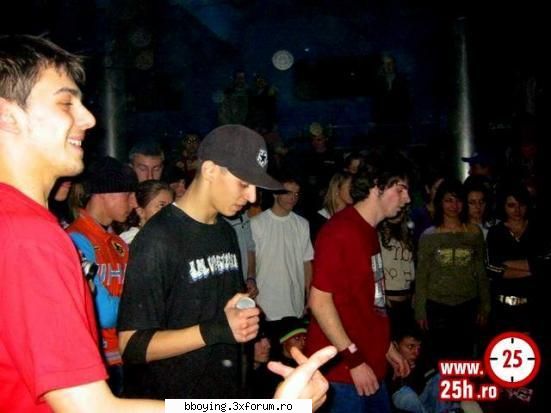
 and "top rock" (dancing on two feet, like the Moonwalk). Acrobatic moves such as the headspin had yet to emerge. Floor Rock involved complicated leg moves. Athletic young men found it was a good way to win dance contests. B-Boy'n was especially popular in the South Bronx, where rival gangs would battle over turf, or just to gain each others' respect.